Scootering From Czechia to Nordkapp - Because Cars Are Overrated
Targeted advertising on the internet is evil! And this is doubly true when you enjoy seeking out new challenges and big adventures. That’s because you can get excited about just anything. Why am I telling you this? Partly to warn you, but also because the greatest travel adventure of my life so far began with just such an ad.
How it all started?
At the end of August last year (2018), my brother and I returned from our expedition from České Budějovice to Split. I rode a scooter and my brother rode a bike. We slept outdoors and carried all our belongings with us. It was the second trip of this kind that we had taken together. The first was in 2017 and led from České Budějovice through the Alps to Venice.
The trips were great. On such a journey, you limit yourself to basic needs such as rest, food, and the ride itself, and you don’t need much to be happy. Maybe just that it’s not raining, or that it was warm and you could swim in the river, so you won’t fall asleep all sweaty in the evening. But the problem arises when you return home. They are suddenly plunged into the sea of everyday life, where they encounter the petty problems of daily life, but their mind is still on the road. During this period, they are pumped up with the experiences of the past few days, and a little voice in their head keeps nagging them about what else they could do. I felt the same way last year, and so it happened that a few weeks after returning from Croatia, an advertisement for the North Cape 4000 ultra cycling race popped up on Facebook. The race is non-stop without any support. It starts in Italy, is about 4,000 km long, and the finish line is at the northernmost point of Europe – Nordkapp. When I saw photos from the race, I suddenly had the idea to try to make a trip to Nordkapp from České Budějovice and get there on a scooter.
Over the course of the year, the idea began to take shape. Especially in the second half of the year, while writing my thesis and preparing for my final exams, when my head was spinning from all the studying. Planning the trip, buying the necessary equipment, choosing a suitable date… I even managed to convince my brother, who wanted to go by bike, so the two of us started looking forward to the trip.
Head directly north and then slightly right past Adršpach
We were planning to sleep outdoors again and buy our return tickets from northern Europe somewhere along the way, depending on when we would be able to better estimate when we would reach Nordkapp. Therefore, we did not have an exact date for departure. We just wanted to leave before the end of June.
The planned route led through Poland, Lithuania, Latvia, and Estonia. Then by ferry (the only part where we used a means of transport other than a scooter or bicycle) from Tallinn to Helsinki, across Finland, crossing the Arctic Circle and, almost at the northernmost point of Finland, crossing the border into Norway. From there, we would continue north to the shores of the Arctic Ocean and follow the coast to the undersea tunnel to the island of Mageroya, where Nordkapp is located.
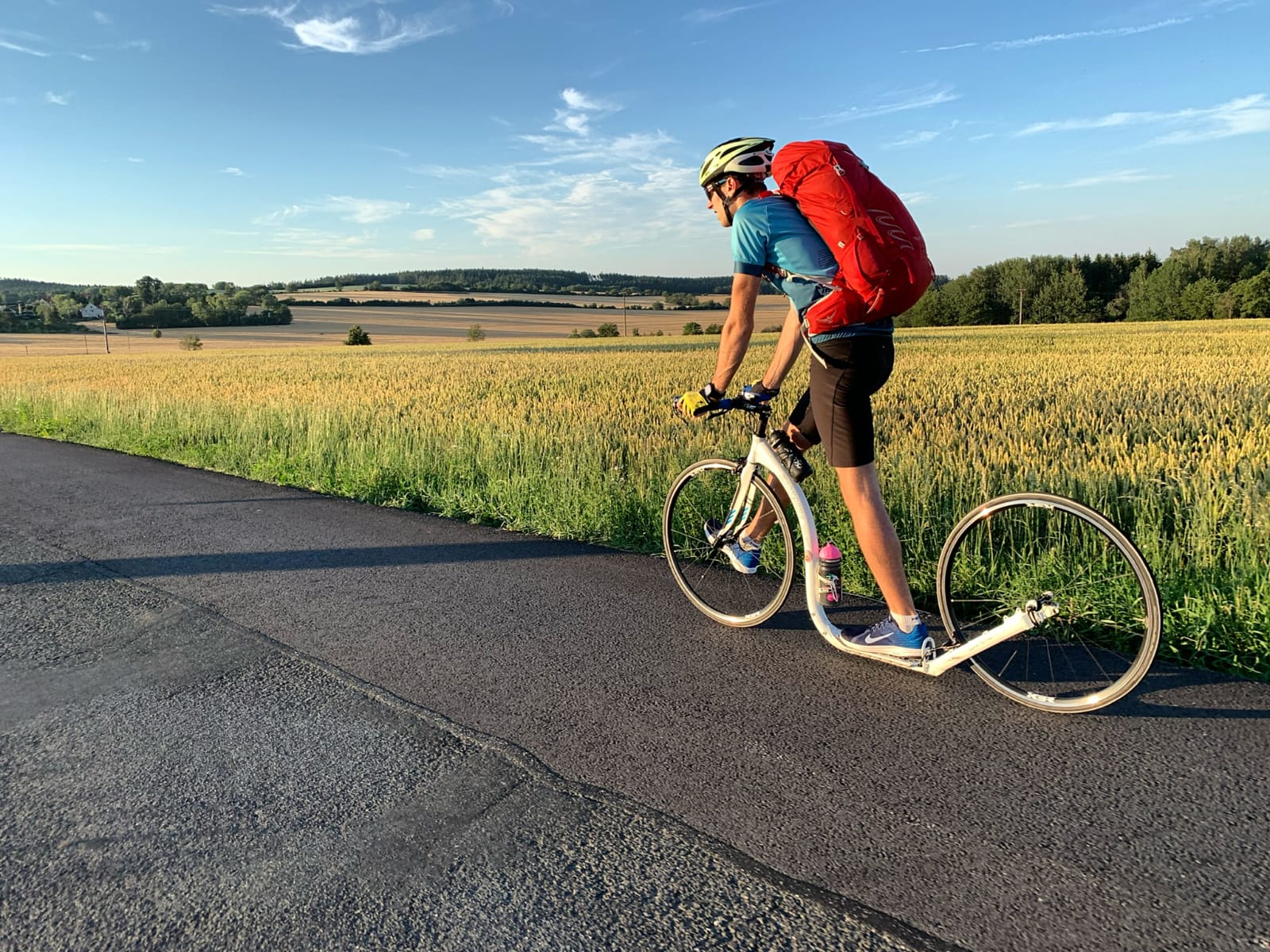
And so, on June 30, we set off from České Budějovice to the north. We spent the first two days traveling through the Czech Republic, testing out the new equipment we had purchased for the trip. This mainly consisted of sleeping gear: a sleeping bag, a light inflatable mat, and a tarp – basically a tent without a floor, but very light. Weight was one of the main criteria we used when packing for the trip. We wanted to travel as light as possible, with each of us carrying our own things and the load divided roughly in half. My brother carried some things in a bag on his bike, and I again stuffed all my things into a 33-liter backpack, which weighed 7 kg with everything when we left home. You don’t need much more than that for about six weeks anyway. Apart from two half-liter water bottles, I had nothing attached to my scooter. On the very first night, we discovered that our ultra-light tent pegs were great, but they couldn’t be stuck in the ground everywhere, so two days later, while still in Trutnov, we bought some classic aluminum ones. We thanked ourselves several times for this decision.
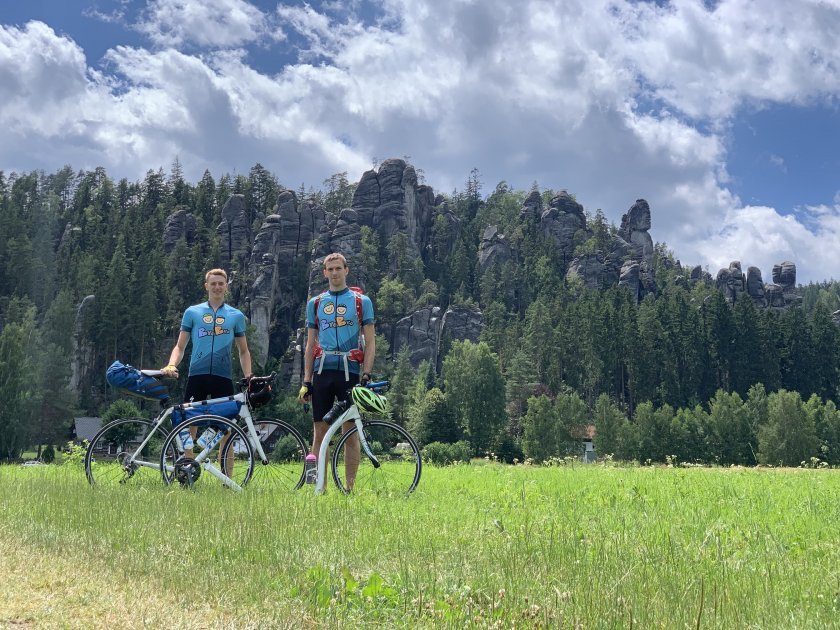
After three days of traveling, we left the Czech Republic just beyond Adršpach, and the real trip could begin. Immediately after crossing the border, we started riding on Polish roads. (For those who don’t know Polish, droga means road.) From the border, it was downhill, and for the next few days, it would be the last major descent, because Poland is simply flat. We mentally prepared ourselves for Poland as a boring flat landscape that we would have to travel about 800 kilometers through. However, we were pleasantly surprised when we realized how wrong we were. It was true about the flatness, but it was definitely not a boring landscape. Beautiful fields where rapeseed does not grow, but grain, cabbage, potatoes, pumpkins, corn, carrots, and cows graze on huge green meadows. Thanks to this, my brother and I agreed that the quality of Polish food cannot be as bad as is often said in our country. It is also worth mentioning that, during our entire trip north, we found Polish drivers to be the most considerate towards cyclists (and me on my scooter). I would not hesitate to compare them to Austrians or French drivers in this respect.
As for sleeping in this country, we noticed that they have a great network of bus stops, most of which have roofs and provide a nice place to sleep at night, sheltered from the wind and rain. Sleeping at a bus stop is often more comfortable than setting up a tarp every evening. Moreover, we knew that we would be using tarps a lot in the coming weeks, so we were happy to use the stops. Interestingly, the stops were often in such remote places that the bus probably only passed through once a year at most. At least, that’s what we think, because we never saw a bus there.
We also have a few funny stories from Poland. Our favorite is the one that happened in the village of Biala Piska. A man stopped in front of us in front of a supermarket. From his appearance, I would have guessed him to be one of the regulars at the local pub. He looked us over for a moment and then asked us in Polish where we were headed, to which we replied in brilliant “protoslavic language,” as one of my friends called this language, that Suwalki was waiting for us, about 90 kilometers away. This information completely floored him, and he immediately began enthusiastically telling passersby about it, before we even had a chance to tell him that our destination was the northernmost point of Europe. Suddenly, we were the ones going “all the way to Suwalki.” To explain, Proto-Slavic is a mix of all possible Slavic languages that doesn’t sound like any of them, but you feel a little exotic when you speak it with a speaker of another Slavic language who doesn’t understand English.
What’s more, I think we managed to dispel one myth in Poland, namely that you almost never ride with the wind behind you, but always against it. During our journey across almost the whole of Poland, we were lucky with the wind and had it at our backs for several days in a row. But it would have been strange if everything had gone too smoothly, so when we reached the Polish-Lithuanian border, we got wet for six days in a row. It never rained all day, but it’s enough when it rains in the evening and you’re riding a scooter without mudguards. Then you suddenly have a nice little pool in your shoes and you put on wet shoes in the morning. Here, we also promised ourselves that we would buy better raincoats in Helsinki than the thin plastic ones we had been using until then, because at the beginning of August, the temperature at Nordkapp is around 6-9 °C, and getting wet in such temperatures would not be much fun. This is even more true when you know that you will be sleeping outside under a tarp in the evening and the only way to warm up is in your sleeping bag.
Across the Baltic States
After more than a week in Poland, we enter Lithuania. The landscape doesn’t change much, but it seems to us that drivers are not as considerate as in Poland, and the quality of the roads is also worse. It also happens occasionally that a relatively large main road turns into a gravel road with stones. Fortunately, thanks to our well-planned route, this only happens about twice. In any case, the side roads that connect to the roads we are traveling on look more like dirt roads in our country. In the villages we pass through, people speak Russian rather than English, but we don’t speak Russian, so we don’t really talk to the locals. Although we did have a few nice encounters here. And even though Lithuania is not an ugly country at all, in retrospect we rated it as the country we liked the least during the whole trip.
From Lithuania, we continued to Latvia. In Latvia, we passed through the capital city of Riga, which is located a short distance from the Baltic Sea coast. Just outside Riga, after more than 1,500 km, we dipped our feet in the sea for the first time on our trip, which was much later than on our previous trips to Venice or Split. And we weren’t even halfway there yet. But the sea was beautiful here, and so was the wide sandy beach. One could almost say that it was Italy, but two fundamental things were different here. It was a little colder (you could swim in the sea with your teeth chattering) and there was almost no one here. So we spent one sunny morning near the town of Sulkrasti lying on the beach and relaxing.
We continued along the coast to the next country. On the evening of the fifteenth day of our trip, we crossed the Estonian border. That day, after crossing the border, we continued our journey through Estonia for about an hour and then ended up in the evening in a small Estonian village in a wooden stall, where, judging by its decorations, fish was usually sold. The plan for the next day was to ride a few dozen kilometers to Tallinn, from where we were to take a ferry to Helsinki. But as it happens, plans change during a trip, and when we found out the next evening, after almost 130 kilometers, that it was going to rain the next morning, we decided to ride a few more kilometers so that we wouldn’t have to ride in the rain for so long in the morning. We rode on great asphalt, and because we wanted to get as far as possible, we did it in the style of a team time trial, with my brother riding his bike in front of me and me on my scooter drafting behind him. In the end, we covered 44 kilometers at an average speed of 25 km/h (with about 8 kg of backpack on my back), which I consider to be quite good speed training on such a trip. And so we finally went to sleep after 171 kilometers under our belts, just a few kilometers from Tallinn. We crossed almost the entire length of Estonia in one day. The next day in Tallinn, we boarded a ferry and sailed about 60 kilometers to Helsinki. To Finland – the first Scandinavian country we passed through on our journey.
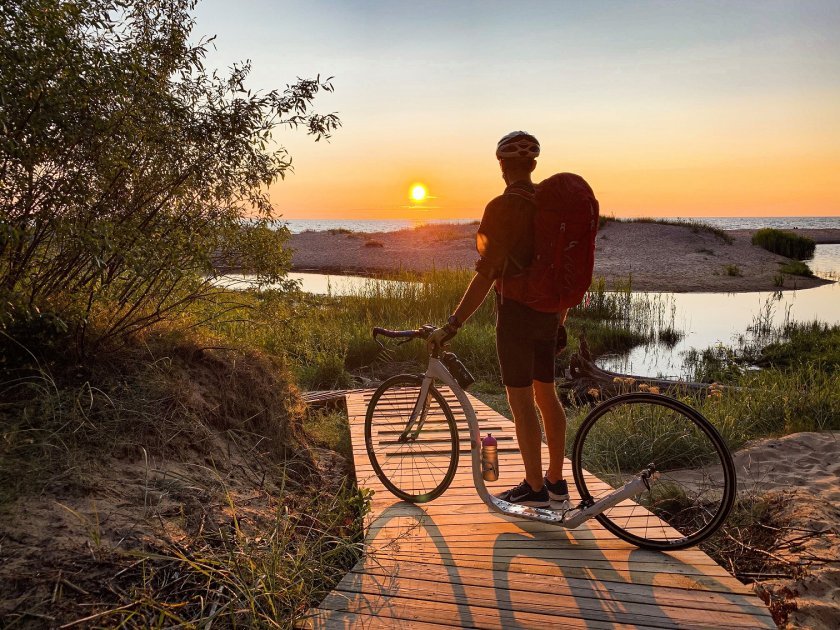
To the land of a thousand lakes
Helsinki welcomed us with a short but intense rain shower, so we set off from the ferry into the rain. We immediately headed to a shopping center, where we bought proper raincoats, as we had promised ourselves in Poland. Then we moved to our booked Airbnb, which was the only indoor accommodation we had in over a month. Its significance was purely practical, as we needed somewhere to recharge our power banks and wash the few items of clothing we had been wearing for the last two and a half weeks. About seven to eight kilos of clothes is enough for a month, but it comes at the price of a nasty smell.
The next day, we had another pleasant, pre-arranged meeting with Alpo. Alpo is an excellent scooter rider and a nice guy who, for example, rode the 100th Tour de France and Giro d’Italia with other scooter riders from the Czech Republic. At the Kickbike scooter warehouse in Helsinki, he helped us install a rear fender on my scooter, which could come in handy in case of rain in the north, and also gave us recommendations on the route through Finland.
Finland and Norway in general were countries full of nice encounters with local people for us. People here are probably more open than in the Czech Republic and are not afraid to talk to you on the street, even though you are a complete stranger to them. Thanks to this openness, we met a lot of nice people and were even invited to a real Finnish sauna, which a Finn had at his cottage on the shore of a lake.
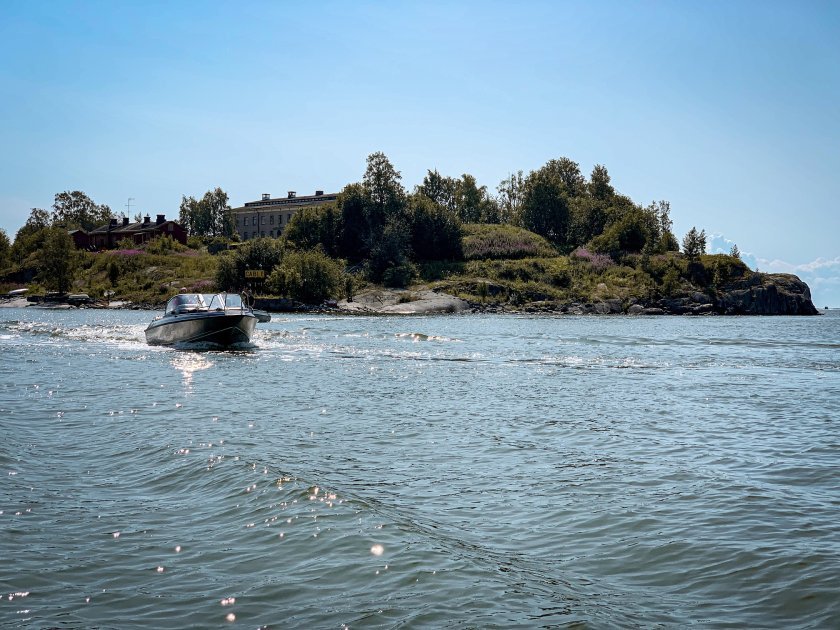
From Helsinki, we continued north through the city of Jyväskylä to Oulu, located on the northern shore of the Gulf of Bothnia. Here, the landscape began to change slowly, and the endless forests were occasionally replaced by swamps and peat bogs, which appeared more and more frequently as we headed north. We were slowly approaching Lapland. The landscape here is harsh, and the people who live here have to adapt to it. As an example of a tough northerner we saw on the way, I can mention a guy who was mowing the grass in front of his house with a scythe. The plot of land was not exactly small. What’s more, this guy wasn’t pushing a single mower in front of him. He was pushing two – one in each hand. And he was smiling cheerfully at us as he did so. From this, we concluded that the people here must be really tough. We never found out whether the large meadows that sometimes appear in Finland are mowed by guys who each push two mowers. But I would believe it.
The first test began after Oulu. We had about 200 kilometers to go to the city of Rovaniemi, located just south of the Arctic Circle, during which we would not pass through any towns where we could buy food and drink. Incidentally, Finland has the lowest population density among European countries and ranks 165th in the world. However, even though the distances between individual cities are quite large, Finland was not as desolate as we had expected. The Finns have cottages almost everywhere, and since it was the holiday season, it was relatively easy to meet someone at a cottage, thanks to which we didn’t have to use a water filter very often and we usually filled up our drinking water at people’s homes. I don’t think we ever rode more than 60 kilometers without coming across a cottage.
We also have a funny story from this part of the trip. In the evening, we were supposed to pass by a campsite, so we agreed that if the price for a tent was reasonably low, we would spend one night at the campsite. We drove into the campsite with the intention of first checking out the situation, when suddenly an old man came up to us from one of the caravans. The campsite manager, we thought. After a while, it turned out that the old man was not the campsite manager and that he only spoke Finnish. Moreover, he was very talkative and didn’t care at all that we didn’t understand him. So we just smiled and nodded. At one point, we somehow understood that he was probably asking us where we were from and where we were going, so we showed him on the map of Europe on our jerseys that we were going to the northernmost point of Europe. We hadn’t understood a single word he said the whole time, but then he suddenly said in a solemn, mysterious voice: “Nooorrrrrdkapp.” Well, we didn’t end up sleeping at the campsite because the price for a tent was quite high, but then we thought that maybe he was some kind of shaman and that his “Nooorrrrrdkapp” ensured that we would indeed reach the north of Europe.
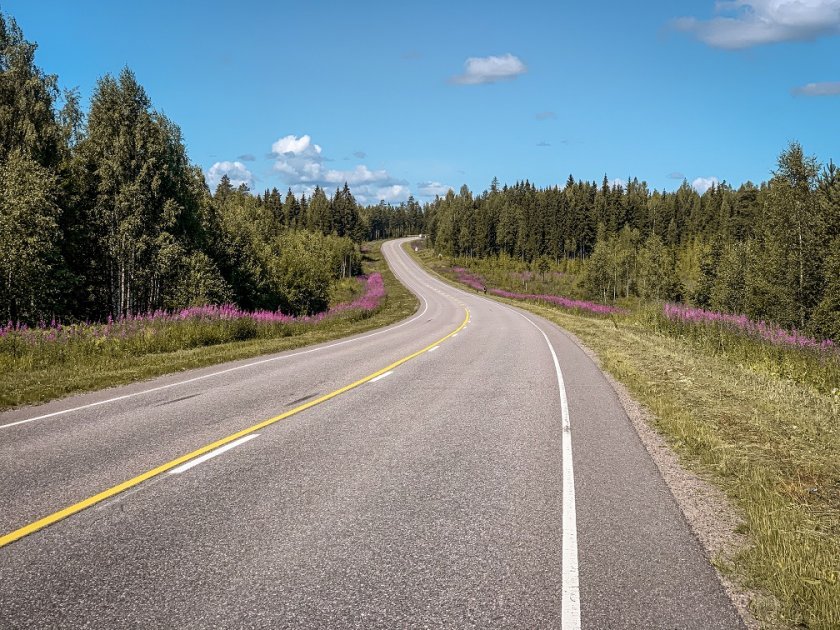
The next day, we wanted to get to the city of Rovaniemi. Again, we were driving through endless forests that morning when suddenly there was a sign next to the road saying “watch out for planes” and we suddenly found ourselves on a runway. The road simply turned into a runway for about a kilometer and then turned back into a normal road. Here in the north, where there are huge distances between villages and it is not even possible to make an emergency landing in the forests, this is perhaps not unusual.
Our arrival in Rovaniemi was marked by unusually warm weather, which I had hoped we would avoid, at least here in the north. As the locals confirmed, 30-degree heat is not normal here. My brother added to this when he looked at the weather forecast and reported that it had been about a degree cooler in Morocco over the last four days than here in the Arctic Circle. Rovaniemi is a city of about 60,000 inhabitants, also known as Santa Claus’s city. And even though it is one of the few larger cities we passed through in Finland, we were surprised by its peaceful atmosphere. We arrived in the evening, so we had a typical “quickie” supermarket dinner and then went out to look for mosquito hats with mosquito nets because, as we learned, mosquitoes can be a real nuisance here in Lapland. Apparently, there are times when there are so many that if you want to eat and don’t have a mosquito net over your head, you can’t eat without swallowing a few mosquitoes. We couldn’t find any hats because everything was already closed, so we decided to continue on and hope that the mosquitoes wouldn’t be too bad. In the end, our wish came true because the warm weather probably didn’t suit the mosquitoes. In addition, we didn’t stop much while driving and slept in open areas where the wind blew and the mosquitoes didn’t linger. Fortunately, our tarps had mosquito nets at the bottom, so when we woke up in the morning and found maybe 10 mosquitoes that had crawled through somewhere, it was still bearable. However, as soon as you drove into the forest to relieve yourself, you had a very strong motivation to be quick.
From Rovaniemi, we continued along the left, less frequented bank of the Ounas River. Our journey took us to the small town of Sirkka, located below Levi Hill, which has a ski resort. Again, we had about 170 km ahead of us without any major villages or shops. The journey through the beautiful Finnish countryside flew by. In addition, we began to encounter reindeer from time to time, which roam freely here.
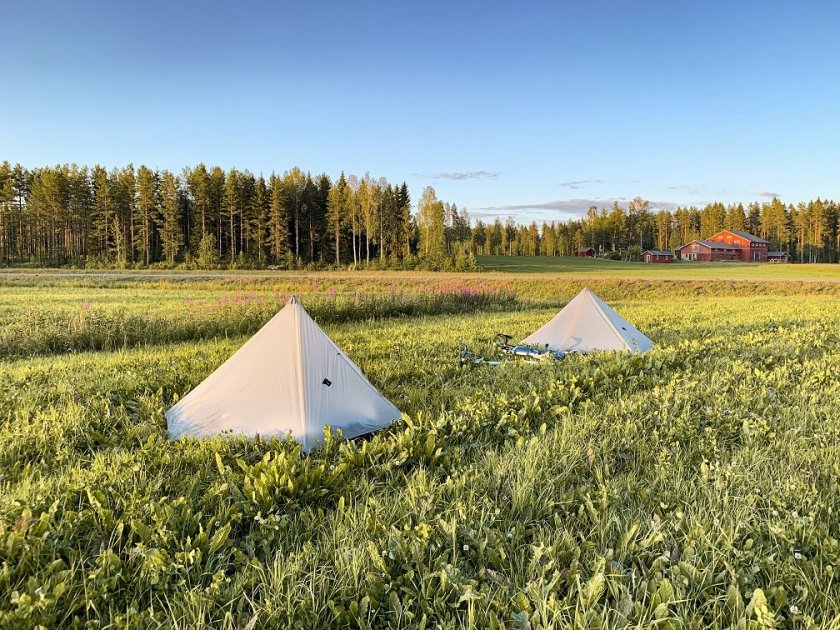
From the town of Sirkka came the dreaded 60-kilometer stretch of gravel road. Fortunately, the road was well-travelled, so it was easy to drive on and we didn’t get a flat tire or, God forbid, cut through the tire. That’s what I was most afraid of, because we didn’t have a spare tire and, in the worst case, that would mean hitchhiking back to Rovaniemi. Fortunately, that didn’t happen, and we reached nice asphalt again, which began in the village of Pokka. Or rather, a hamlet. This village has only a gas station, a snack bar, and a tourist shop in one building, plus about three other buildings, so it’s definitely not a metropolis. However, the village has a relatively tactical location, and especially in winter, when snowmobiles are widely used here, everyone has to stop here to refuel because it is about a snowmobile’s driving distance from other villages. We met some nice people at the snack bar. One of them was a Russian-Finnish couple who were filming a television documentary about survival in the harsh Lapland wilderness, à la Bear Grylls. They looked hardened by nature, but even so, they couldn’t understand how anyone could voluntarily travel such a distance on a scooter. Then we also met a Frenchman on a bike who was also headed for Norkdapp. Even though we had never seen each other before, he knew about us because he had met the cyclists we had met two days earlier. Apparently, they said we were always eating. I have to admit that it was true, we ate like crazy (especially me), but on the other hand, even though I was riding a scooter, we were faster than them, and even faster than our French friend on his bike. We covered the 500 kilometers that remained to Nordkapp almost a day earlier than him, so that’s about it.
From the village of Pokka, we continued 100 kilometers to the nearest village, Inari. Alpo told us in Helsinki that this section is one of the few places in Europe where we can soak up the atmosphere of Alaska. Thanks to the cars that occasionally passed by during the tourist season, we never felt completely alone, but it is true that the nature in these parts was wild and beautiful.
Inari lies on the shore of the lake of the same name. After a long time, we went to a restaurant where we had a burger with smoked reindeer meat and recharged our phone batteries. The solar panel we had brought with us and used almost the entire trip was no longer working here because it had been almost permanently cloudy for the last few days.
A short distance beyond Inari, we saw the first sign for North Cape, which meant that our destination was close. And since it was now fewer kilometers than the length of the Czech Republic, I slowly began to believe that we would actually make it to the north. I mean, it’s not that we didn’t believe it at the beginning of the trip, but I have to admit that it sounded pretty funny when a man in a shop in Trutnov asked us where we were going and I replied that we were going to the northernmost point of Europe.
The road was almost entirely downhill throughout Finland, even though the climbs were only a few meters up and then down again. But here in the far north of Finland, the road sometimes looked like a roller coaster. We could see several kilometers ahead of us, and the road swayed up and down countless times. Even the pine forests slowly began to turn into birch forests, and the trees became so short that you could just about see over them. Here and there we spotted a reindeer and once even a moose. The sun was still above the horizon after 10 p.m., so we were able to make up for the kilometers we had lost due to our increasingly lazy pace when packing our tarps in the morning.
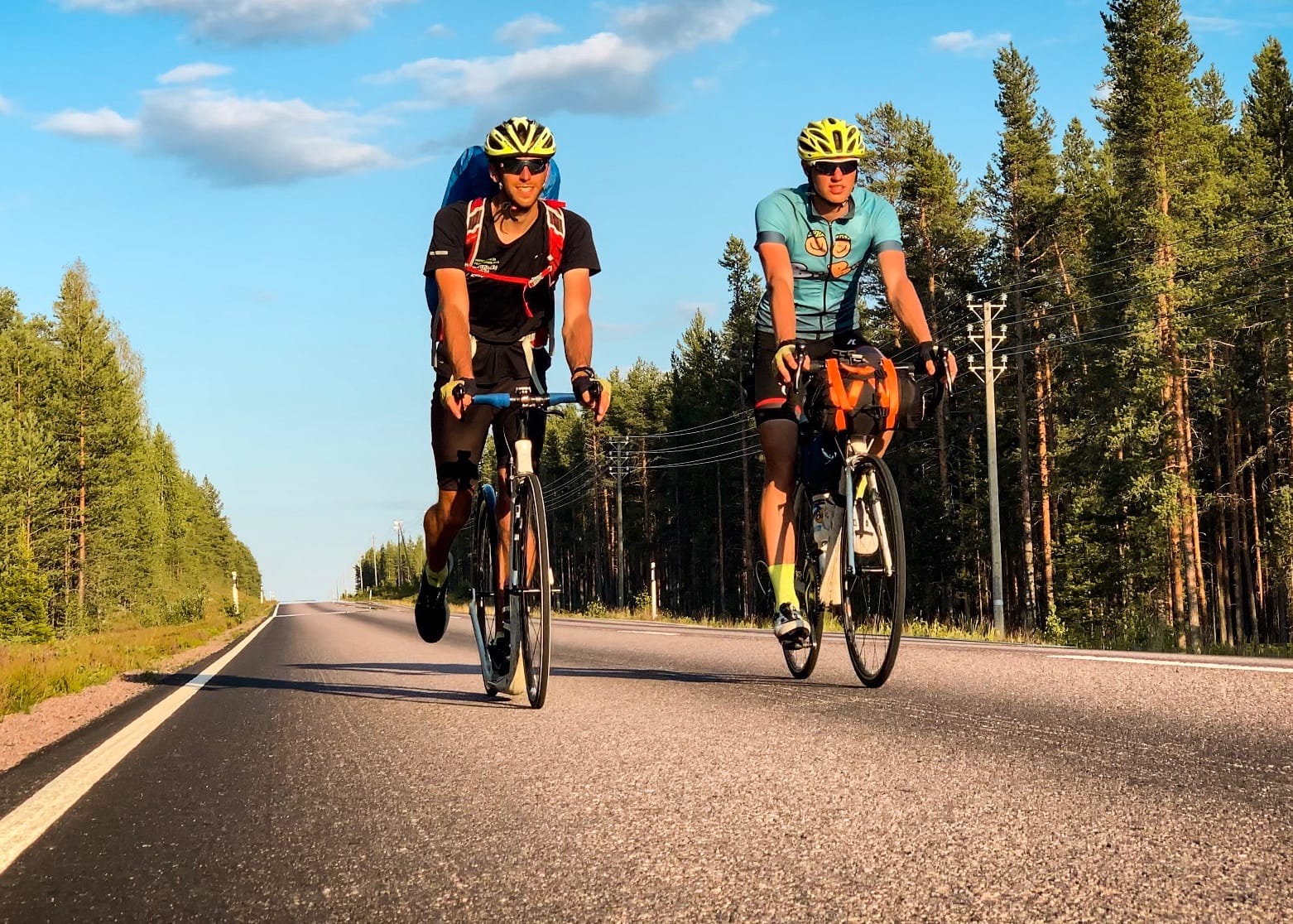
Norway – the last country on the trip
On the thirty-first day of the trip, we descend to the Karášjohka River and enter Norway. In the city of the same name, we were shocked when shopping for lunch in a supermarket. If Finland was expensive, Norway is outrageously expensive. The prices are more or less the same as in the Czech Republic, but the Norwegian krone is worth about CZK 2.7, so a loaf of bread, for example, costs the equivalent of about CZK 100. Fortunately, coffee in a restaurant here costs about the same as coffee in the center of Prague, which is quite a lot, but after a month of traveling, the last few days of which have been relatively cold, it is acceptable, so we sit down in a restaurant for about an hour. We charge our phones and notice a girl and a guy at the next table, both in cycling gear. They have relatively lightly loaded bikes in front of the restaurant. I can’t help myself and strike up a conversation with them. I find out that they are Australians living in France and have now set off on a journey from Nordkapp to Athens. While they are only at the beginning of their journey, we have less than 300 kilometers left to our destination. On the one hand, I’m glad, but I also envy them a little, because they have a lot of adventures ahead of them that will soon be over for us. Before we say goodbye, we exchange information about the trip. They tell us what to expect in the north, and we give them a few tips on traveling through the Baltic states and camping outside Scandinavia.
After Karášjohka, we have a few kilometers of climbing ahead of us, followed by a huge flat plain where only dwarf birches grow and a crazy headwind blows. My brother and I try to take turns at the front, but I’m much slower than my brother on my bike, so I end up hiding behind him and we continue like this for several dozen kilometers through this inhospitable landscape. Suddenly, mountains begin to rise up in front of us. But they are not mountains like we know from the Alps, for example. These look different. They are mountains typical of Norway. Suddenly, we descend into a valley. The wind is still blowing against us, and even though my bike computer shows a 5% descent, I have to push off to move at all. Here and there, we start to meet more cyclists who are also riding in expedition style. Compared to most of them, however, we are riding quite lightly. We wave to each other, and when they see the scooter, they give us a thumbs up in appreciation.
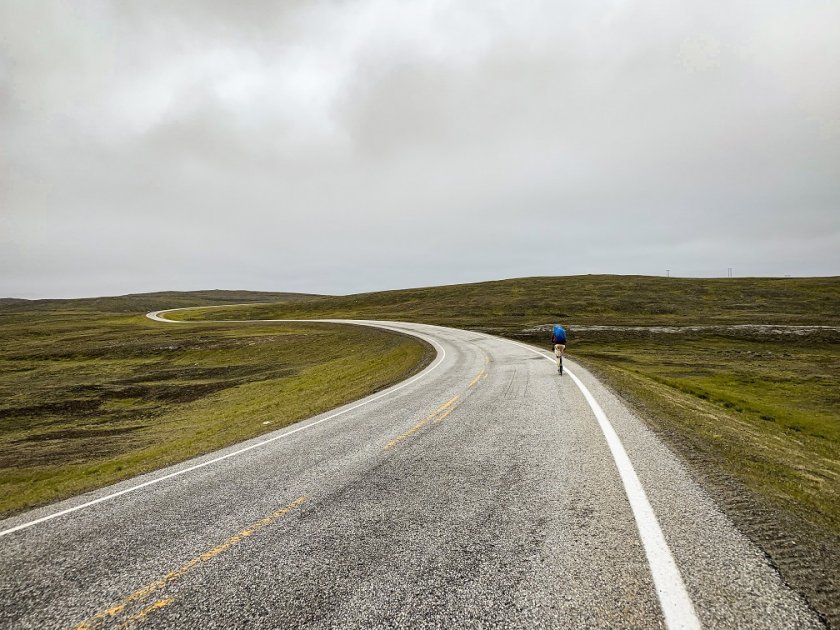
On our first night in Norway, we set up our tarps in a valley below the mountains. The highest peaks here are just over a thousand meters, but even so, some of them are covered in snowfields. It’s starting to get colder, but we expected that. During the day, I need less clothing on my scooter than my brother on his bike, who doesn’t get as warm at our travel speed, and at night I hide in a warm down sleeping bag. From riding in winter, I have found that an Icebreaker long-sleeved shirt and a light sweatshirt are enough for temperatures up to two degrees above zero. Riding with a backpack also keeps me warm. My brother, on the other hand, sometimes has a harder time. He decided to bring the same sleeping bag he took to Split, but here he realizes that the sleeping bag has definitely not been comfortable at 5°C for a few years now. So he regularly dresses in several layers of clothing for the night, and we also use the golden rescue foil that we carry with us just in case. It’s a very handy thing that can make even a snack break in colder weather more pleasant.
In Olderfjord, we want to buy food for the next 100 kilometers, which is all that remains before we reach Honningsvag, the next and last village before Nordkapp. Unfortunately, the store is already closed, but we don’t want to wait until the next day. So we buy two packs of overpriced Norwegian crackers in a souvenir shop and agree that the food we still have will last us until Honningsvag. Then we go for a coffee in a nearby restaurant. We are served by a young man who, after about ten minutes, asks us where we are from. When we answer “Czech Republic,” he starts laughing and exclaims in Czech, “No way, why didn’t you say so right away?” And that’s how we met Tomáš, who was here in the north for the summer to earn money for traveling around New Zealand. Thanks to that, we ended up paying only about a third of what we drank at the restaurant, and that was only because his boss was around the corner (thanks, Tom!). As we were leaving the restaurant, an older gentleman who was sitting at the table behind us stopped us. He introduced himself as Josef, and after a short conversation, we learned that he was from Vienna and was also cycling to Nordkapp and back home. We met him several times over the next few days, and I dare say we became friends. I wish I had as much energy as him at his age.
It was already 8 p.m., but we wanted to ride at least another 15 kilometers to reach 100. In the end, we rode 40 because we were riding well and the wind had stopped for a while, so we wanted to take advantage of it. It was just before midnight, but there was still enough light that it didn’t make sense to put on our flashing lights, because they wouldn’t be visible anyway. We didn’t go to sleep until a little after midnight that day, and we still had eighty kilometers to go to reach our destination.
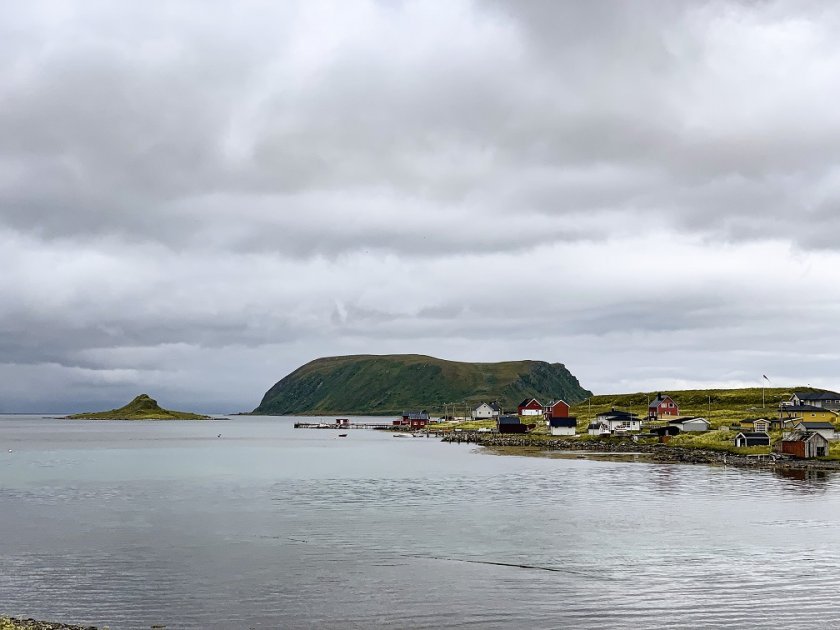
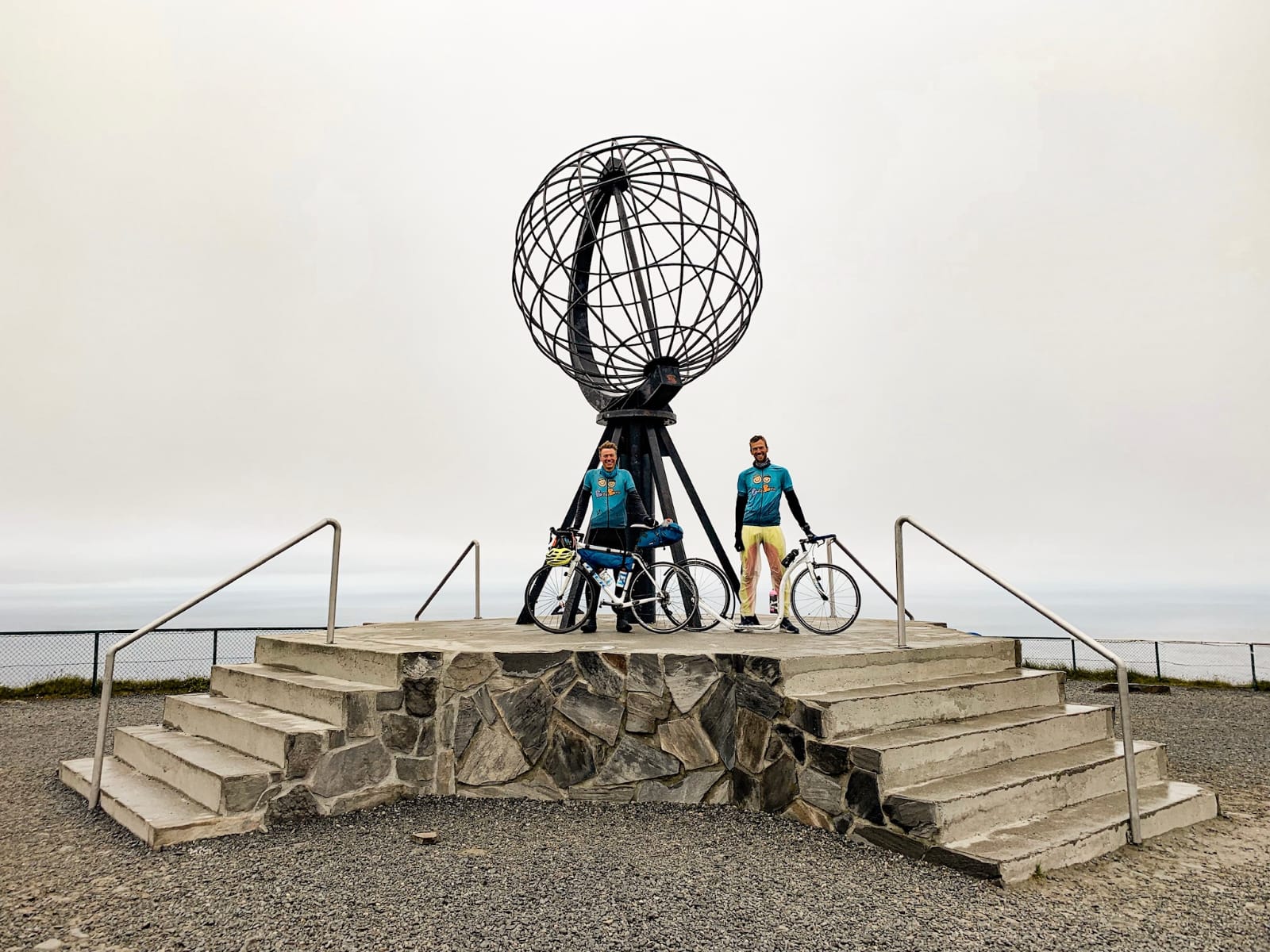
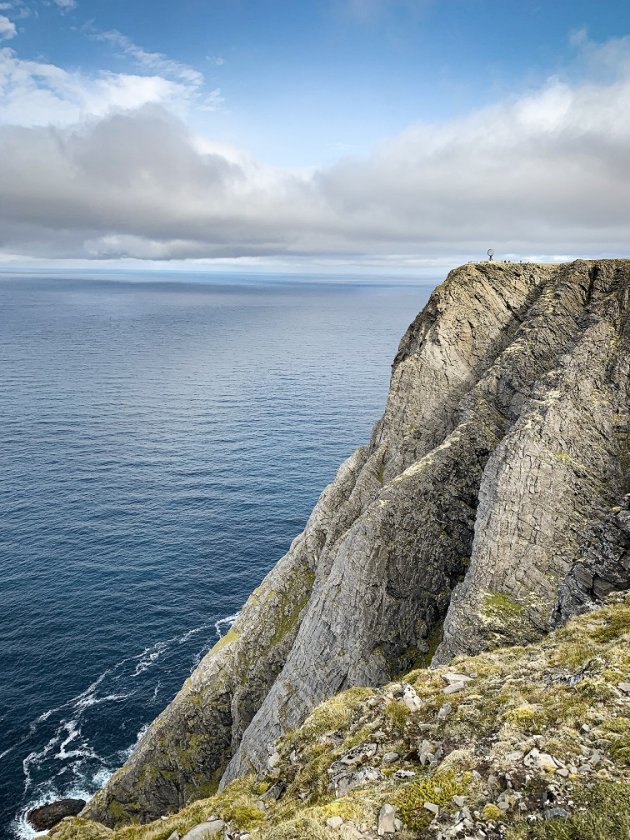
We didn’t feel like getting up the next morning and were extra slow packing, so we didn’t set off until around noon. After about an hour of riding, we caught up with Josef, who had already covered 60 kilometers that day. We rode together for a while, then my brother and I picked up the pace a bit and headed for the tunnel. Nordkapp itself is on an island connected to the mainland by a 6,800-meter-long undersea tunnel. The tunnel runs 212 meters below sea level, so first you drive down a 9% incline for three kilometers and then up the same incline for three kilometers. We drive through the tunnel and are already speeding across the island of Magerøya. We drive through another four-kilometer tunnel and arrive in Honningsvag, the last village before Nordkapp. We buy food for the next day and set off on the last 30 kilometers of our journey. Even though we only reach an altitude of 360 meters, it feels like we are in the mountains. The landscape looks like it, and there are no trees. We see huge herds of reindeer and clouds rolling over the tops of the surrounding hills. I call it humid air. My brother claims that the air is somehow too humid because he can hear it falling on his jacket and see it dripping from his helmet. On top of that, the temperature is around 6°C. We try not to notice it and push through the midday kilometers. Even though the inclines are more than 13%, I refuse to push my scooter and just want to fight my way to the finish line. After two and a half hours of riding from Honningsvag, we pass the Nordkapp sign and see the tourist center behind it. We walk around it and behind it we see an iron globe – a characteristic statue for this place. There are still quite a few tourists here, but we are lucky and manage to take a photo with the globe without any people in it. We take the photo in style at exactly 8:00 p.m. We have 3,530 kilometers behind us in 33 days, and we are happy that we made it. Then we go to rest at the tourist center (and restaurant in one), which is open until 1:00 a.m. We meet cyclists from France and Switzerland and discuss our travel experiences long into the night. Even though it’s a very touristy place, it has its own atmosphere, and people who got here under their own steam tend to flock together. We go to sleep at half past one in the morning, not far from the tourist center, behind a stone wall, where a few tents are already pitched.
Return home
We have reached our destination, but our plane is flying from Alta, which is another 250 kilometers south of here. We know we could cover this distance in two days, but we are in no hurry because our plane is not leaving for another five days. So in the morning, we visit the local information center, take a few photos of the globe, and get ready to leave. On our way out, however, we are stopped by a friendly guy who introduces himself as a journalist from Belgium who has been preparing a podcast about people who have traveled to Nordkapp on unusual means of transport, and that a scooter definitely meets the criteria for an unusual means of transport, and asks if we would give him an interview. So we stay a little longer. We exchange contact details so that he can let us know when the podcast is released. It hasn’t been released yet, but I’m curious to hear it. So we leave Nordkapp not only as winners, but also as media stars.
The trip to Alta takes us three days, and we really enjoy having plenty of time and not having to rush anywhere. It’s still below ten degrees, but the sun is shining, and the harsh north wind is now merciful to us, blowing at our backs. On the way, we stop to see Tomáš in Olderfjord and tell him about our experiences over the past few days.
In Alta, we have only one last task ahead of us, which is to find boxes in which we can transport our scooter and bike by plane. After a few hours, we manage to find two great boxes for bikes in a sports equipment store. We leave them there until the next day so we don’t have to carry them around Alta, as our flight is not for another two days. Then we go to see the prehistoric rock carvings, which are a UNESCO World Heritage Site. The four kilometers from the center suddenly seem like a very long distance. The next two days are spent lazing around in cafés, but we don’t mind because we need a rest after more than a month on the road.
The day before departure, we spend the night in a forest right next to the airport. There is also a beautiful shelter with a fireplace, so we buy sausages and have something other than bread or couscous for dinner. In the morning, we pack our bikes into boxes and carry them to the airport a few hundred meters away. We revel in the luxury of having a “hotel” right next to the airport.
The flight with a transfer in Oslo goes smoothly. Only our bike and scooter don’t arrive in Prague because they didn’t manage to transfer them in Oslo. However, a courier delivers them to Budějovice in two days, and our trip can thus be successfully completed.
Conclusion
It was probably the greatest travel adventure of our lives. In 38 days, we covered 3,800 kilometers, got to know a part of the world, and discovered that Europe is actually small. Its northernmost point is right behind our house, because you can get there even on a scooter. And if you can get there on a scooter, it can’t be that far. Or is it? We don’t know what we’ll do next, but there are still plenty of places and directions we haven’t explored, so this definitely wasn’t our last trip. We’d be happy if we inspired someone else to take a similar trip. It’s not complicated at all. If you repeat riding, eating, and sleeping long enough, you’ll be surprised how far you can get.
PS: More photos from the trip are on our Instagram account, which we created for the trip to Nordkapp.
This is an English transaltion of my article about the scooter trip from the Czech Republic to the northernmost point in Europe that I did with my brother in 2019. It was originally written in Czech and published on koloběžkový portál in three shorter articles.