Project Eclipse: The Hard Way to a Solar Eclipse
Most people fly to see a total solar eclipse. I decided to cycle nearly 1,800 km through three countries for less than two minutes of darkness. When I first heard about the eclipse crossing Spain on August 12, 2026, I honestly wasn’t planning to go. Taking a flight just to look up for a few minutes didn’t feel worth it. But in June, working my usual remote job, I got an idea that seemed brilliant and slightly insane at the same time: what if I biked there instead?
True, it wasn’t the easiest way of getting to Spain, but it was definitely the fun one. It seemed like a big undertaking, but when I thought about it for a few seconds, I had no real reasons for not trying it. My current remote job gives me a lot of flexibility, so I decided to take the opportunity and do it just because I can. I checked the map, picked a place on the coast of the Mediterranean Sea that was in the middle of the belt of totality1 - this happened to be Peñíscola — and decided what places might be cool to visit along the way. And so the idea was born, and the approximate plan of my route looked like this:
My plan was to start from Geneva, cycle through Andorra to Peñíscola, see the total solar eclipse, and then continue north along the coast into France, where I would finish cycling and take a train back to Geneva. I planned to sleep mostly outdoors and pack as minimalistically as possible. The heatwaves in Europe were my biggest worry, but they also meant I could leave most of my clothes at home, so the majority of my bike bag was occupied by my sleeping bag, sleeping mat, and tarp.
Melting Under the Rhône Sun
I started from Geneva 12 days before the eclipse, with about 1,250 km to cover if I wanted to make it in time. The first few kilometers ran through familiar terrain, but I quickly ran into what would become my biggest enemy on this trip: the heat. As if the date of the eclipse wasn’t fixed enough of a challenge, Europe decided to throw in a heatwave too, occasionally seasoned with a wildfire. I had no choice but to accept it and get ready to fight.
For the first few days, I had a battle plan: since I was following the Rhône, I stopped often for cooling breaks in the river — sometimes fully clothed, since a wet jersey doubled as air conditioning. That part of the plan worked.
What didn’t work was my front wheel. Shortly after Geneva, a hard hit on a gravel path knocked its spokes out of tension. When I looked closer, I found a real problem: the rim wall was badly worn, its surface curved inward instead of flat. Following the Rhône river on flats was fine, but not great news with the Pyrenees still ahead. I decided to keep riding and hope it would hold until I could get a replacement.
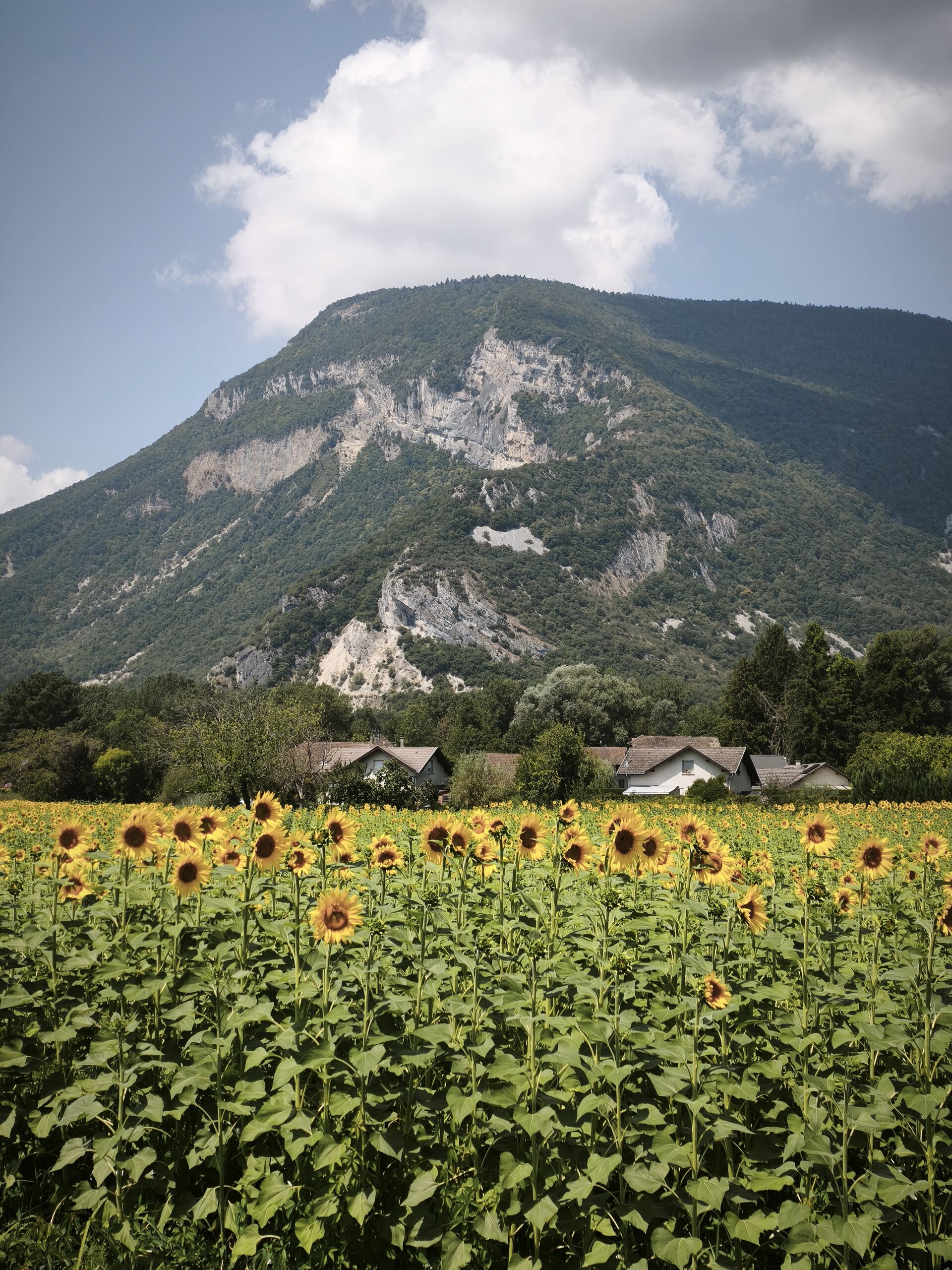
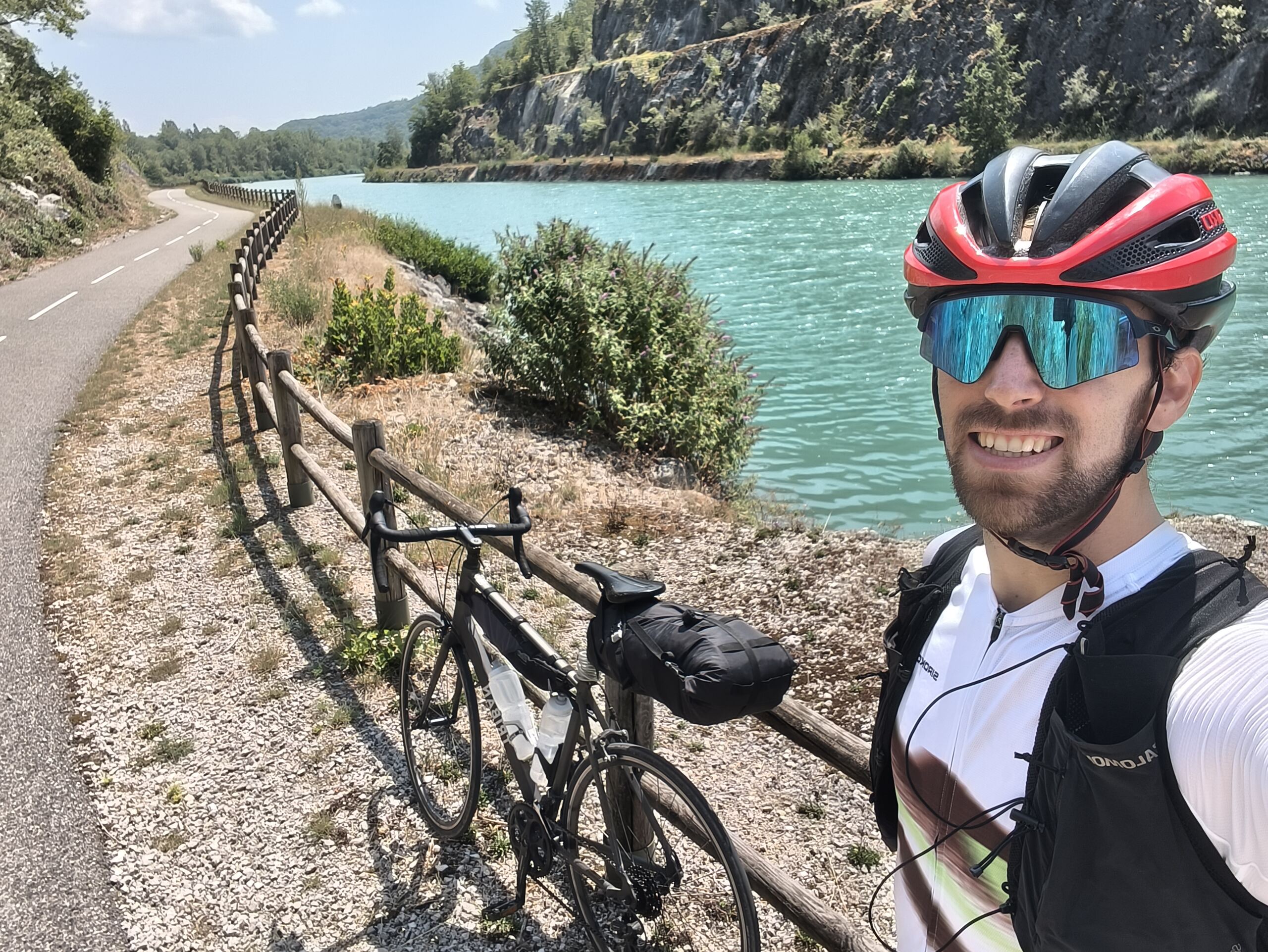
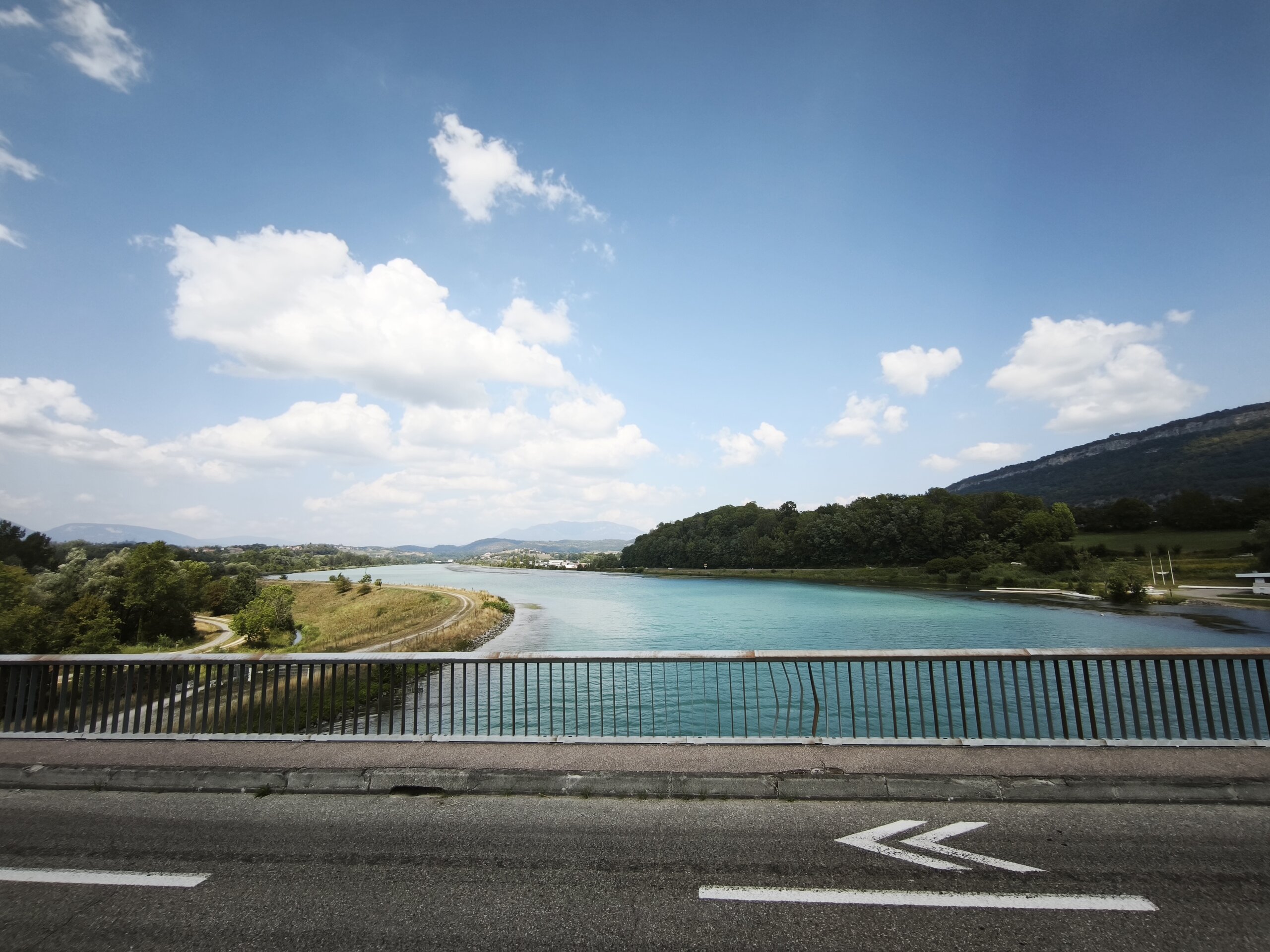
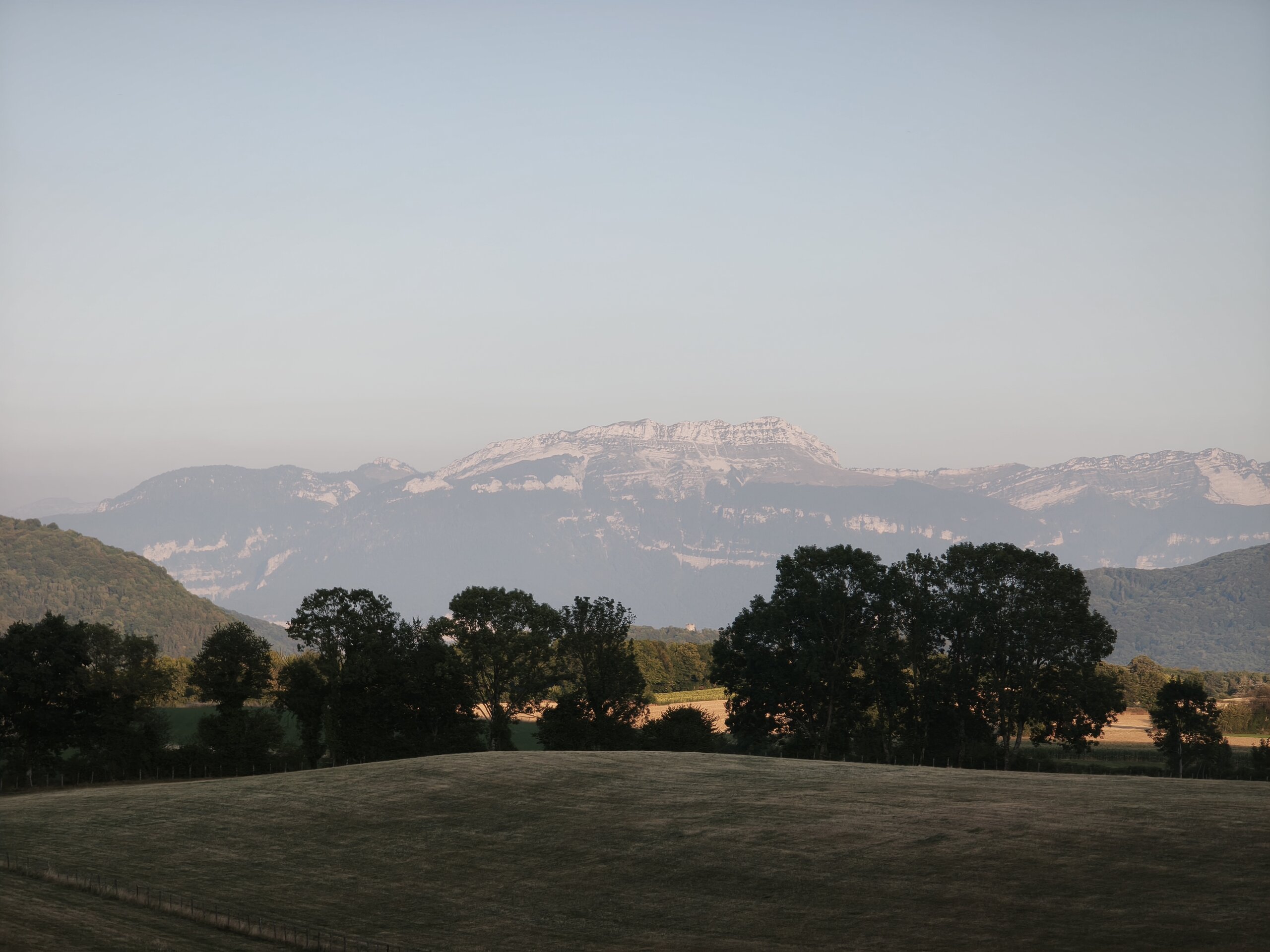
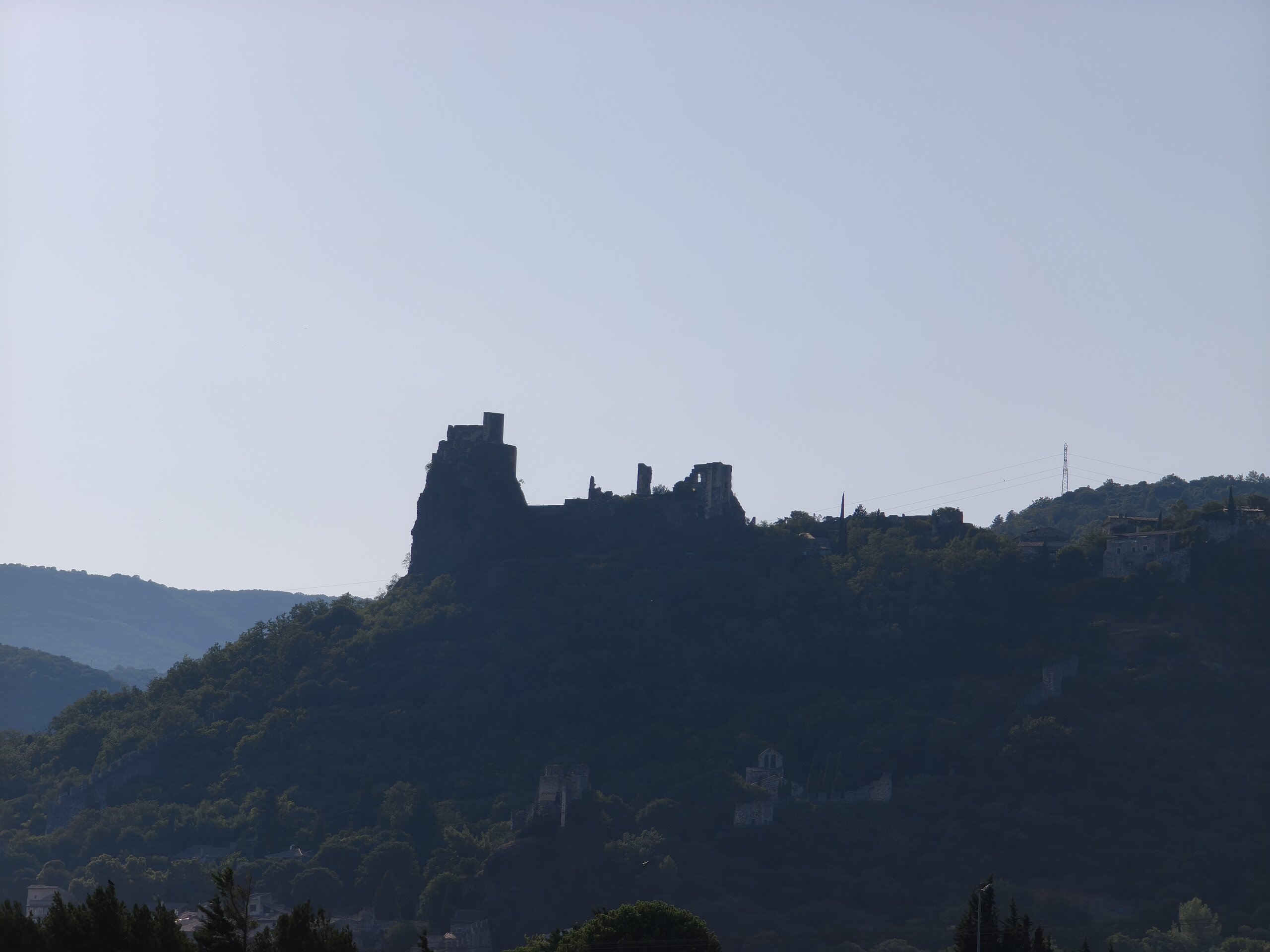
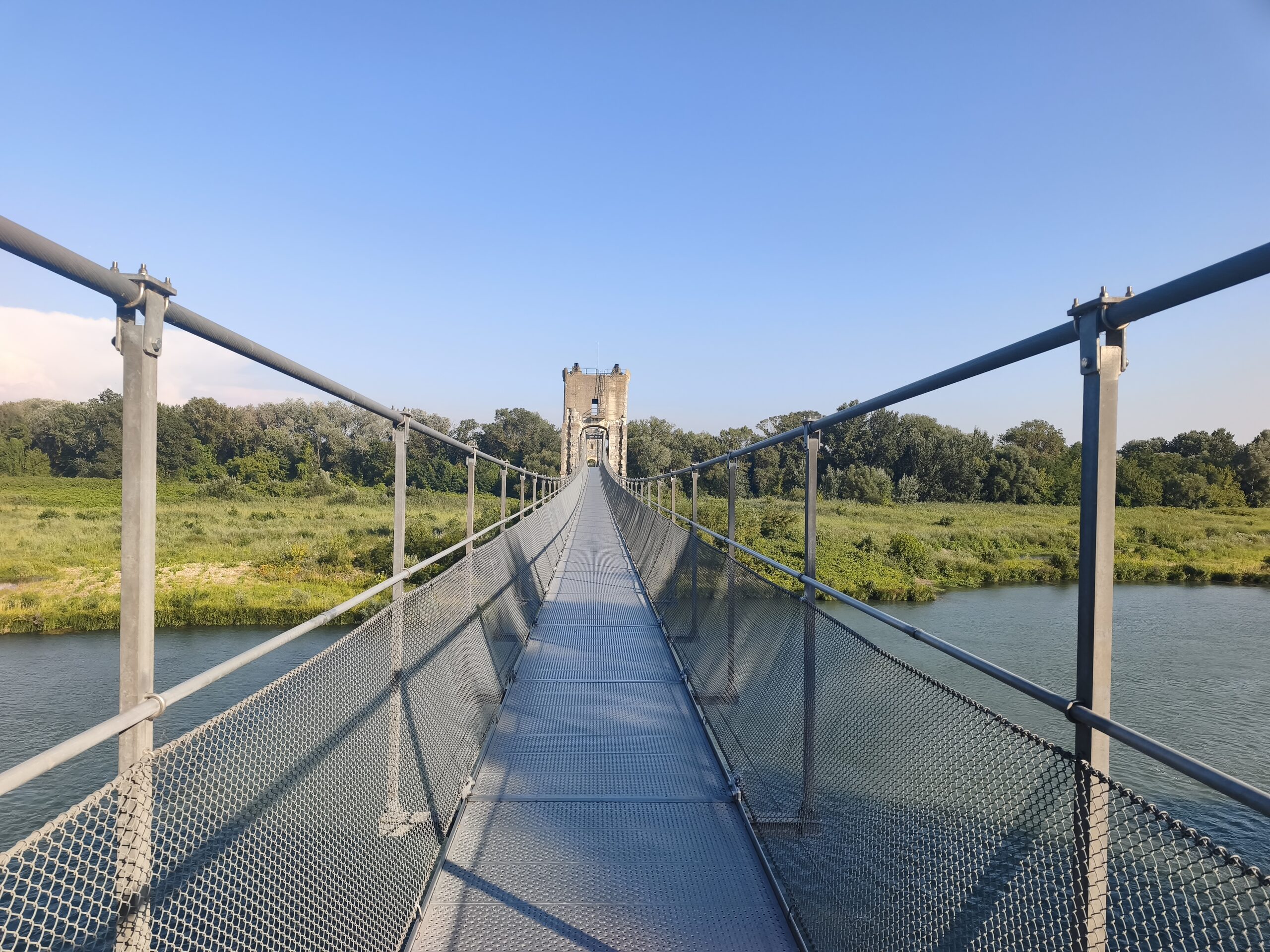
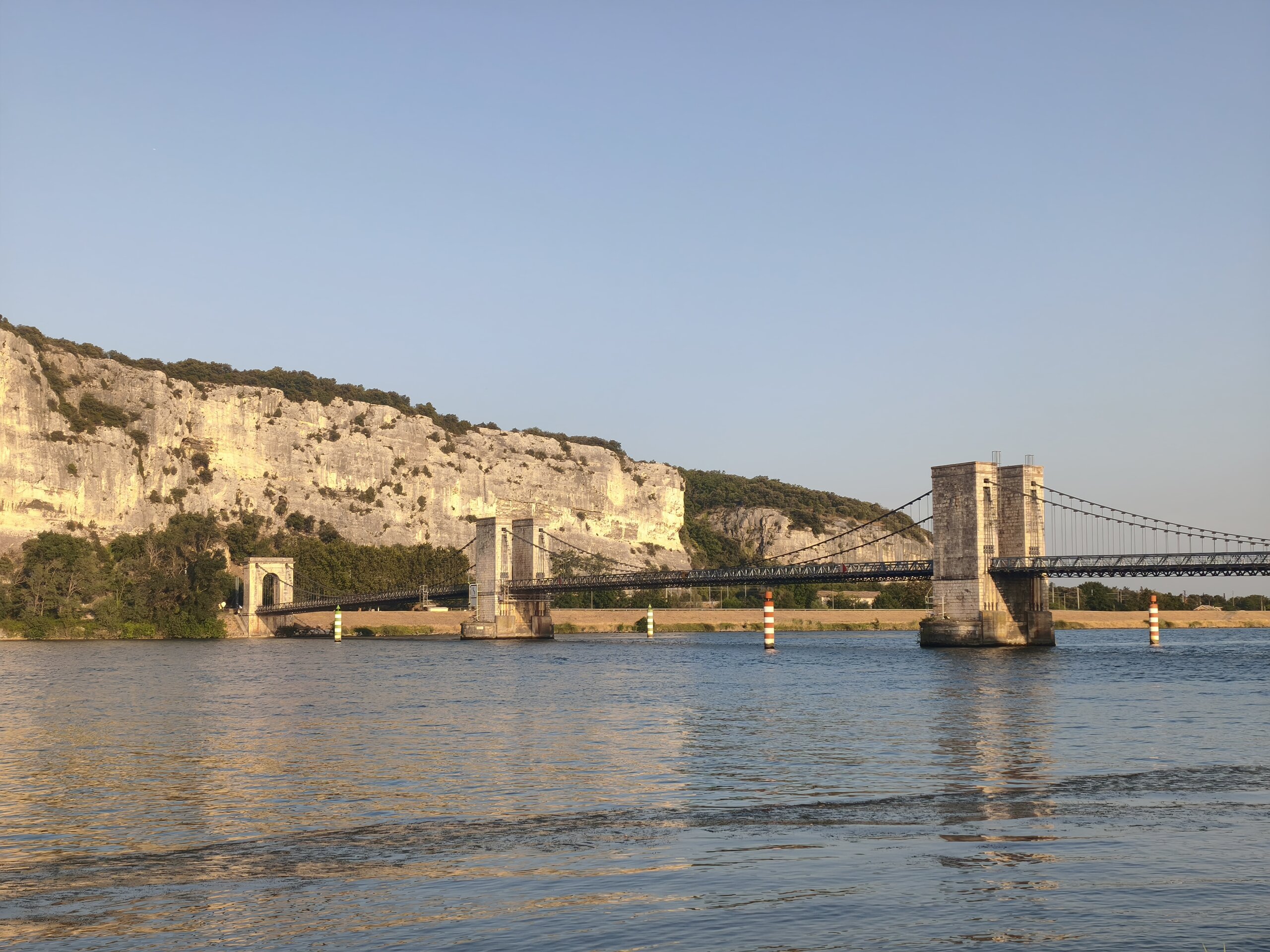
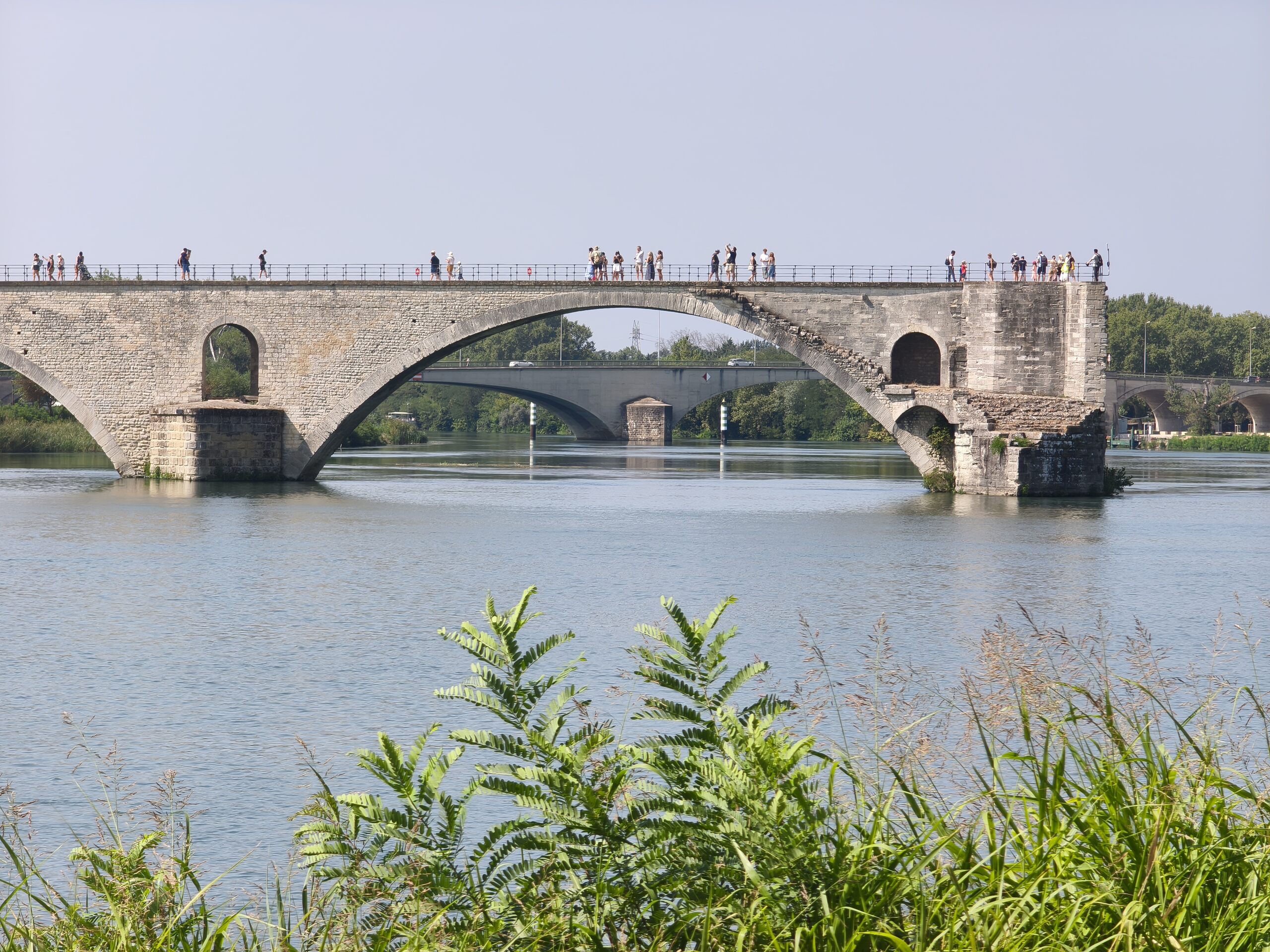
The Rhône valley was beautiful. I followed the Via Rhôna cycling path for most of the way from Geneva to the sea, skipping the stretch through Lyon to head straight for the coast, and rejoining the route in Valence. The river grows fast after Geneva — I passed swing bridge after swing bridge, and plenty of castles along the way. In Avignon, I saw the city’s famous bridge, the one that stops abruptly in the middle of the river. Not the most useful bridge ever built.
After Avignon, in Beaucaire, I saw something that shook me. I was the second person to reach a car crash: the vehicle smashed into a tree, smoke pouring out, airbags deployed, a driver’s elbow still visible inside. With temperatures above 37°C and everything around it bone-dry, the smoking car felt like a disaster waiting to happen. Luckily, someone had arrived just before me and was already calling for help. Moments later, the shaken driver climbed out, confused but alive. Once another car stopped and I saw help was on the way, I got back on the road — there was nothing more I could do. It was a sharp reminder to stay alert out there.
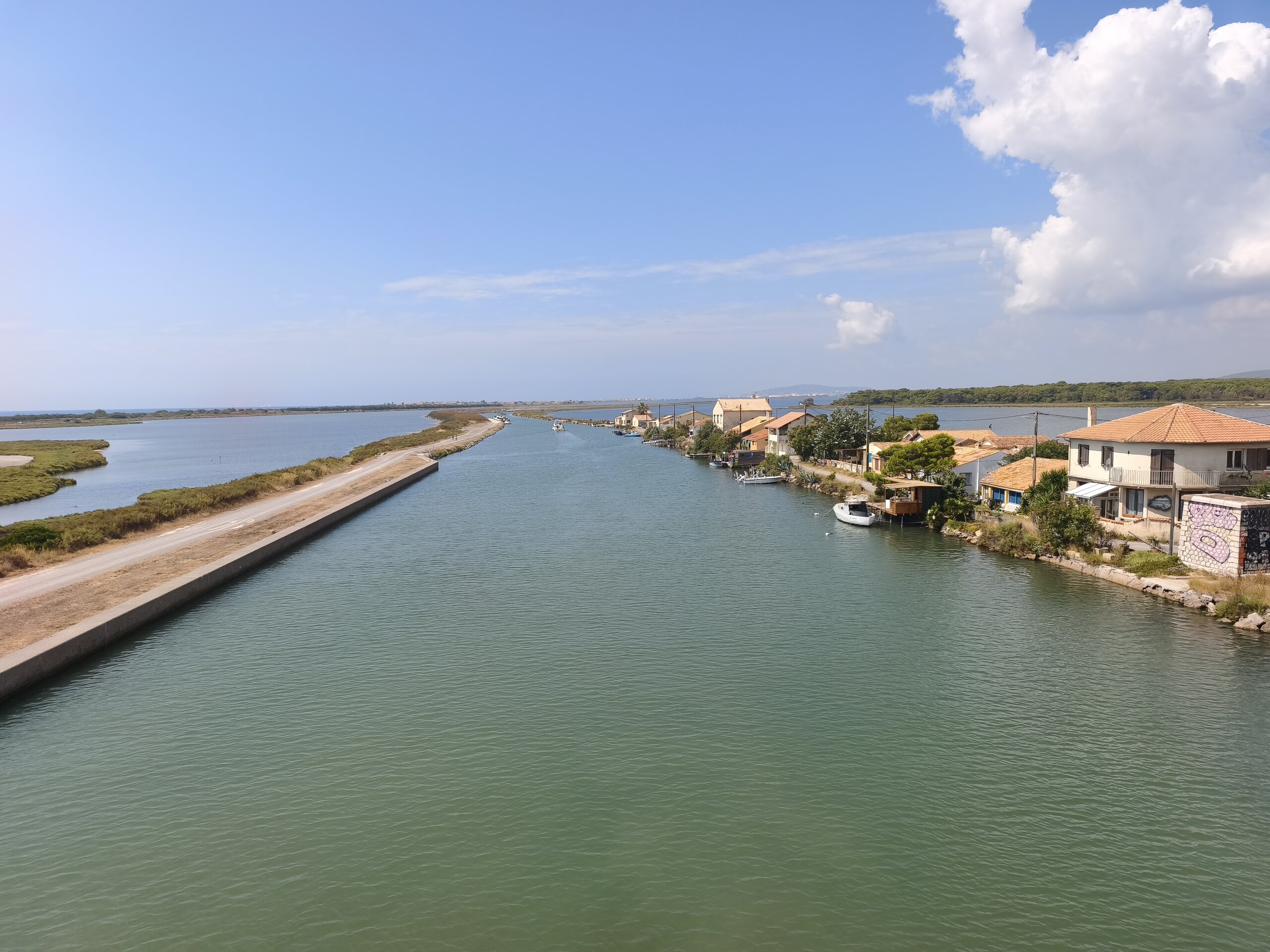
By the time I reached Canal du Rhône à Sète — a boat canal connecting the Étang de Thau to the Rhône — the heat had become brutal. Cycling along it meant full sun exposure for what felt like an endless, straight stretch of path. Mentally, it wore me down, but it was worth it: that evening, I reached Le Grau-du-Roi on the Mediterranean coast. Three days, 500 kilometers, and one very well-earned evening swim in the sea to celebrate.
Flamingos, a Tricycle Burial, and One Very Confused Turtle
The night after reaching the Mediterranean wasn’t a good one. It was hot, humid, and full of mosquitoes, so I barely slept and woke up early to avoid being spotted by passersby. The upside of an early start was having the beach almost entirely to myself. I grabbed breakfast and began the day with another dip in the sea.
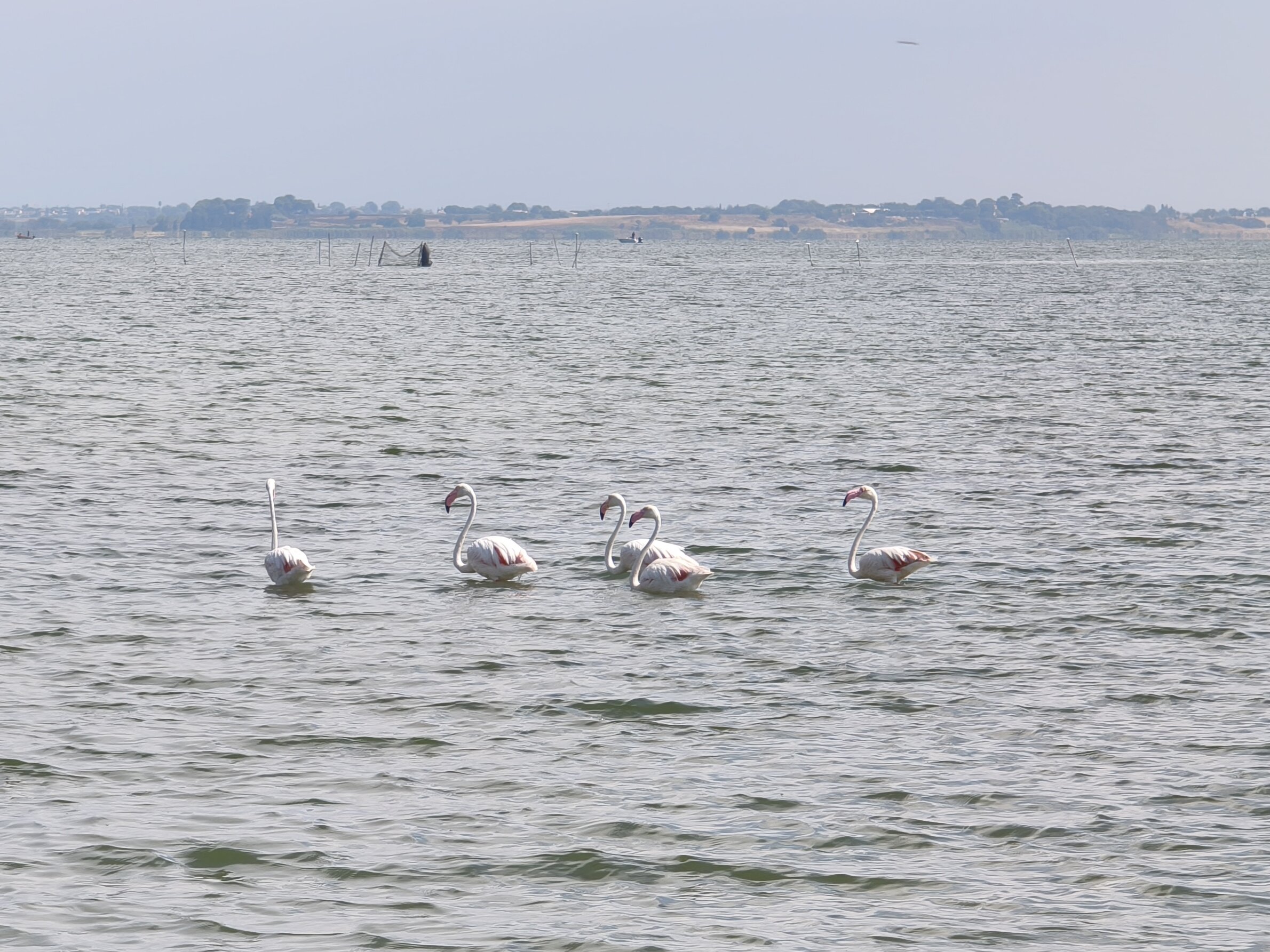
I continued my way and cycled along Étangs2 near Montpellier, where I spotted flamingos. I had no idea they even lived there! Around lunchtime, the heat turned brutal, so I was relieved to duck into an air-conditioned supermarket for food and a break. While eating, I noticed a few people nearby who looked like they were on adventures of their own. One girl’s backpack caught my eye: Hyperlite, the same brand I’d carried while hiking across New Zealand. It’s practically a badge of honor among people doing big trips. I asked what she was up to, and it turned out she was hiking the Hexatrek (a 3,000 km trail through the French mountains), though she’d skipped the less interesting sections and was currently “side-questing” by cycling from Avignon to Perpignan. Her name was Viola.
The guy sitting with her, Shane, turned out to be also interesting. He was riding a wild-looking tricycle from the Netherlands to Peñíscola to catch the eclipse, just like me, before continuing on to Málaga. And Málaga wasn’t just a destination. He was headed there to complete an Earth sandwich with a group in Auckland. An Earth sandwich works like a normal one (bread, filling, bread), except the filling is the entire planet. Find two points on Earth that are exact opposites (antipodes), get someone to lay a slice of bread on the ground at each spot at the same moment, and congratulations: Earth is now a sandwich. As the final touch, Shane didn’t want to ship his old tricycle back home, so his plan was to bury it at the finish line instead.
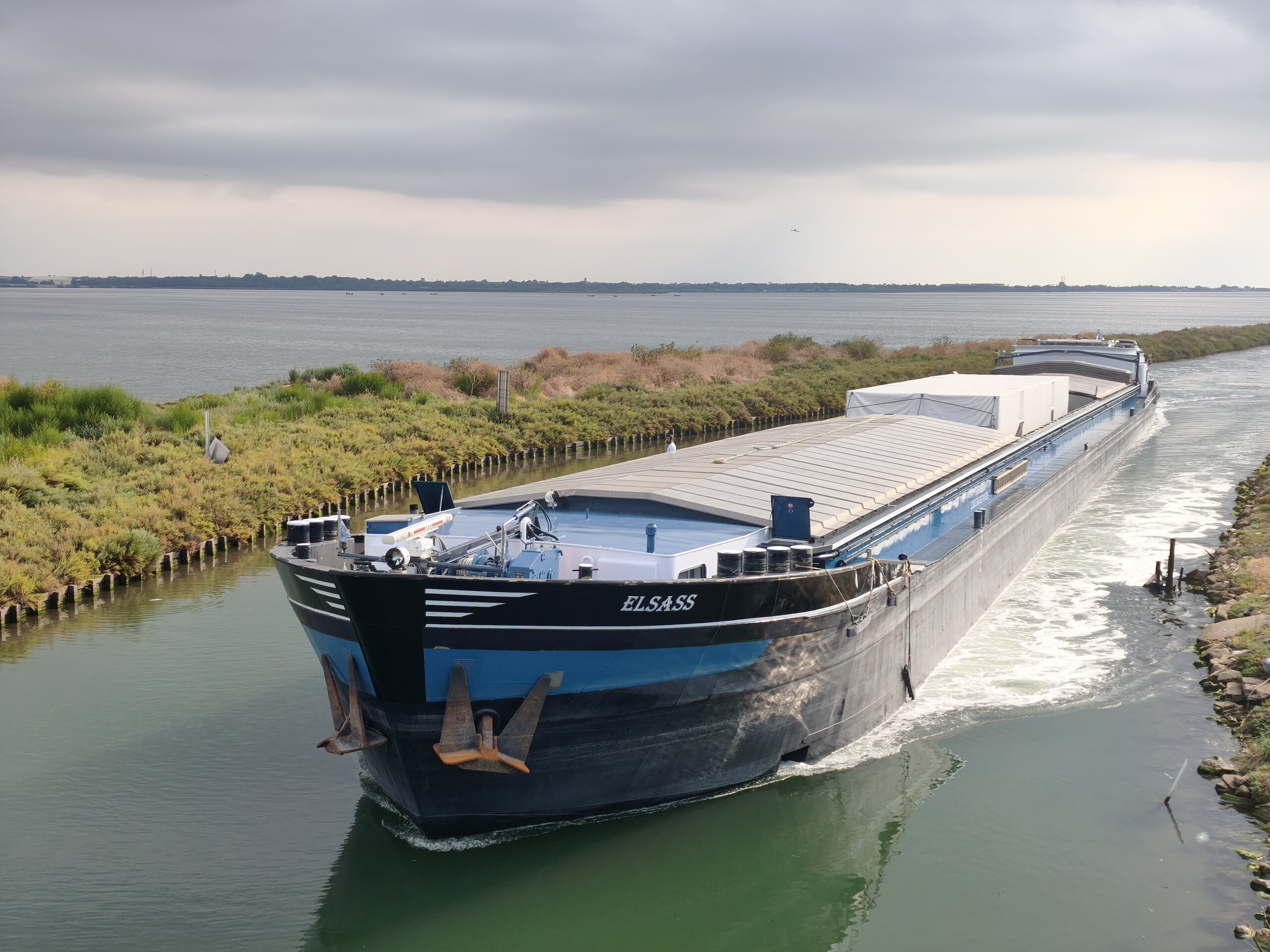
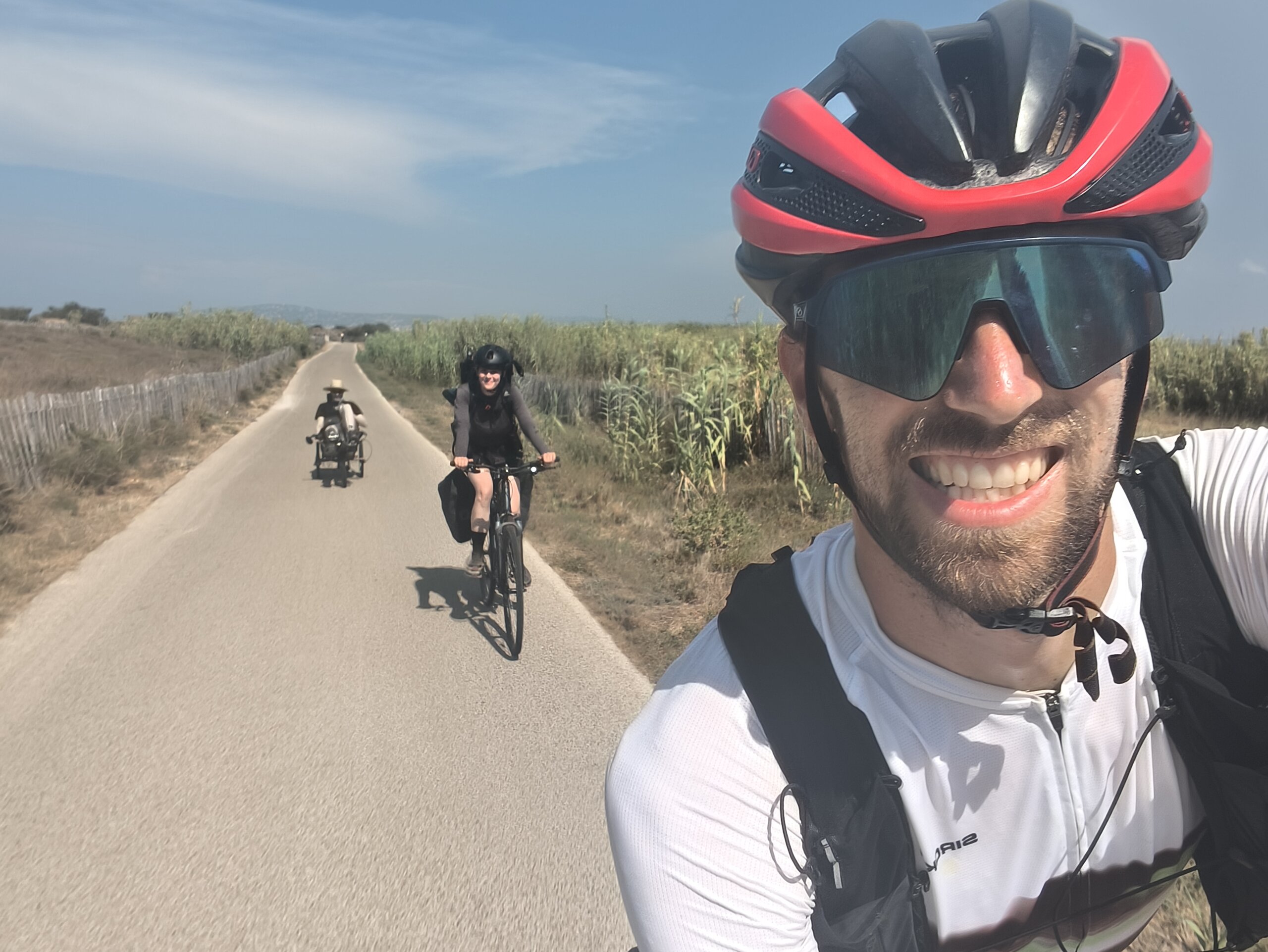
Viola, Shane, and I ended up cycling the afternoon together, since we were all headed to the same place: a Decathlon store, where I could finally replace my front wheel. For a few hours it felt a bit like being back on the trail. We took a cooling break in the sea, reached the store in Agde, and I left with a new wheel and a real sense of relief before the Pyrenees.
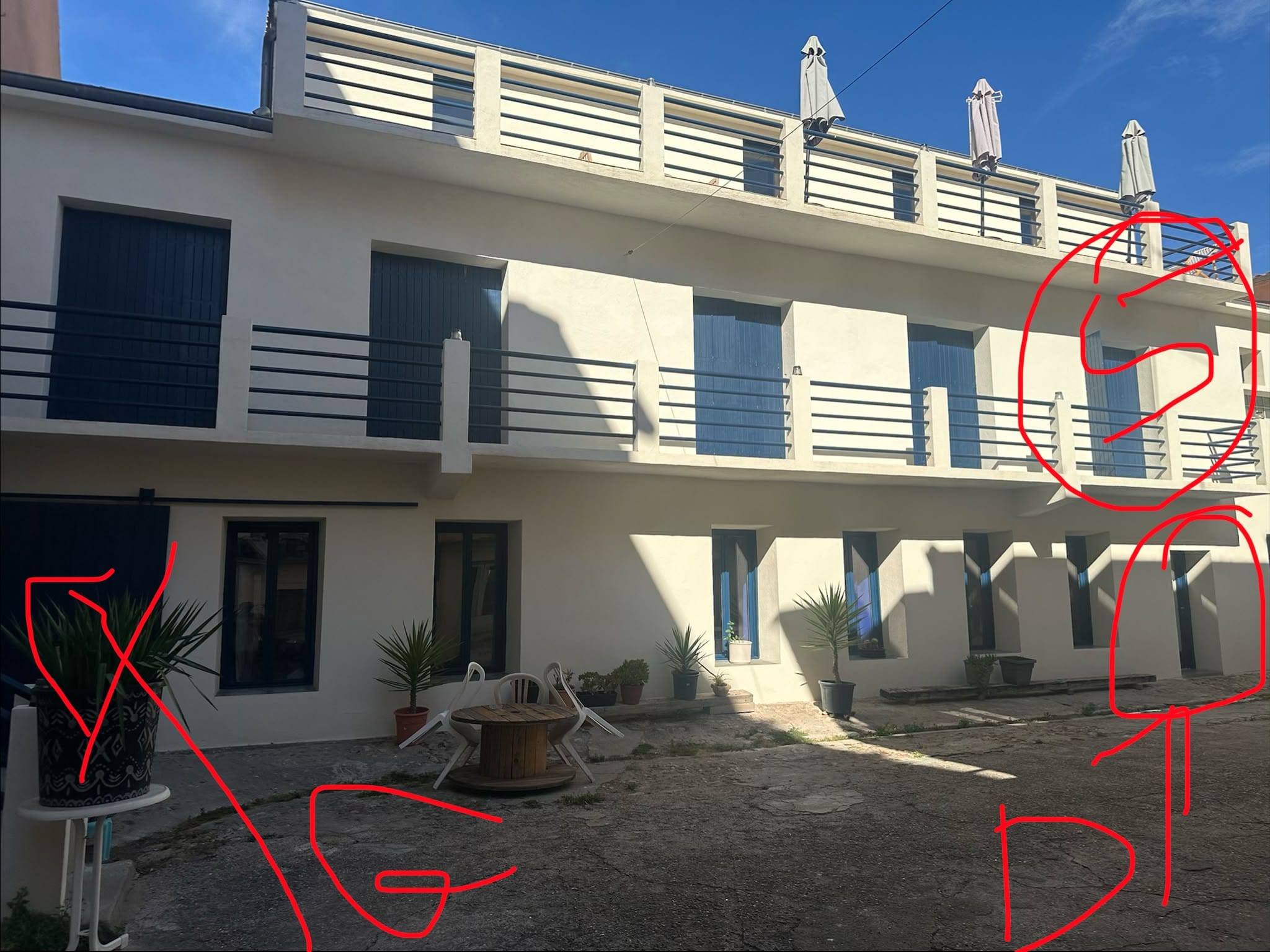
After dinner with them at a supermarket, I still had 25 km to go to Béziers, where I’d booked a place to stay. That’s when things got weird. The property owner messaged me late, saying I had until 7 p.m. to check in, an hour I had no chance of making. I called her on WhatsApp. She acted like there was nothing she could do, then offered to send check-in instructions anyway, for an extra 10 euros. When I asked if that was some kind of rule, she simply replied, “No, you just give me the money.” It was clear she was trying to squeeze a bit of extra cash out of me, so I “agreed” (i.e. lied) just to get the instructions. What she sent was a heavily edited photo, a true piece of art, though not one I’d have paid 10 euros for (see the gallery for proof). I told her I’d leave at 8 a.m. and pay her in person. I actually left at 7. Since that arrangement was never anything official, I didn’t feel too bad about it.
The next morning, she texted, unhappy but unable to do much about it. When her messages kept coming and she started threatening a 145 euro charge, I moved the conversation to Booking.com’s official chat and called their support line to have some backup if needed. The support rep ended up complimenting me for handling it well, confirmed I owed nothing, and even issued a 25 euro refund for the trouble. A clean win, and I was back on the road.
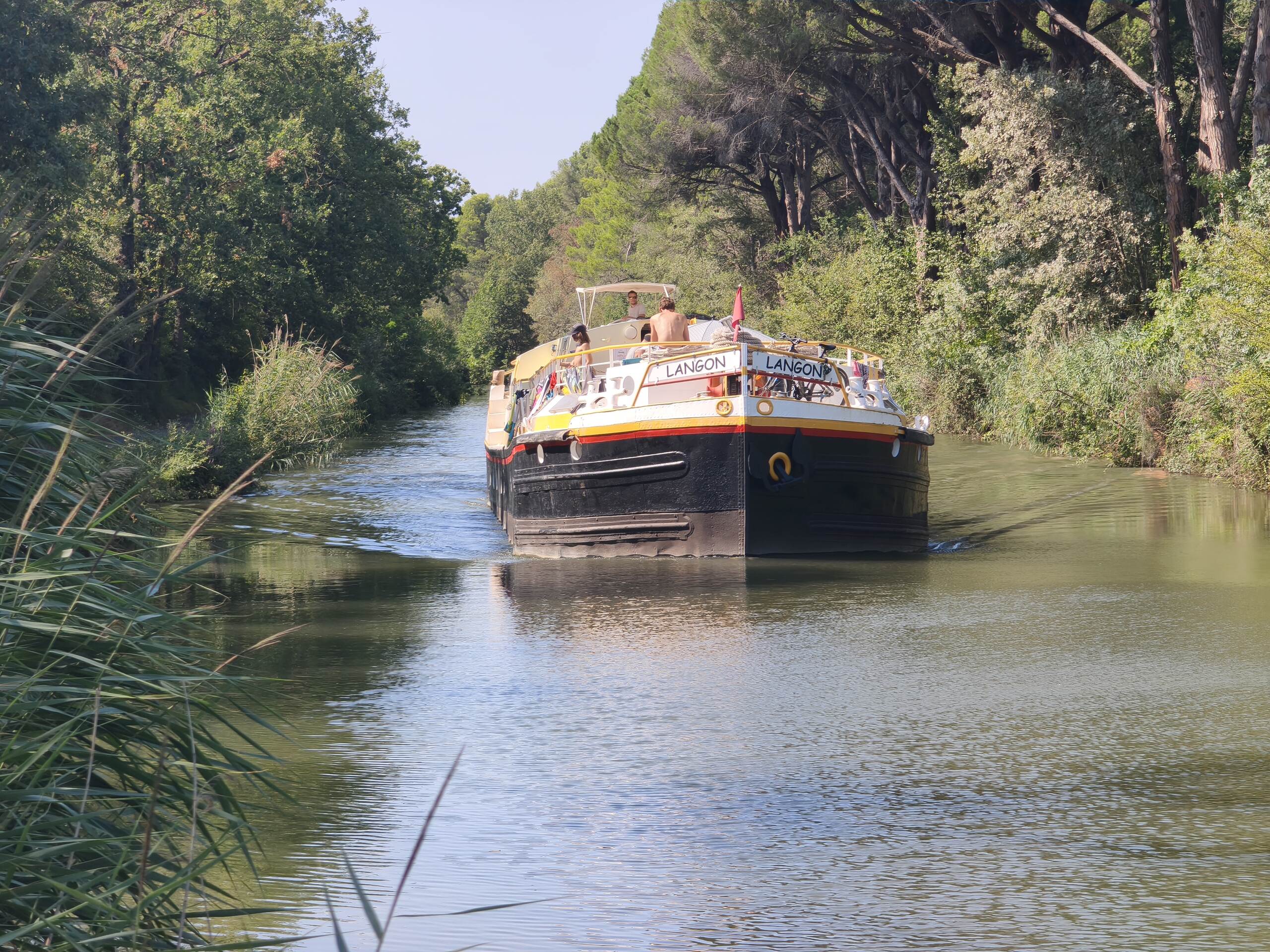
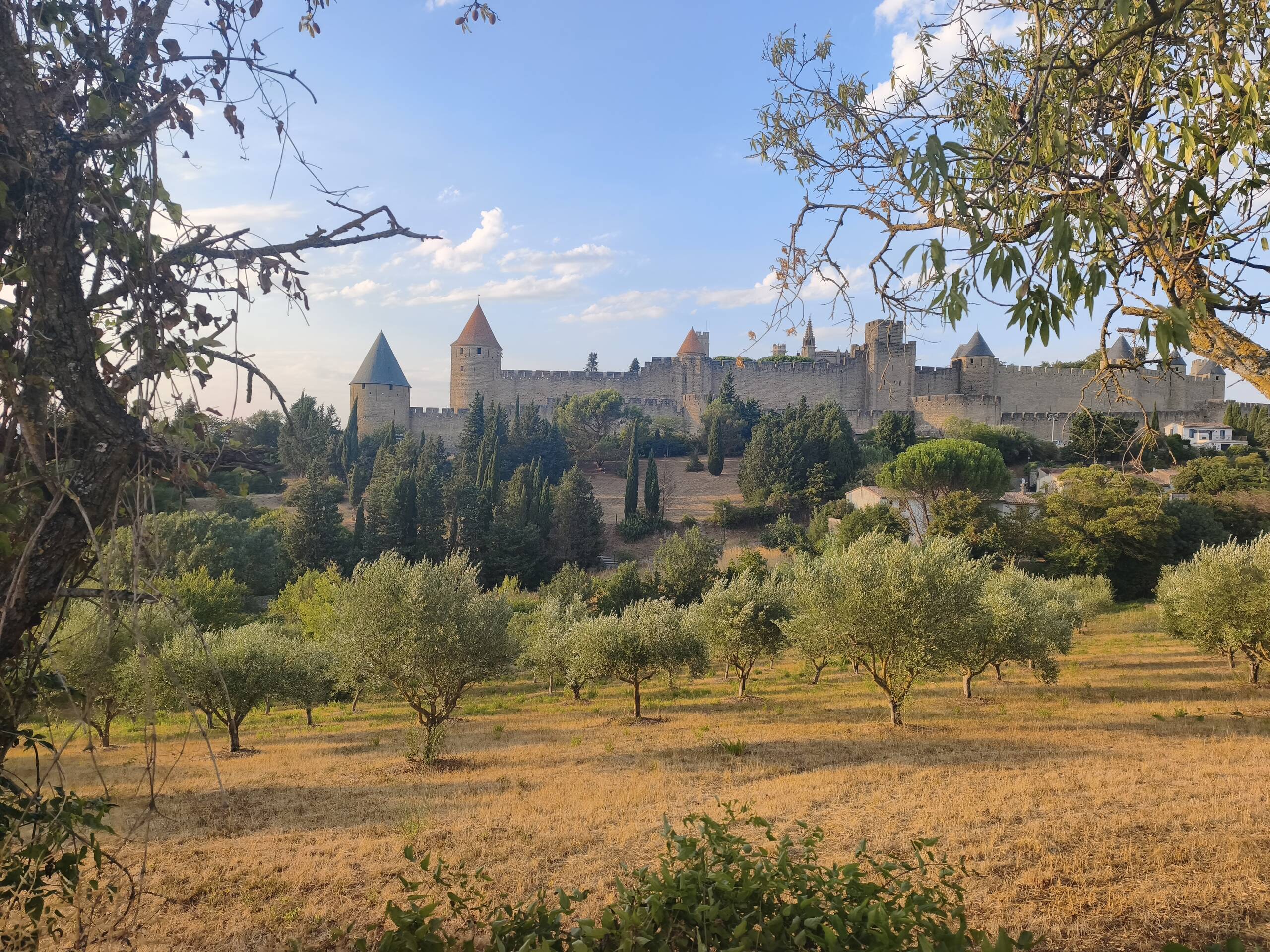
From there I followed the Canal du Midi, which connects the Atlantic to the Mediterranean. The road turned to gravel for the day, and by the time I reached Carcassonne after nearly 90 km of dirt, I was thoroughly rattled. The smooth asphalt in town felt like a gift, and so did the supermarket run and a milkshake with a view of the town’s huge castle, which I checked out briefly on my way through.
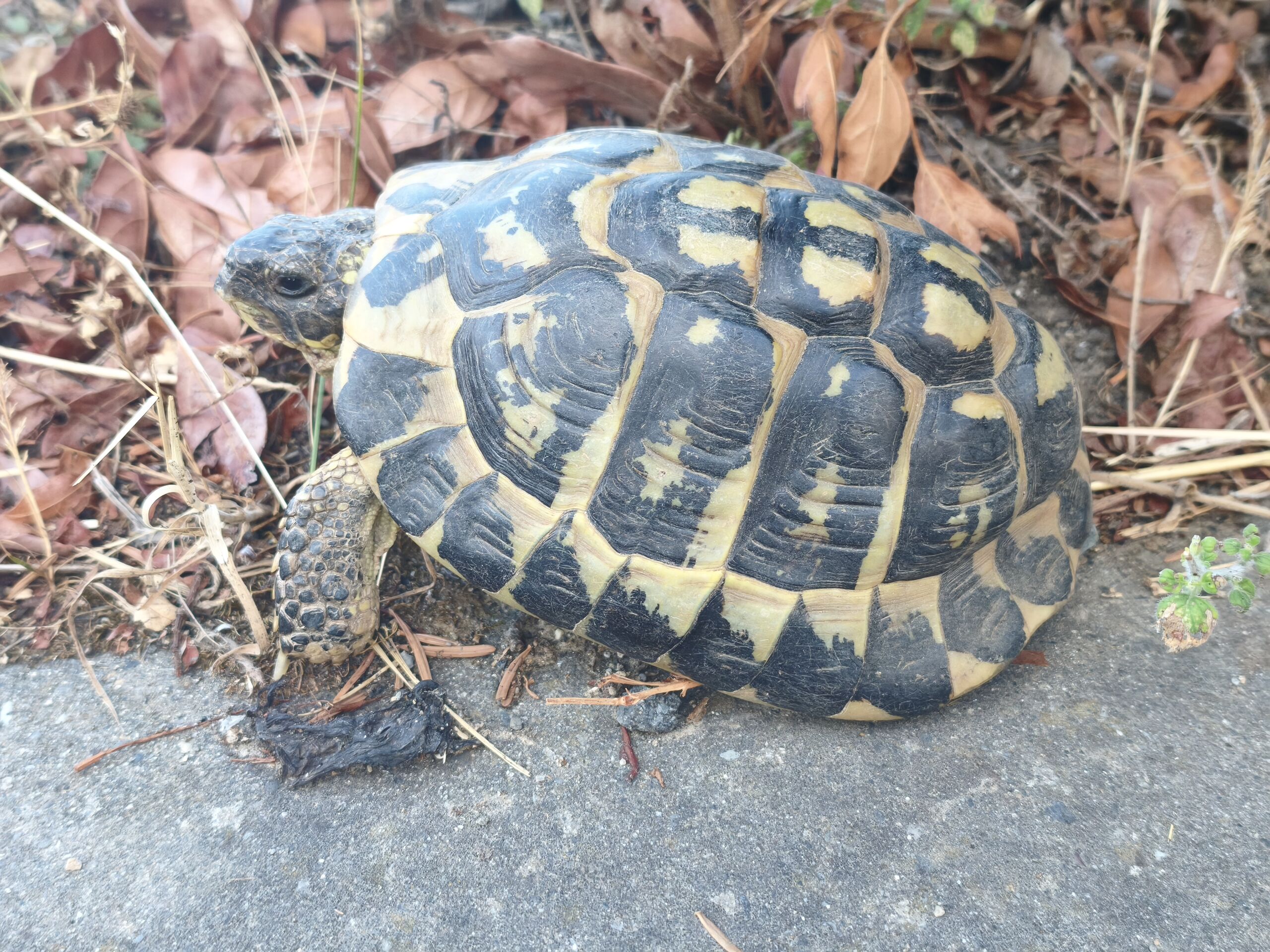
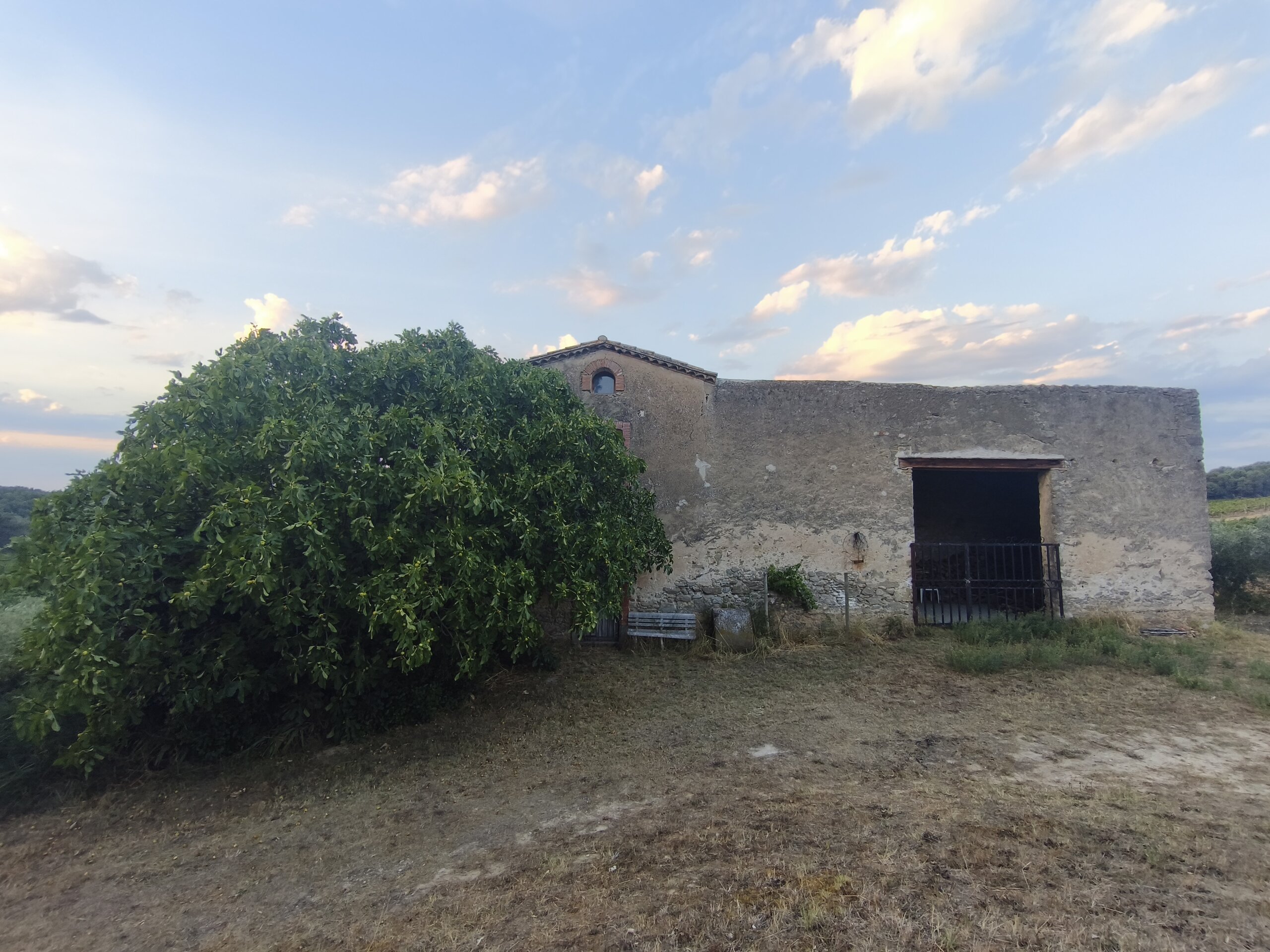
A few kilometers before my sleeping spot for the night, I had my heroic moment (or at least it felt that way). I spotted a turtle crawling slowly across the road, right in the path of oncoming traffic, so I picked her up and carried her to the grass on the other side. She wasn’t thrilled about being airlifted, but she seemed to settle in fine once her feet touched grass again. I rode on, quietly proud that the universe now had one more happy turtle in it. That night I found an ideal spot: an old barn in the middle of a vineyard, next to a huge fig tree. Only later did I learn the nearby village of Pomas would be hit by a tornado about two weeks after I slept there, a rare event for France.
Climbing Into the Clouds (and Almost Into Handcuffs)
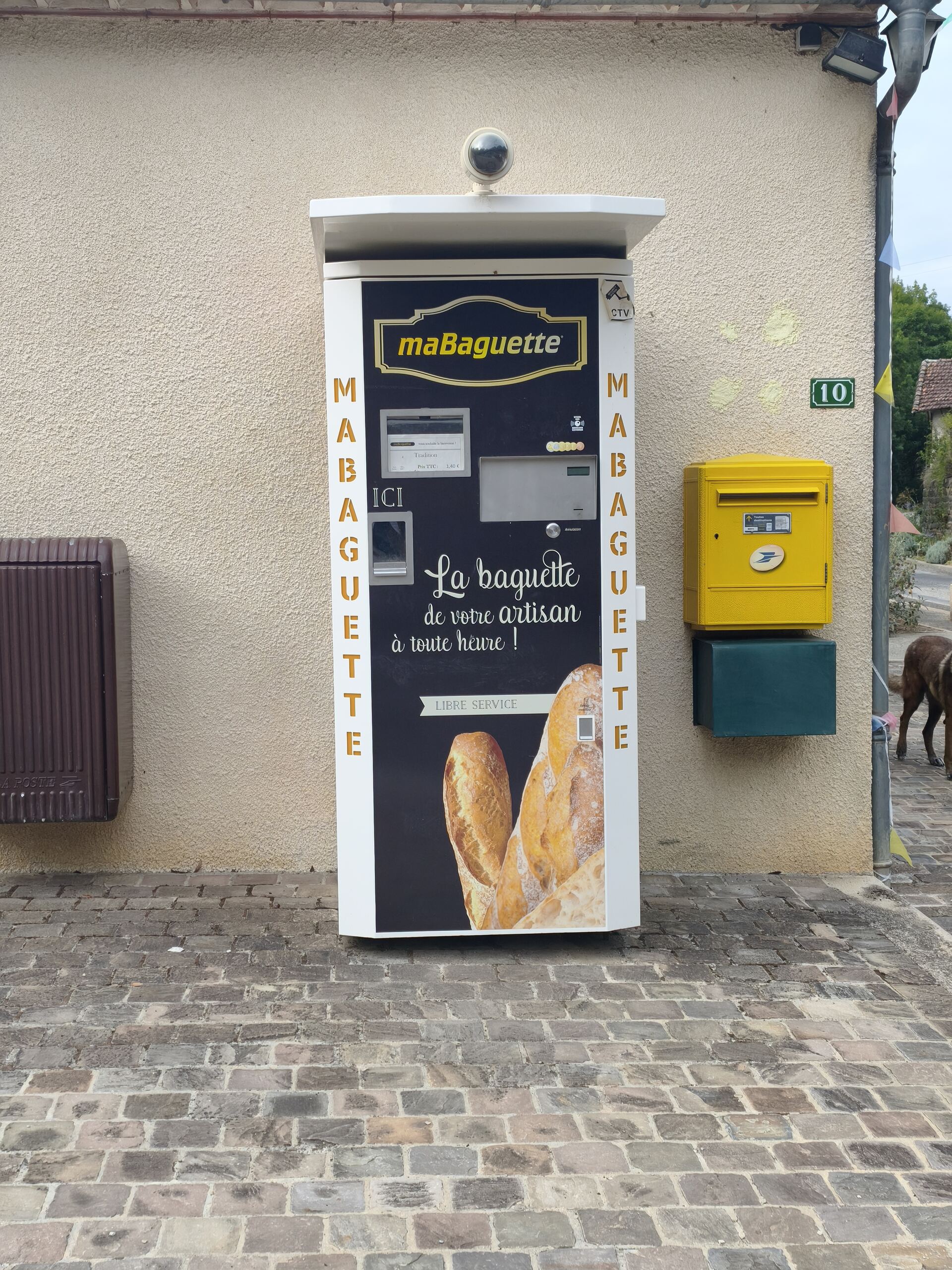
The next day I left the flats behind and started climbing into the Pyrenees. What began as gentle hills quickly grew steeper. The landscape changed too: even though I was still in France, I started noticing signs in Spanish and Catalan, and the countryside looked less and less familiar. The area felt remote, with villages growing sparse, but France remained France in one crucial way: I found baguette vending machines standing guard in the middle of nowhere.
The unpleasant surprise was that the village water fountains I’d been relying on were switched off to save water during the heatwave. Paradoxically, this was also the one section where I got properly drenched by rain.
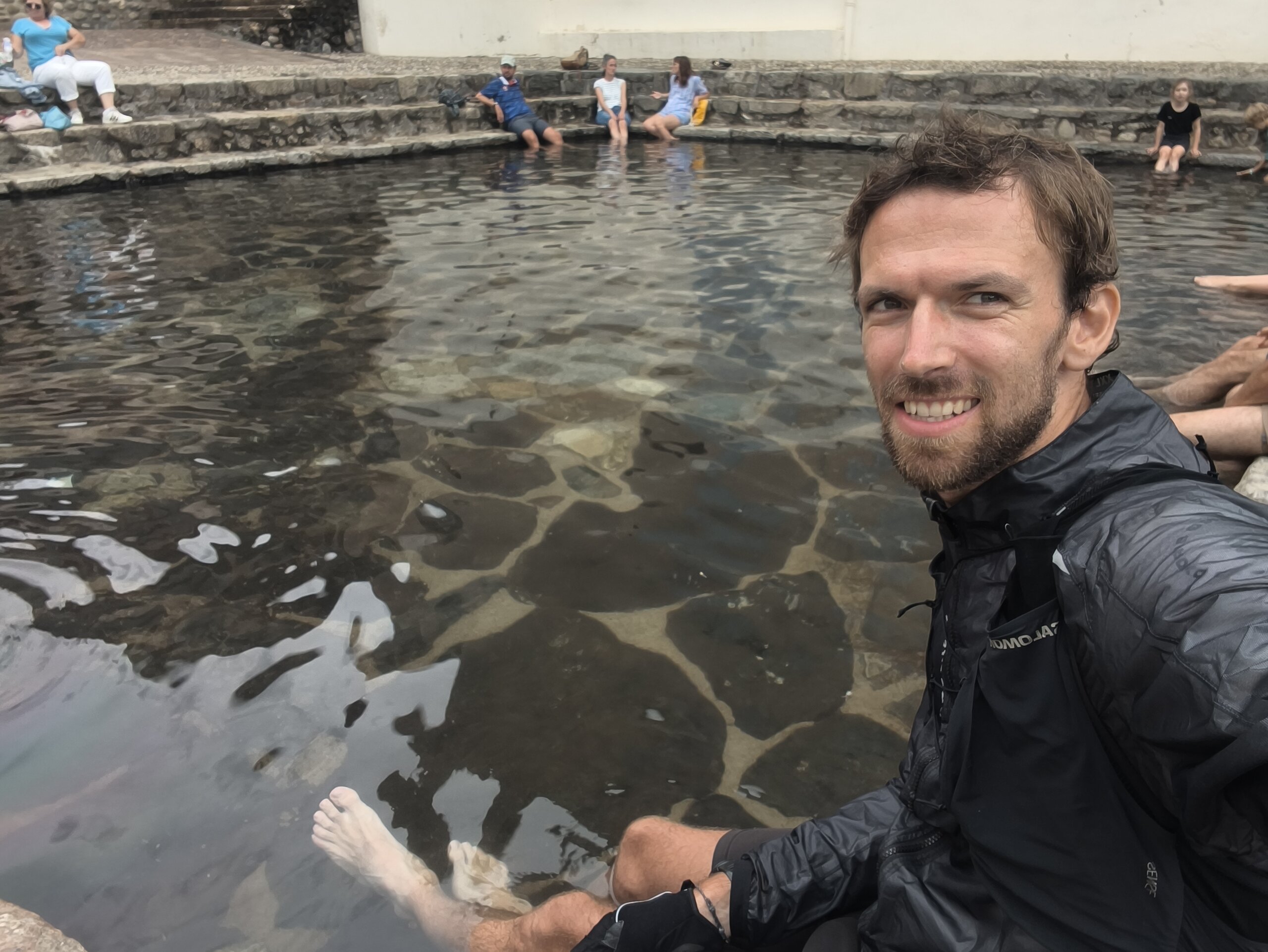
I climbed past a few 1,000-meter hills, but the real mountains were still ahead. In Ax-les-Thermes, where I arrived in a heavy rain, no restaurant was serving food in the middle of the day, so lunch became two tiramisus and a slice of pizza to go. On my way out of town, I found a public hot-spring pool sitting right in the middle of the street. With 1,300 meters of climbing to Andorra ahead of me and only about three hours before sunset, I could only spare a few minutes, but I took them anyway, soaking with strangers in the hot water and the rain.
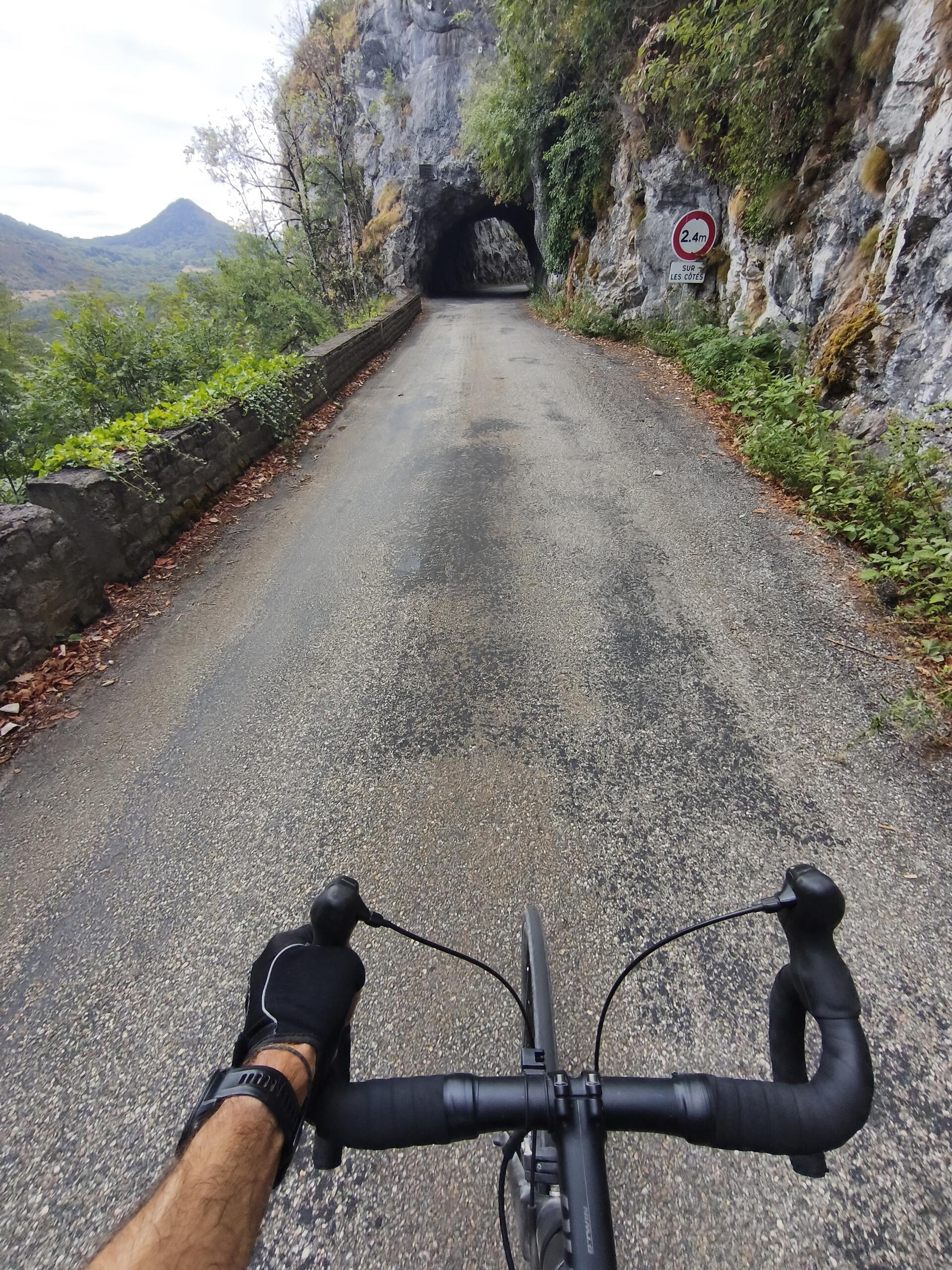
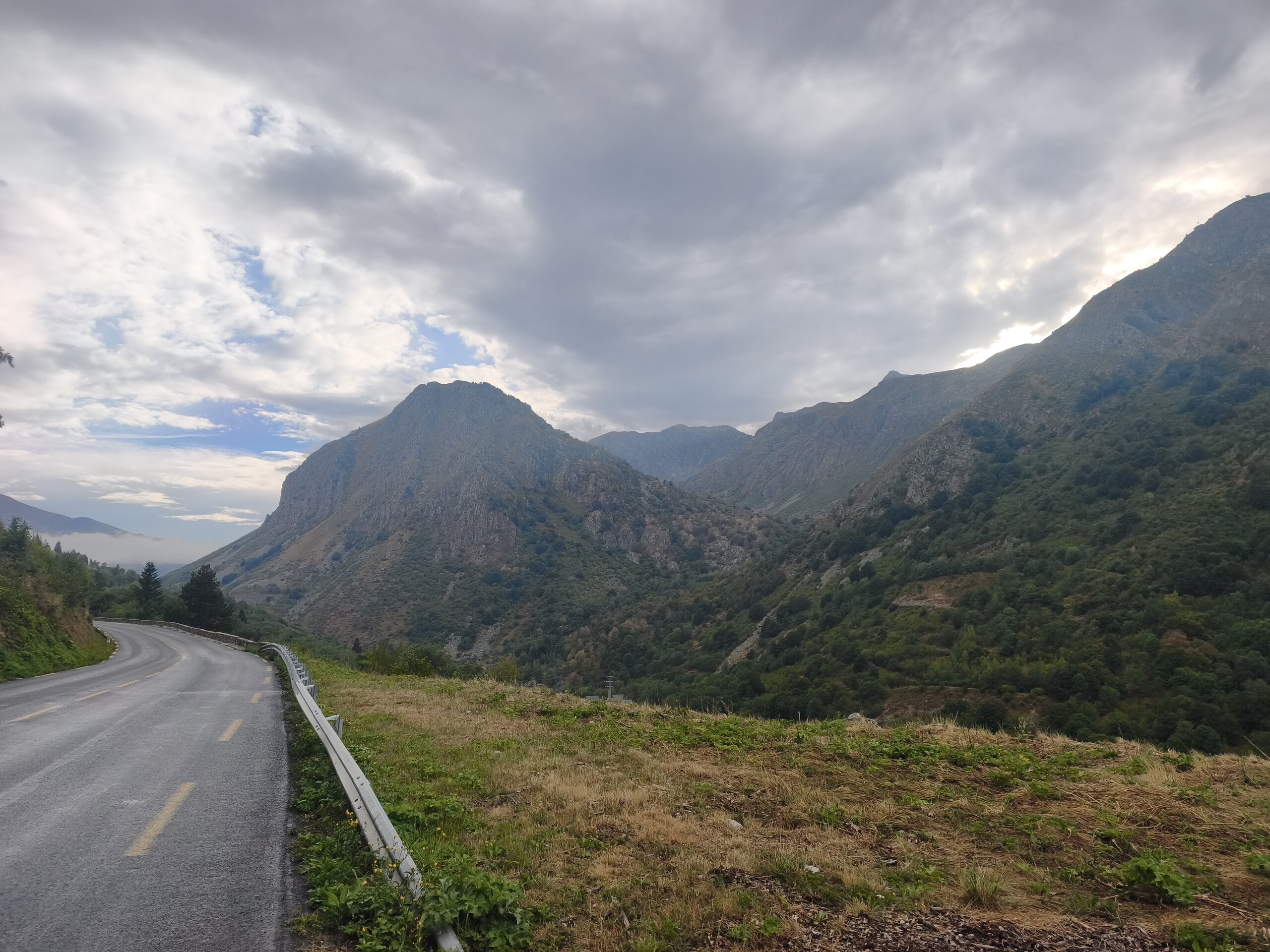
The climb into Andorra started on a busy road with no real alternative. A few drivers honked at me, and I couldn’t tell if it was encouragement or annoyance, but either way I was glad to eventually leave that stretch behind. The road kept shapeshifting: a 50 km/h village street suddenly widened into a one-kilometer, three-lane speedway with a 90 km/h limit, only to shrink back down to 30 km/h moments later. As I climbed higher, traffic thinned out and Pas de la Casa, and the Andorra border, finally came into view.
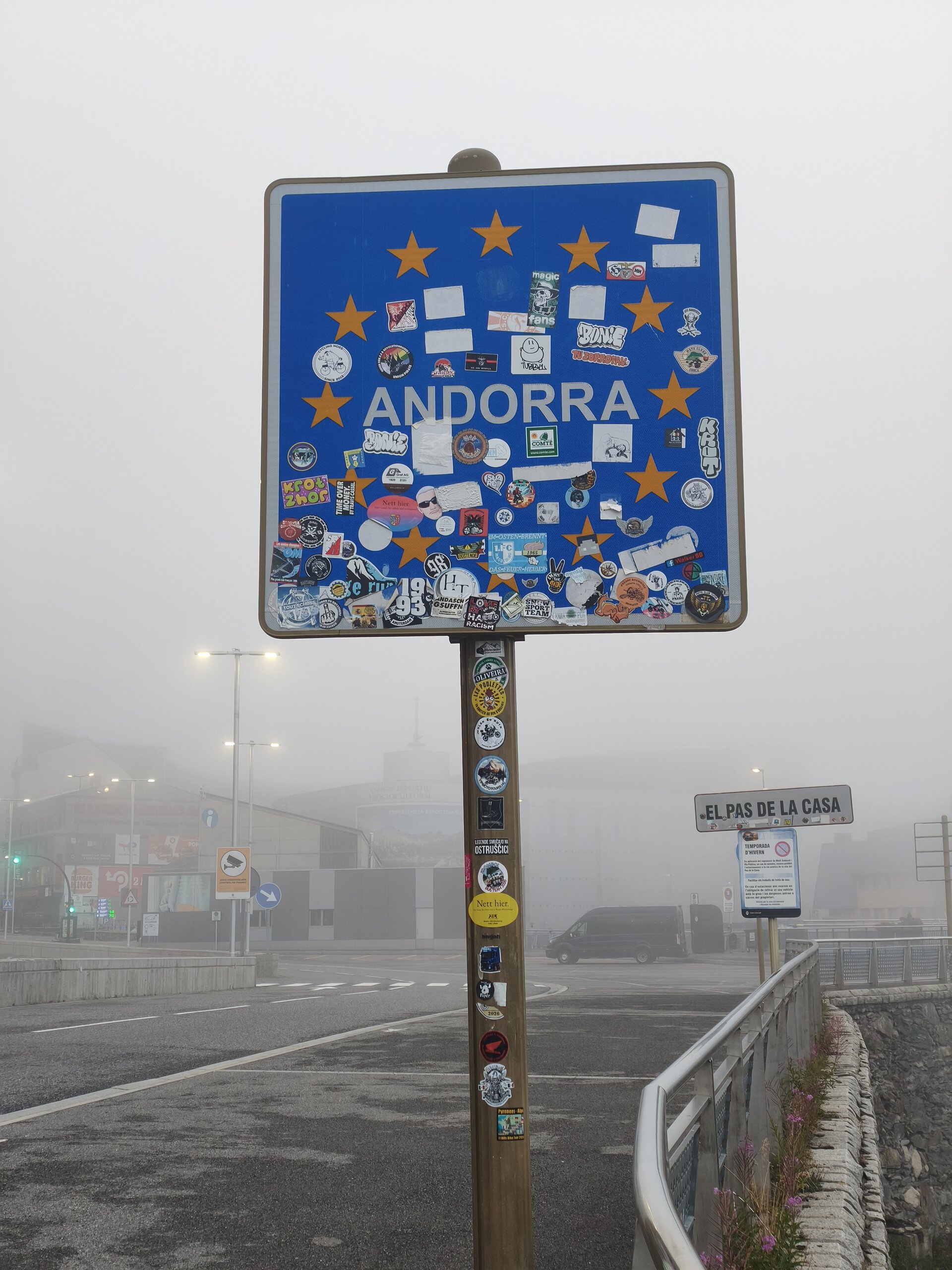
By the time I reached the border, the road was empty and swallowed in fog thick enough that I switched on my rear light to stay visible. With barely any cars around, I risked a few photos while pedaling uphill. Naturally, the one car that did pass turned out to be the police, and they weren’t thrilled to catch me holding my phone while cycling. Luckily, a suitably guilty expression was apparently enough to convince them to let me go.
I found a place to stay right at the Andorra border, had a quick dinner, and went to bed. That evening I discovered my rusty Spanish was more useful than expected, successfully negotiating with the hotel staff (who didn’t speak English) to bring my bike into the room. Small win, but a win nonetheless.
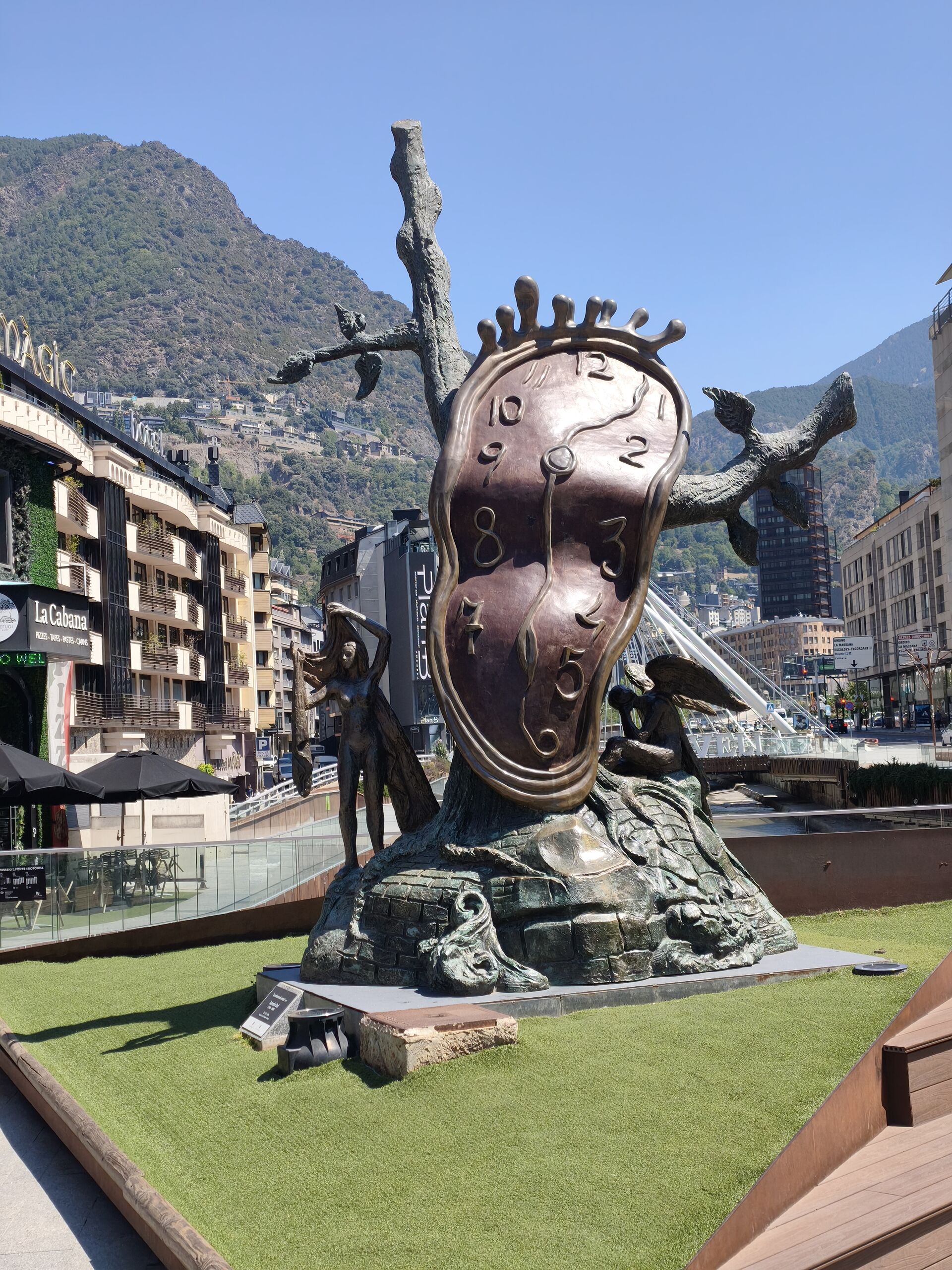
The next morning gave me a proper look at the place, and it felt like walking into an amusement park built at 2,000 meters. Mountains all around, sure, but also fast food chains, karting tracks, and shop after shop after shop. That impression never really left me for the rest of Andorra: even sticking to the main road, it felt less like the Pyrenees and more like a shopping mall for wealthy tourists.
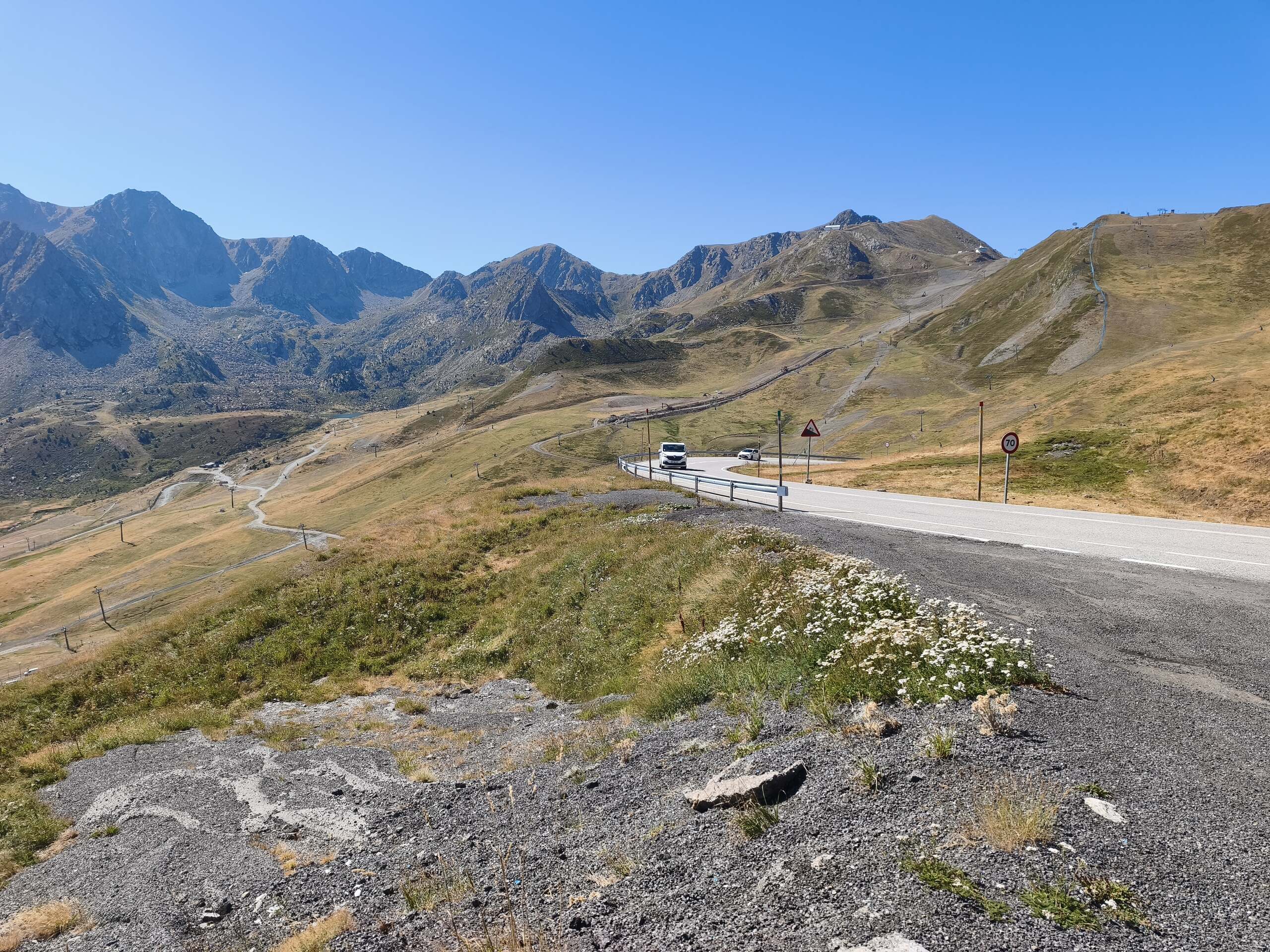
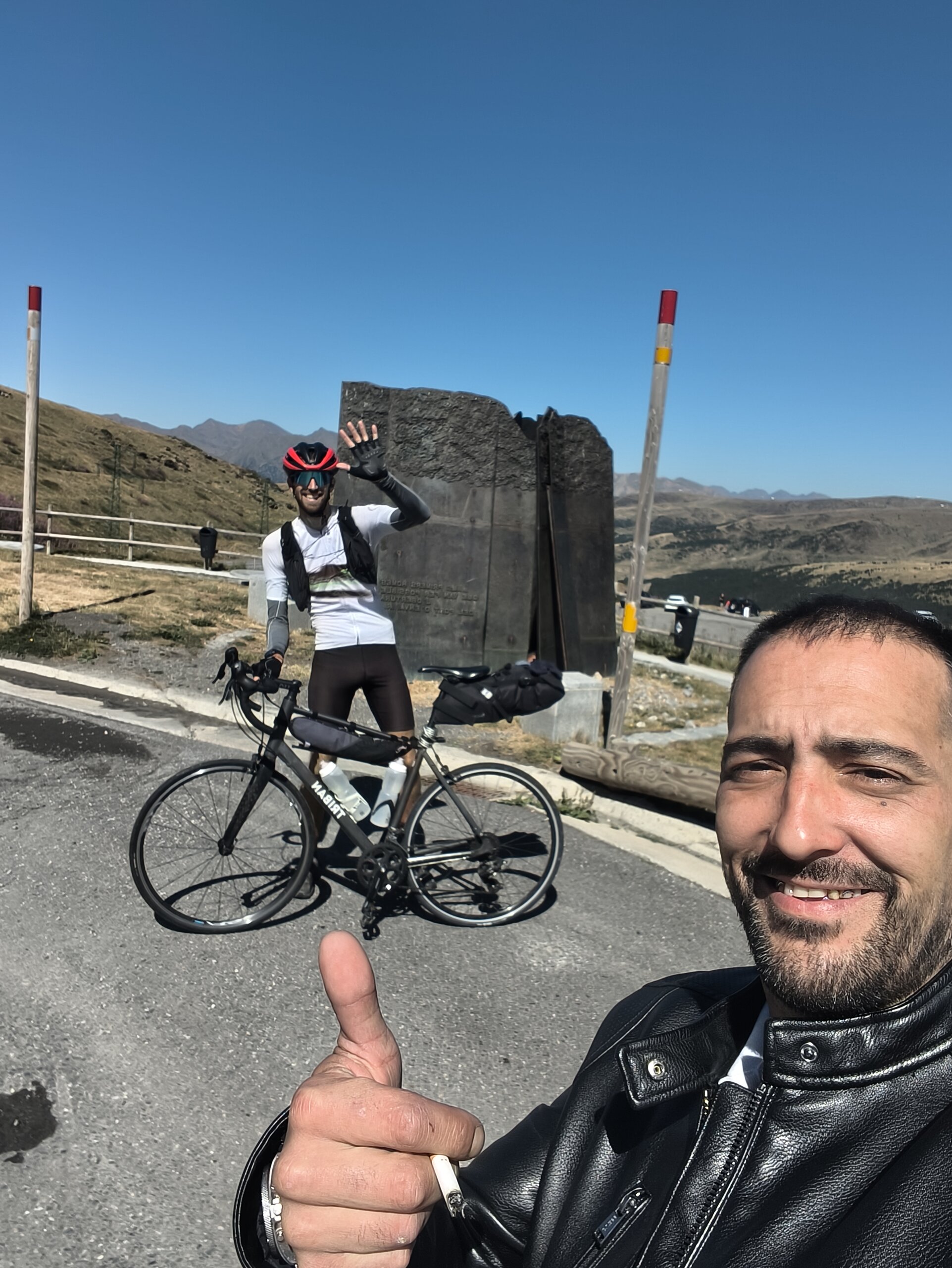
I crossed the highest point of my whole route at Port d’Envalira (2,408 meters) and coasted downhill all the way to Andorra la Vella, the capital, passing plenty of fellow cyclists along the way. The city itself seemed to be one long shopping street, though I wasn’t complaining. It made finding a good lunch easy.
I crossed the border into Spain sooner than expected and dropped down into a scorching mountain valley. The first thing I noticed was how differently Spanish drivers treated cyclists: patient overtakes, safe distances, no unnecessary risks. It made French drivers look bad by comparison. Back in France, drivers often seemed to be trying to be considerate, but their nervous, unpredictable maneuvers ended up creating more dangerous situations than if they’d just driven normally.
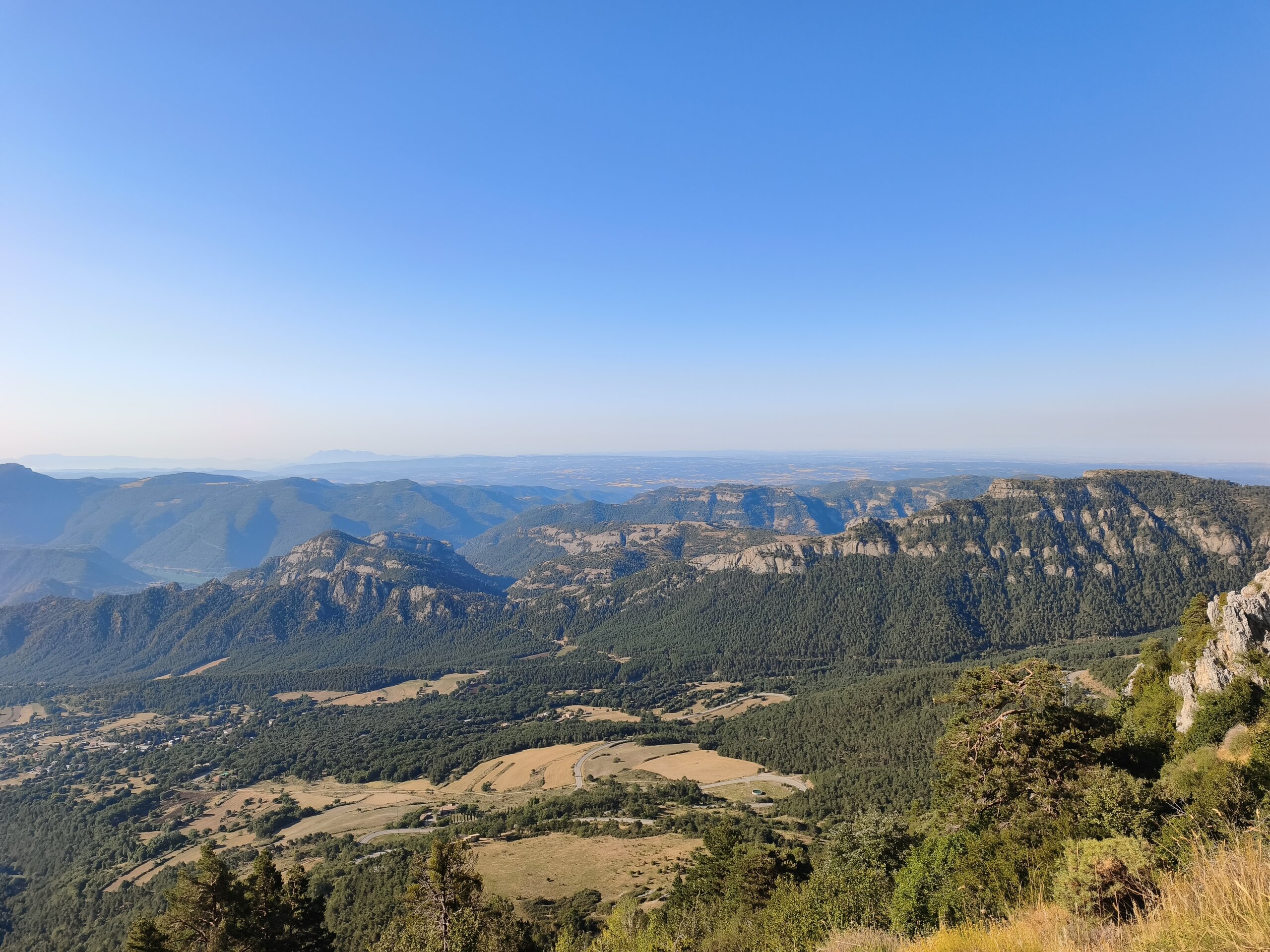
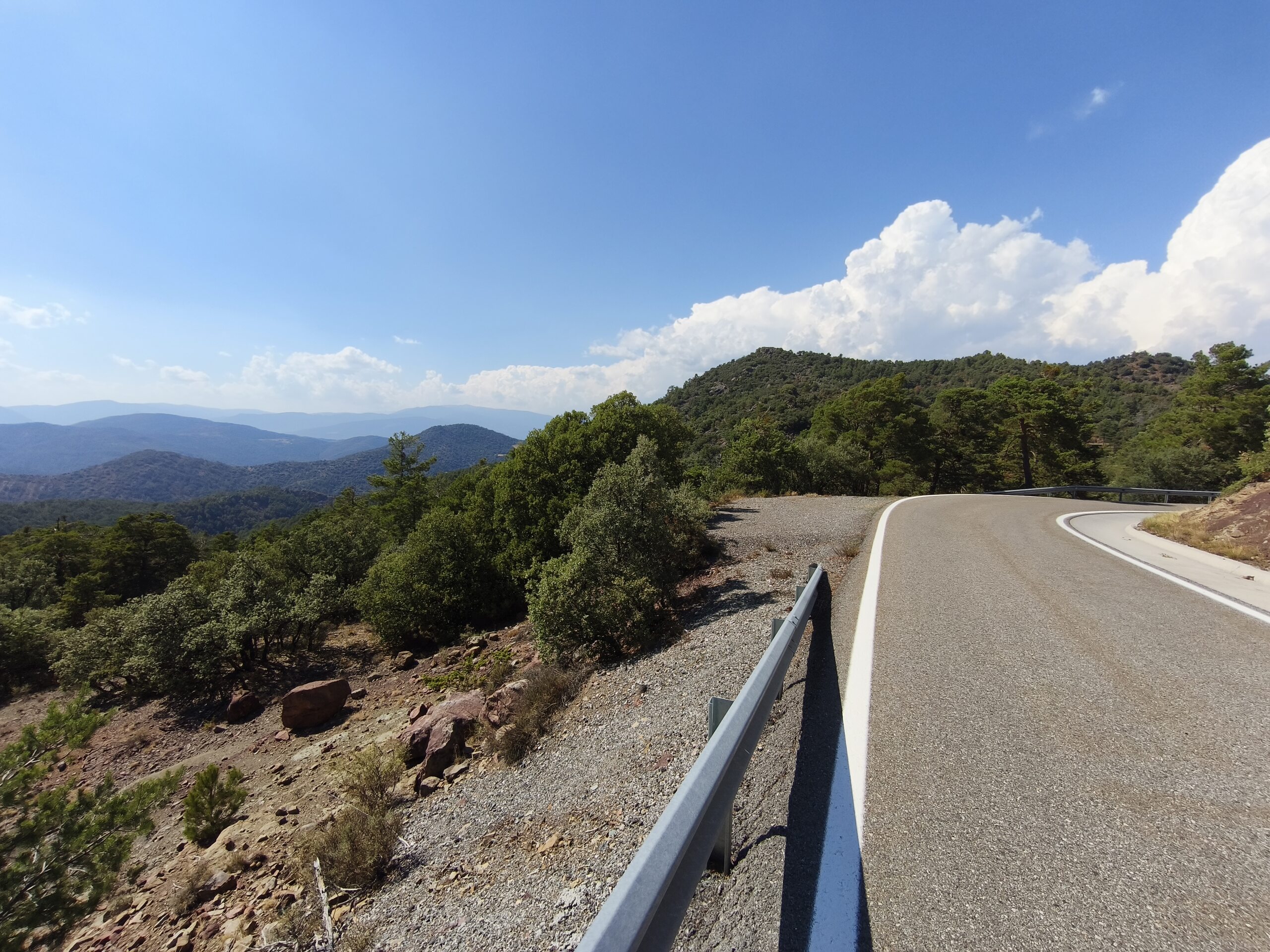
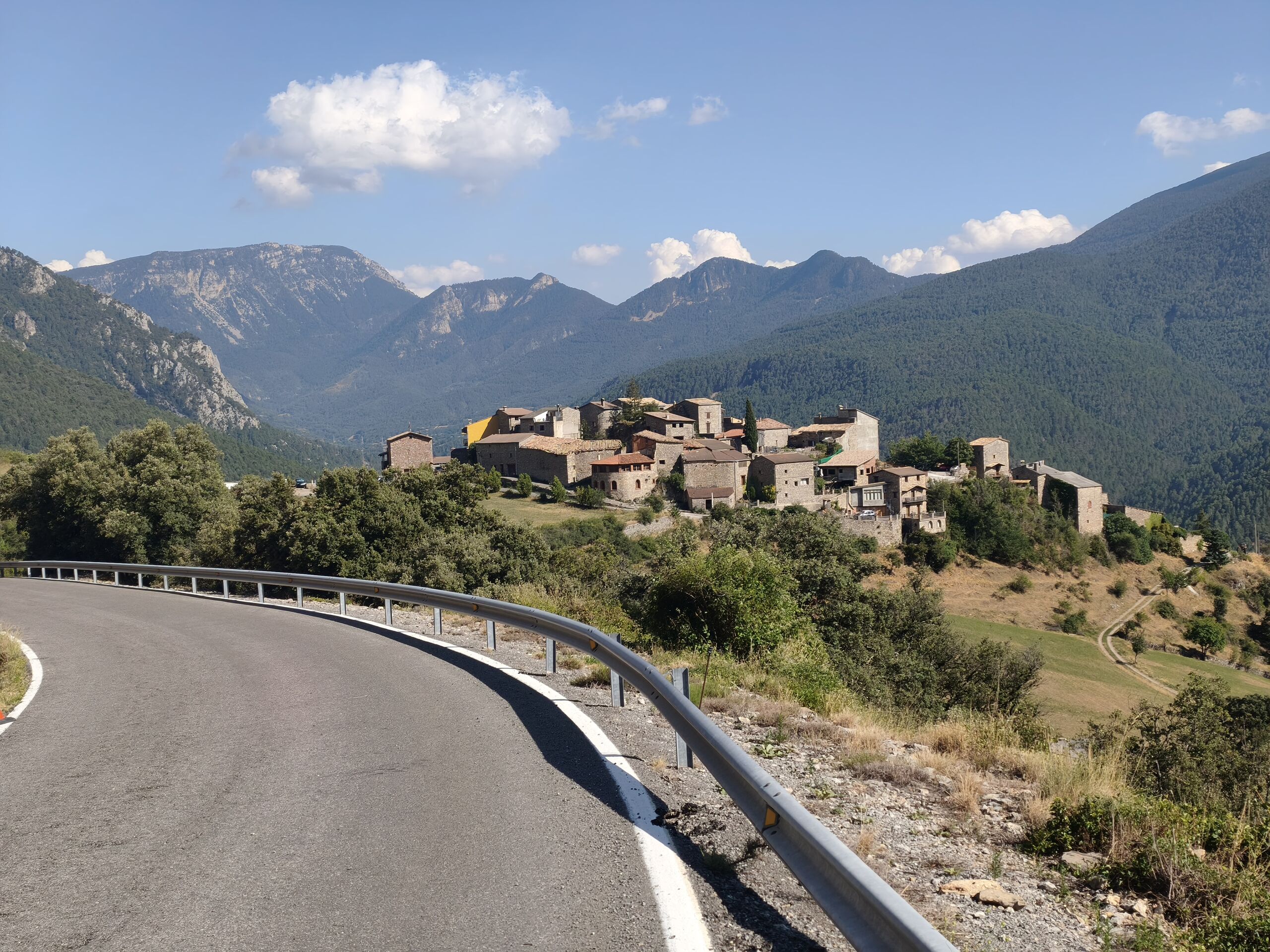
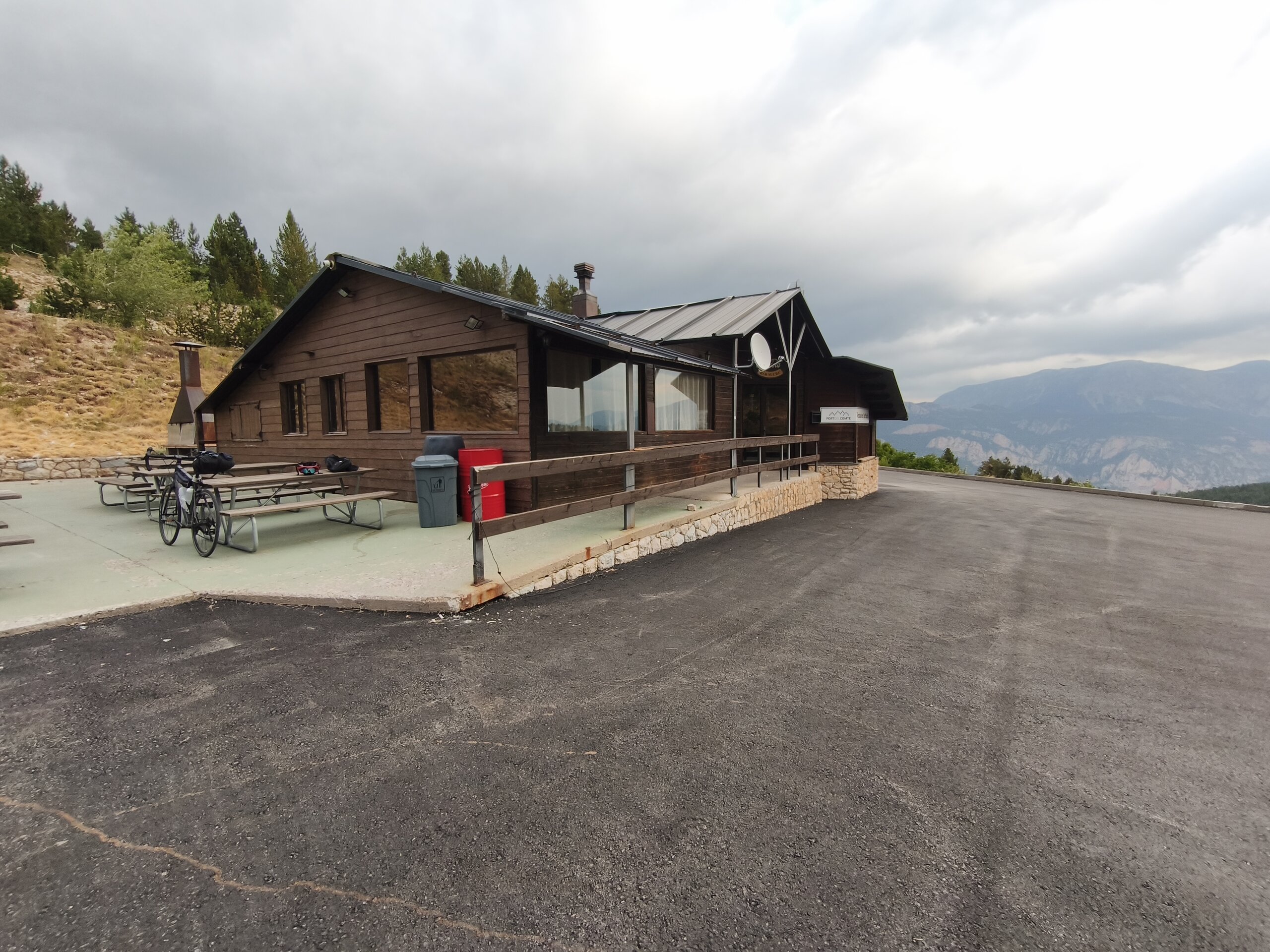
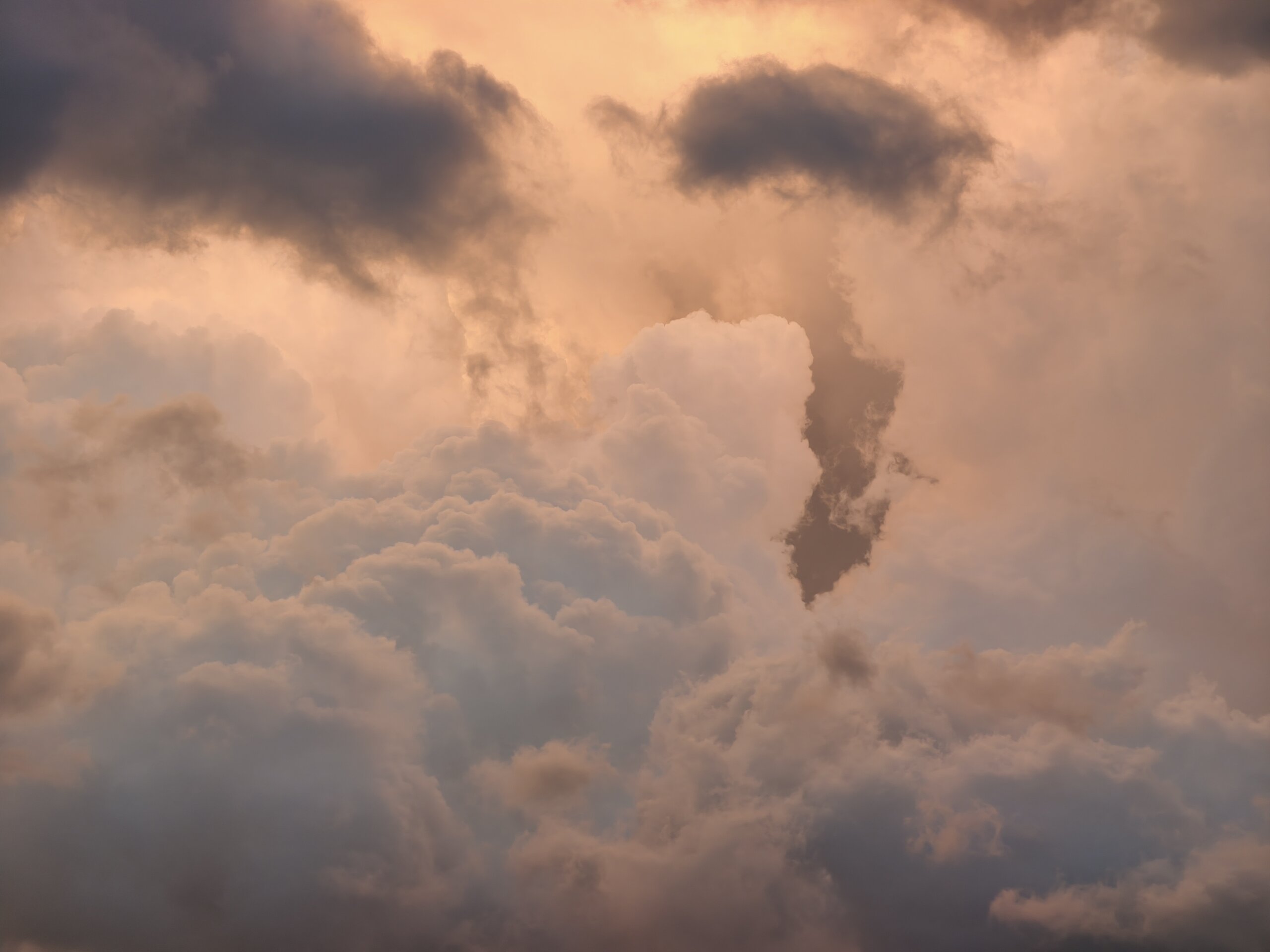
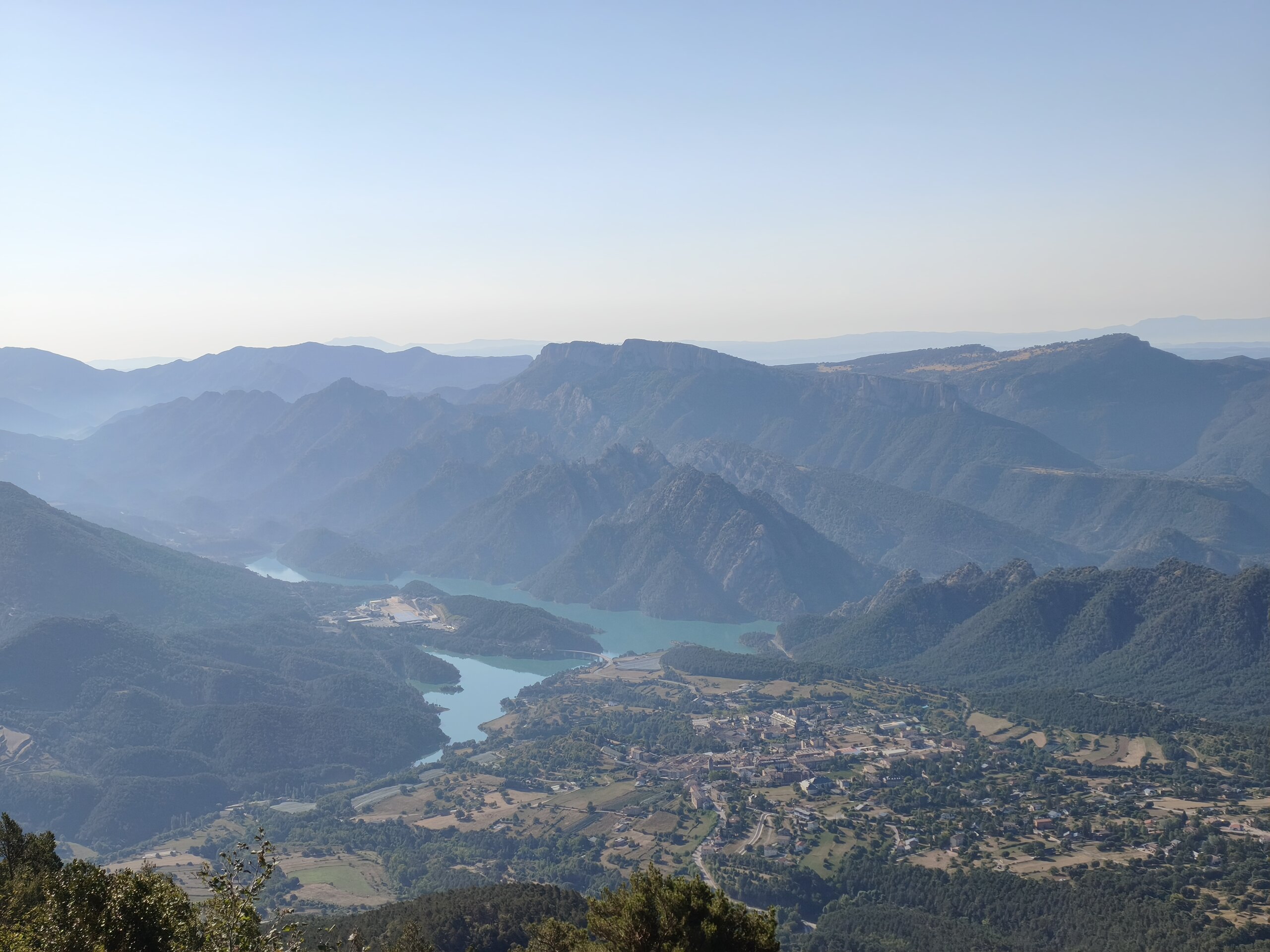
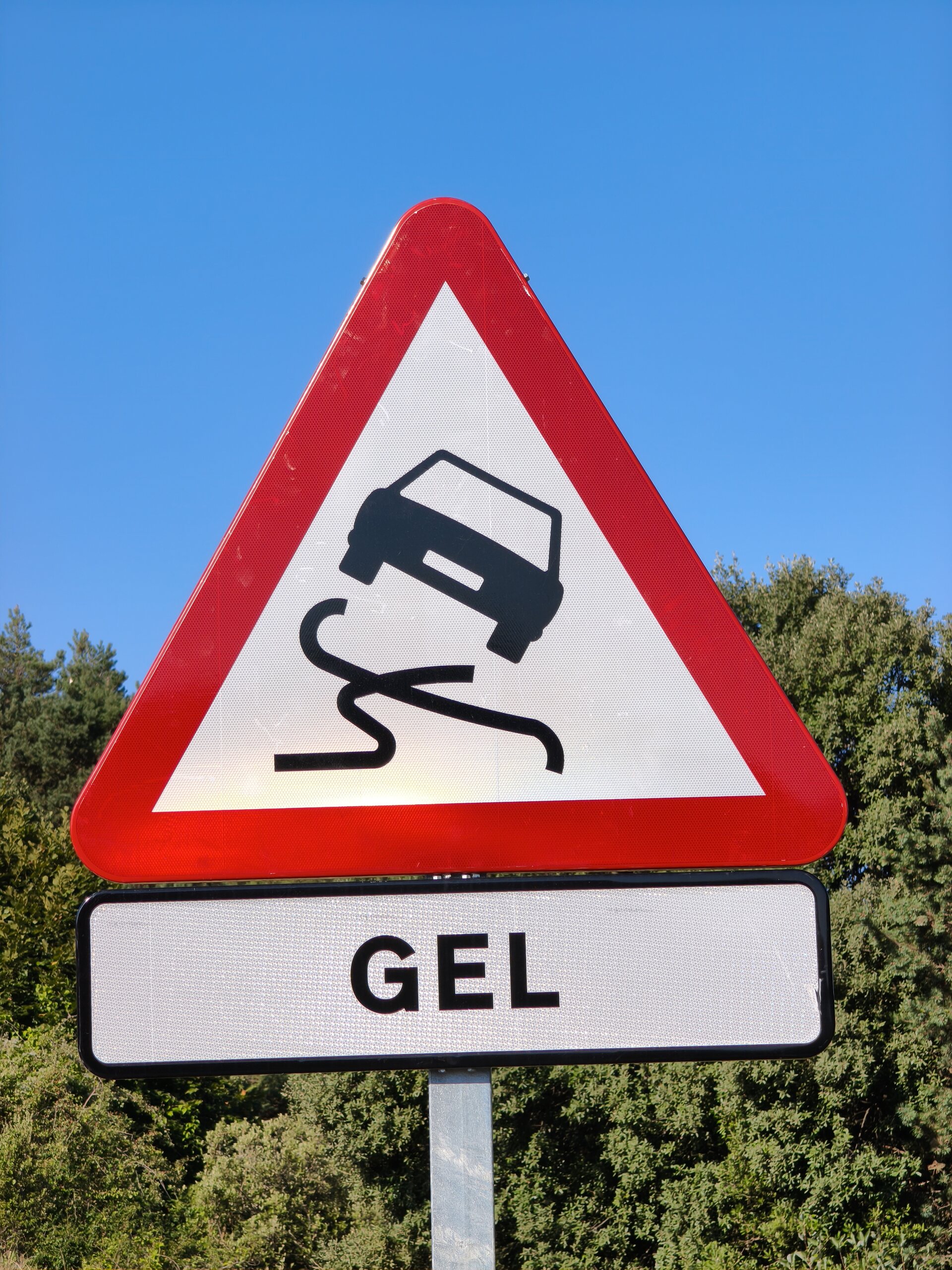
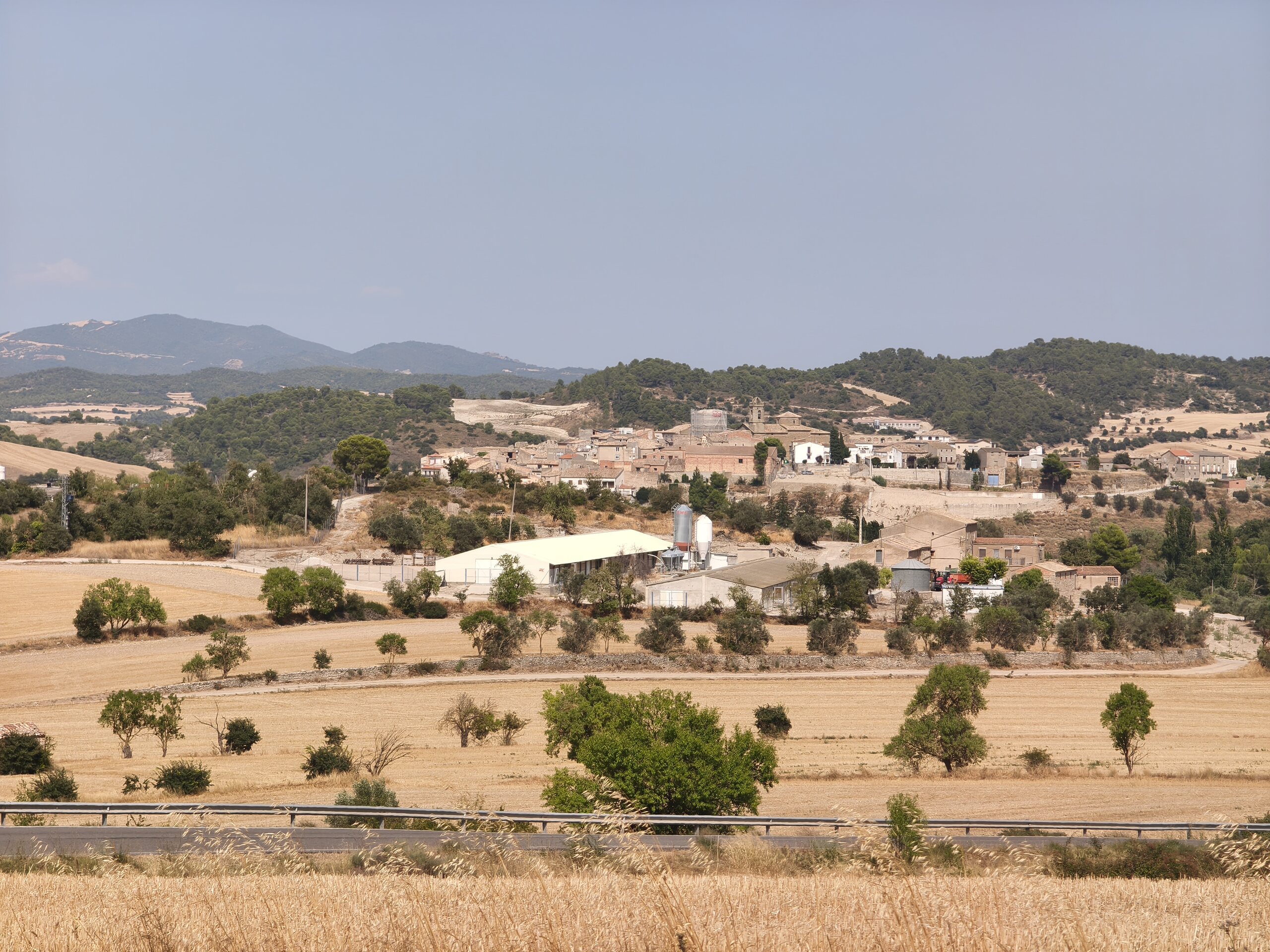
I left the busy road connecting Spain and Andorra at La Seu d’Urgell and began climbing out of the valley into the mountains. The hundred kilometers that followed, up to Solsona, turned into one of my favorite stretches of the whole trip: perfect asphalt, almost no traffic, long climbs, and gorgeous views. I rode through small Catalan villages where time seemed to have simply stopped. Near the end of the day, I found shelter for the night on the porch of a small kiosk near Port del Comte, at the foot of a ski slope. That night came with its own light show: a huge thunderstorm rolled through nearby while my hilltop stayed clear, letting me watch the whole thing from a safe front-row seat.
The Suffer Fest Before the Sea
The next two days were a true test of my heat tolerance. No swimming spots to cool off, barely any shade, and dry land stretching in every direction. What kept my spirits up was the scenery, the still-perfect roads, and how few cars I had to share them with. I celebrated hitting 1,000 km with a puncture, which I fixed in the middle of a field with the sun sitting almost directly overhead.
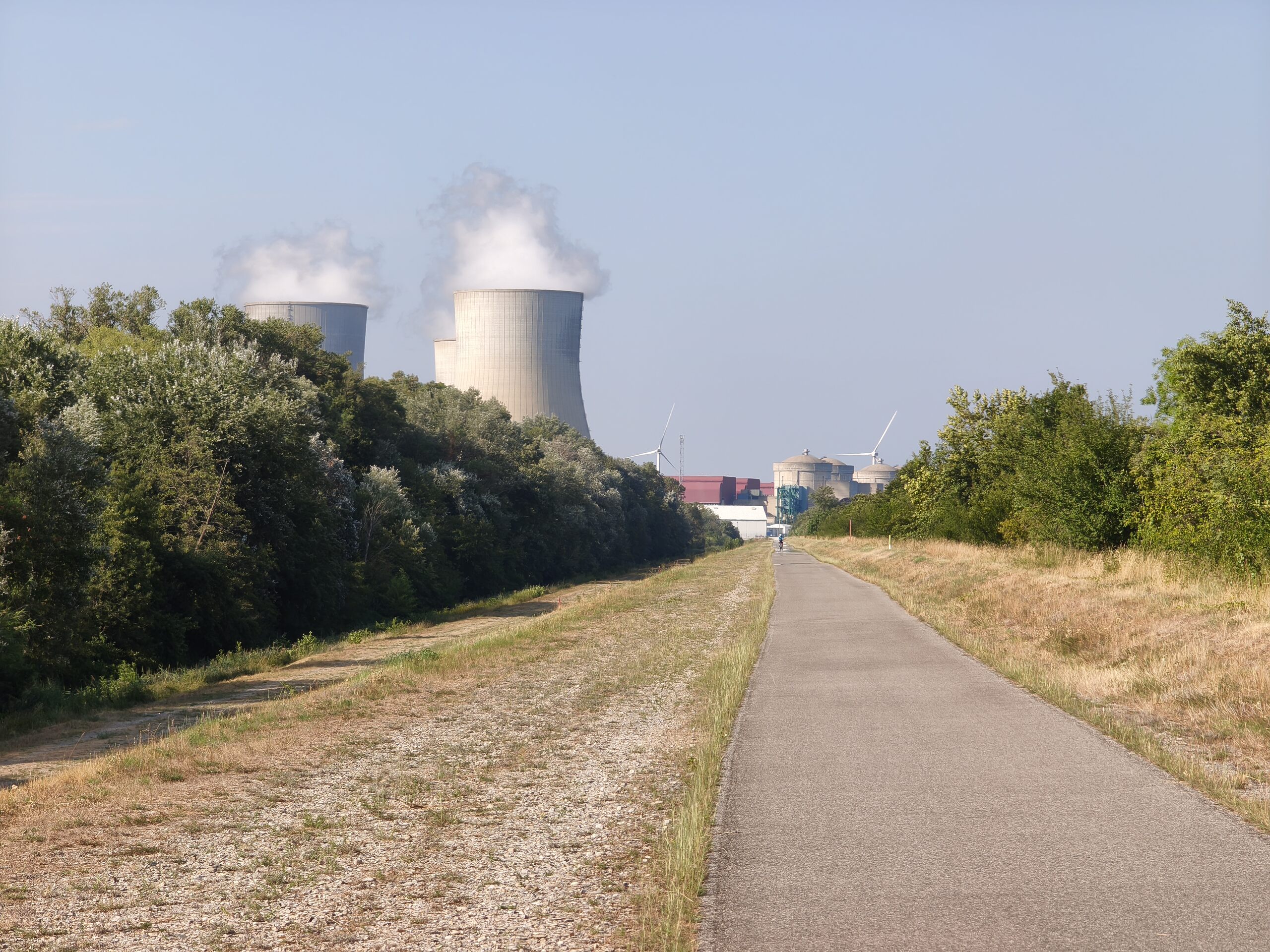
The landscape grew less monotonous as I approached the Ebro River, though the heat made even easy cycling feel like a genuine suffer fest. In Flix, a small town right on the river, I’d hoped for a proper restaurant break, but nothing had its kitchen open at 2 p.m., so lunch became supermarket food eaten in a melting town square. I wanted to keep going that day, but the heat left me weak and slightly sick, so I called it early in Ascó. I slept under a roof behind the football stadium, right next to what I only realized the next morning was a nuclear power plant.
From the bottom of the Ebro valley, I climbed toward Gandesa, a town surrounded by vineyards and wind turbines. The terrain turned hilly again, and a few kilometers before Tortosa (which I’d nicknamed “Tortuga” in my head), the horizon finally flattened out. I knew I’d reach the coast that day, the same stretch of coast where Peñíscola, my eclipse-viewing spot, was waiting for me, two days ahead of schedule.
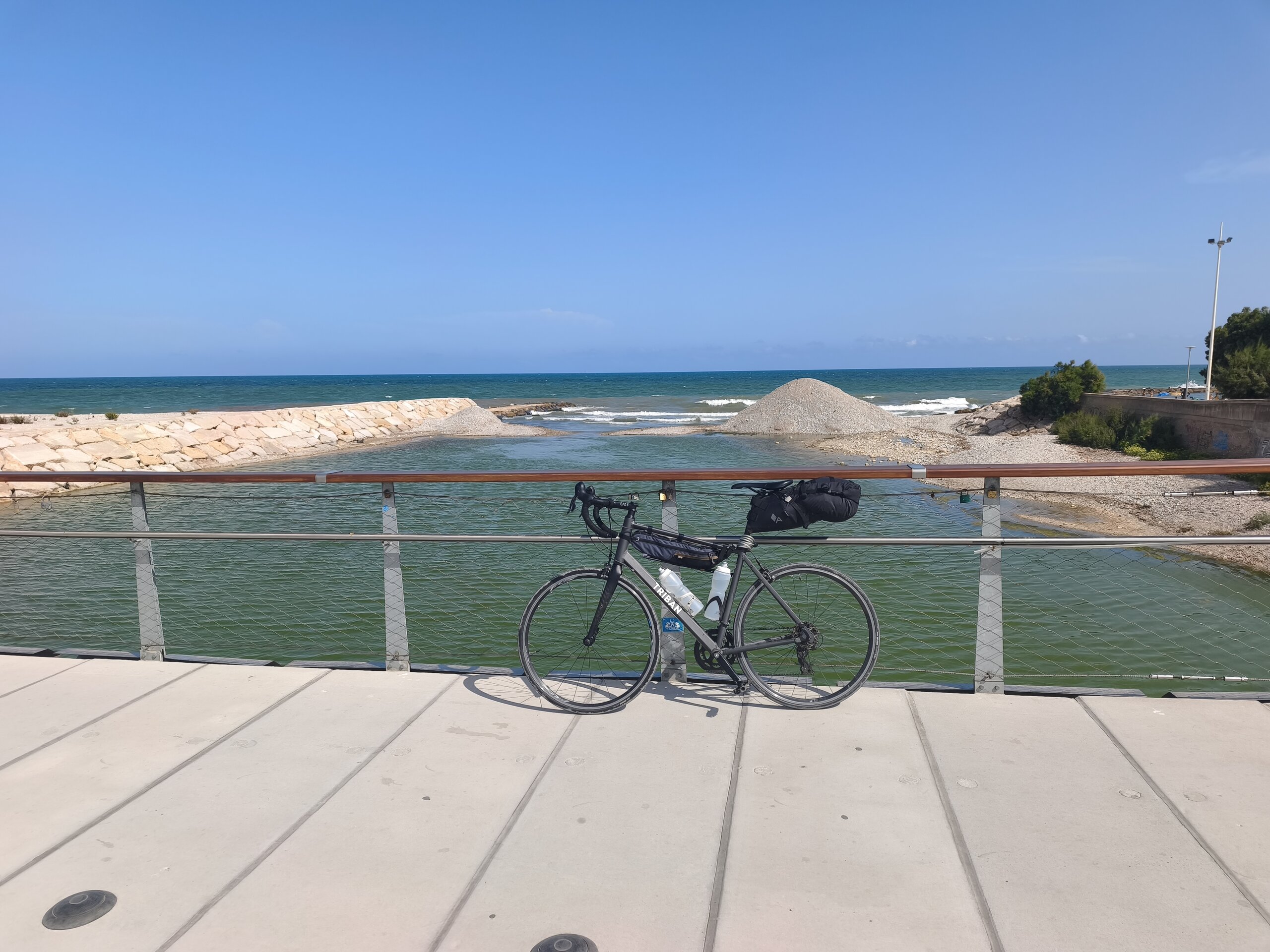
Despite the heat, the road surface was excellent and I felt like I was flying. Just how brutal that heat really was got confirmed when a shopkeeper from Pakistan told me he couldn’t understand how I was managing to cycle in it. A few hours later I reached the coast at Vinaròs, about fifteen kilometers from my final destination: nearly 1,300 km in 10 days, with a two-day cushion to spare.
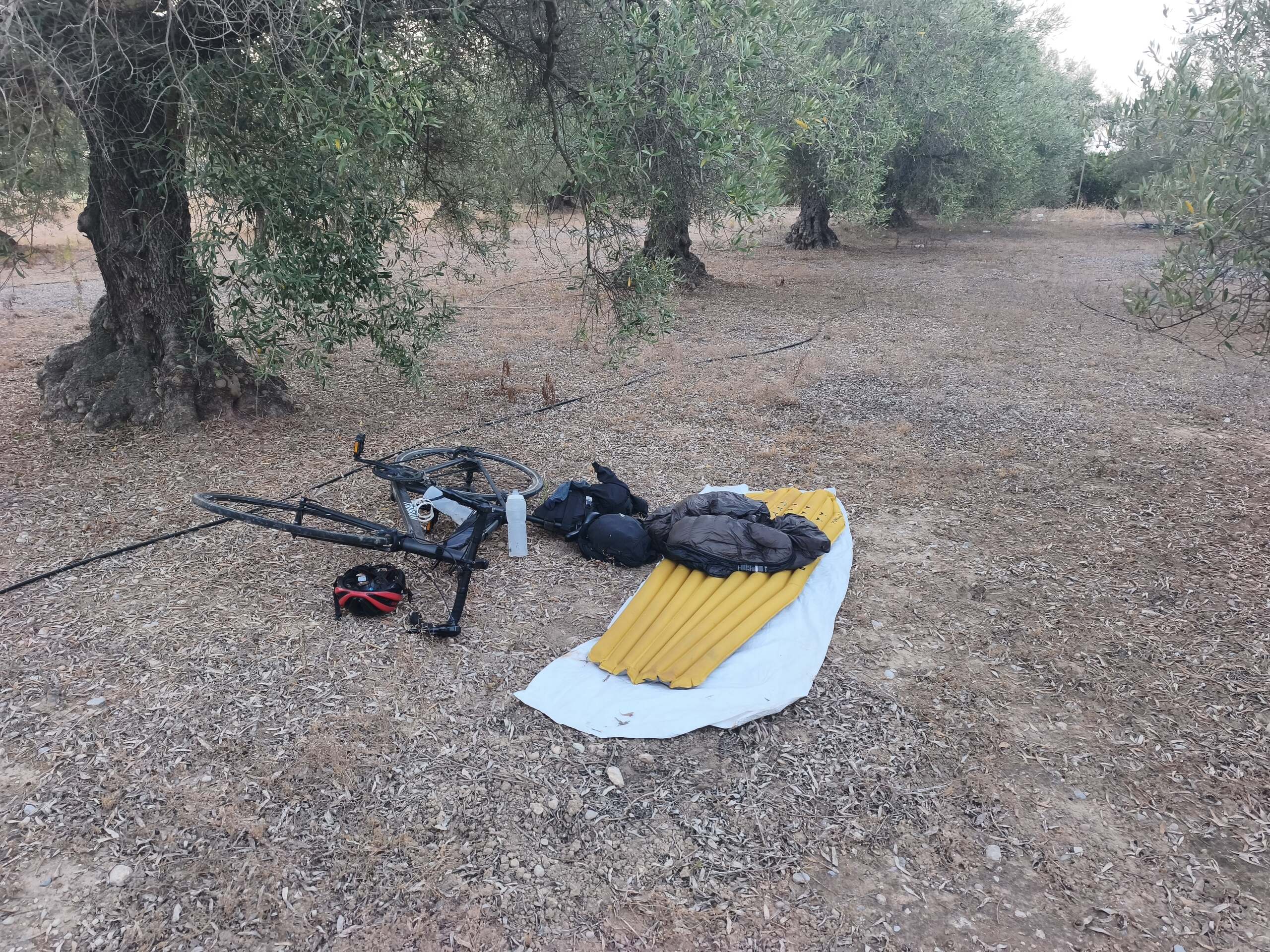
Now the plan was not to look too much like a homeless while relaxing on the beach and waiting for the eclipse. When I saw all the tourists with nice clothes at the beach resorts, I felt a bit inappropriate going around in smelly jersey and laying on the beach on tyvek instead of a proper towel. To make this feeling even stronger, I decided not to pay for any accommodation and I secretly slept these two nights in orange and olive orchards next to the town. The idea of sleeping there was great. The only flaw was that I could hear wild boars going around every night and in the orange orchard this was particularly scary. I couldn’t see to neighbouring aisles because trees were dense, but I could hear boars grunting probably just a few meters from my sleeping spot.
The Eclipse
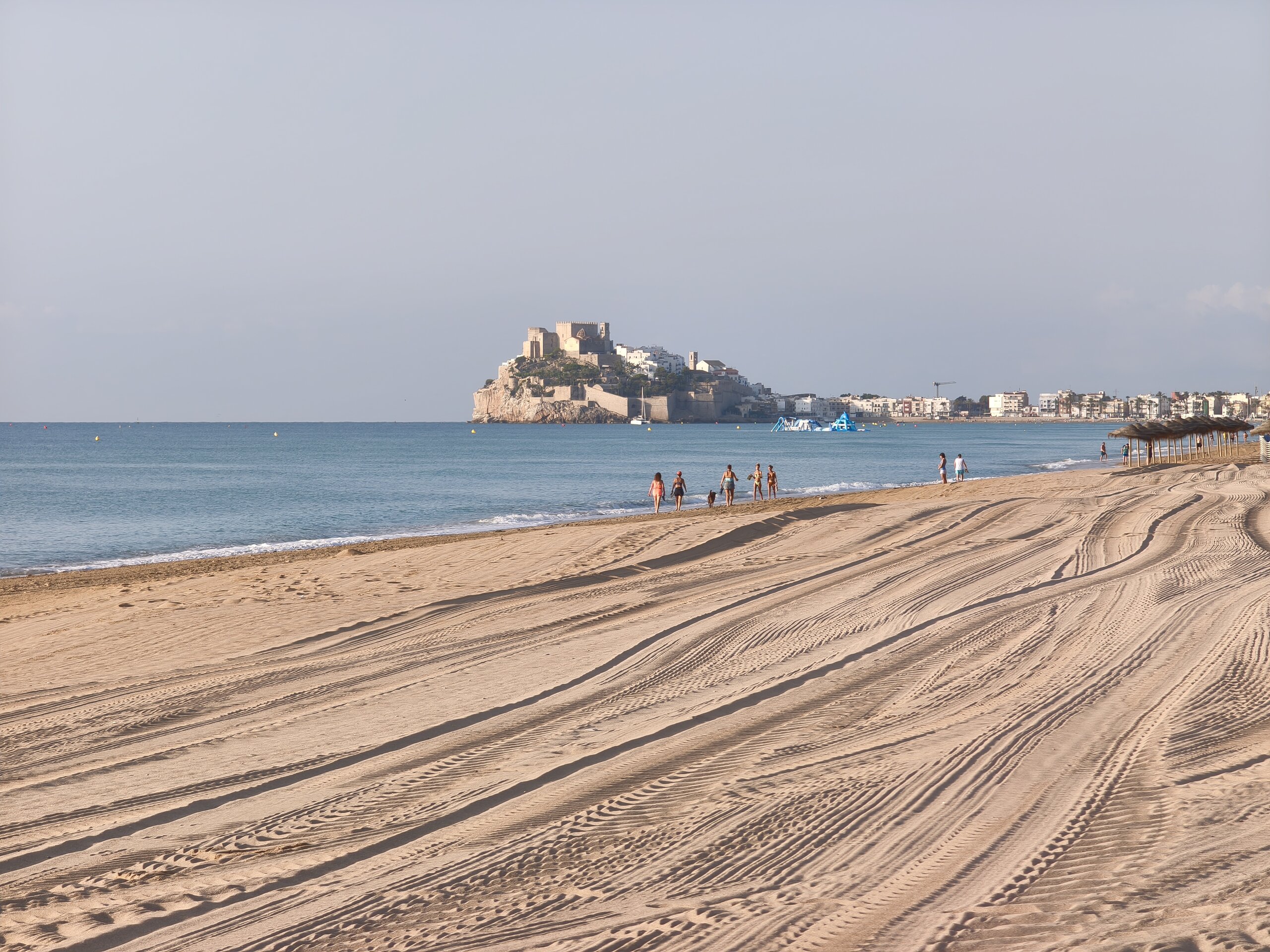
The big day arrived, and my plan was to cycle about 45 minutes to Peñíscola, where I’d be meeting my friend Laura (whom I met a year before in New Zealand) and her friends to watch the eclipse together. I got there early in the morning and had a nice sandy beach almost to myself, right under the old fortress, once home to antipope Benedict XIII (Papa Luna) during the Western Schism. By the afternoon, the beach was packed and the heat unbearable, so I waited it out until my friend with her friends arrived.
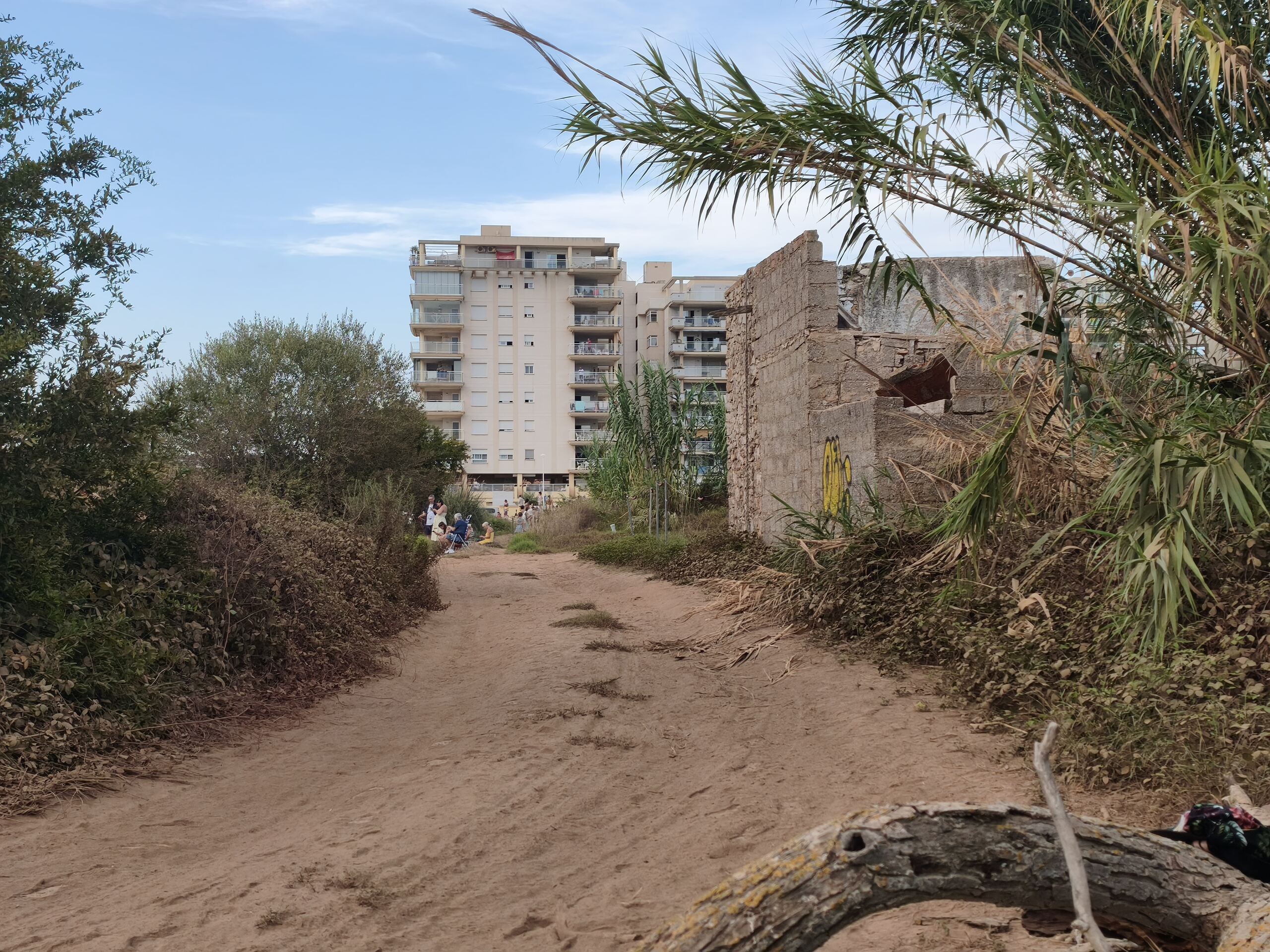
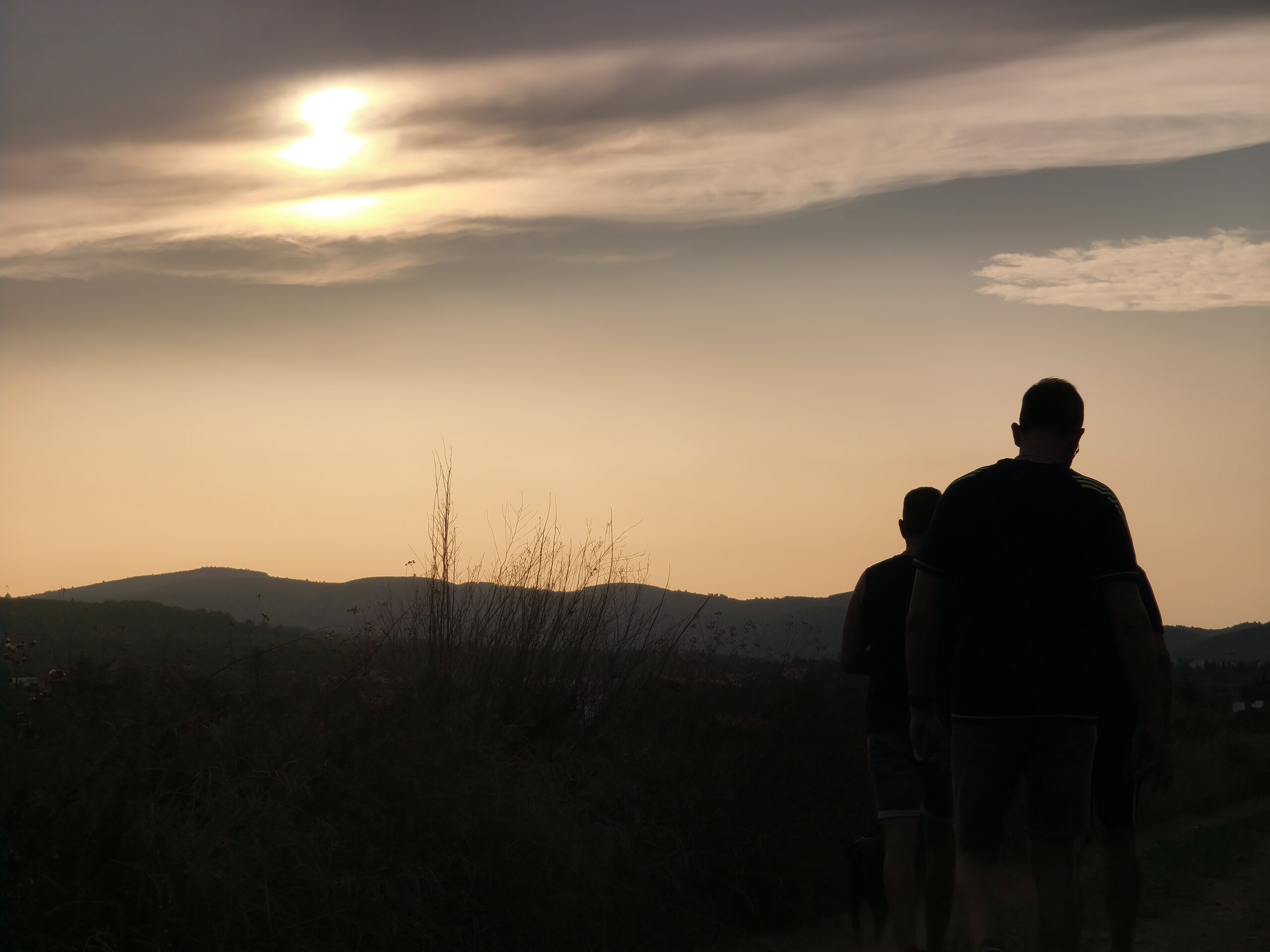
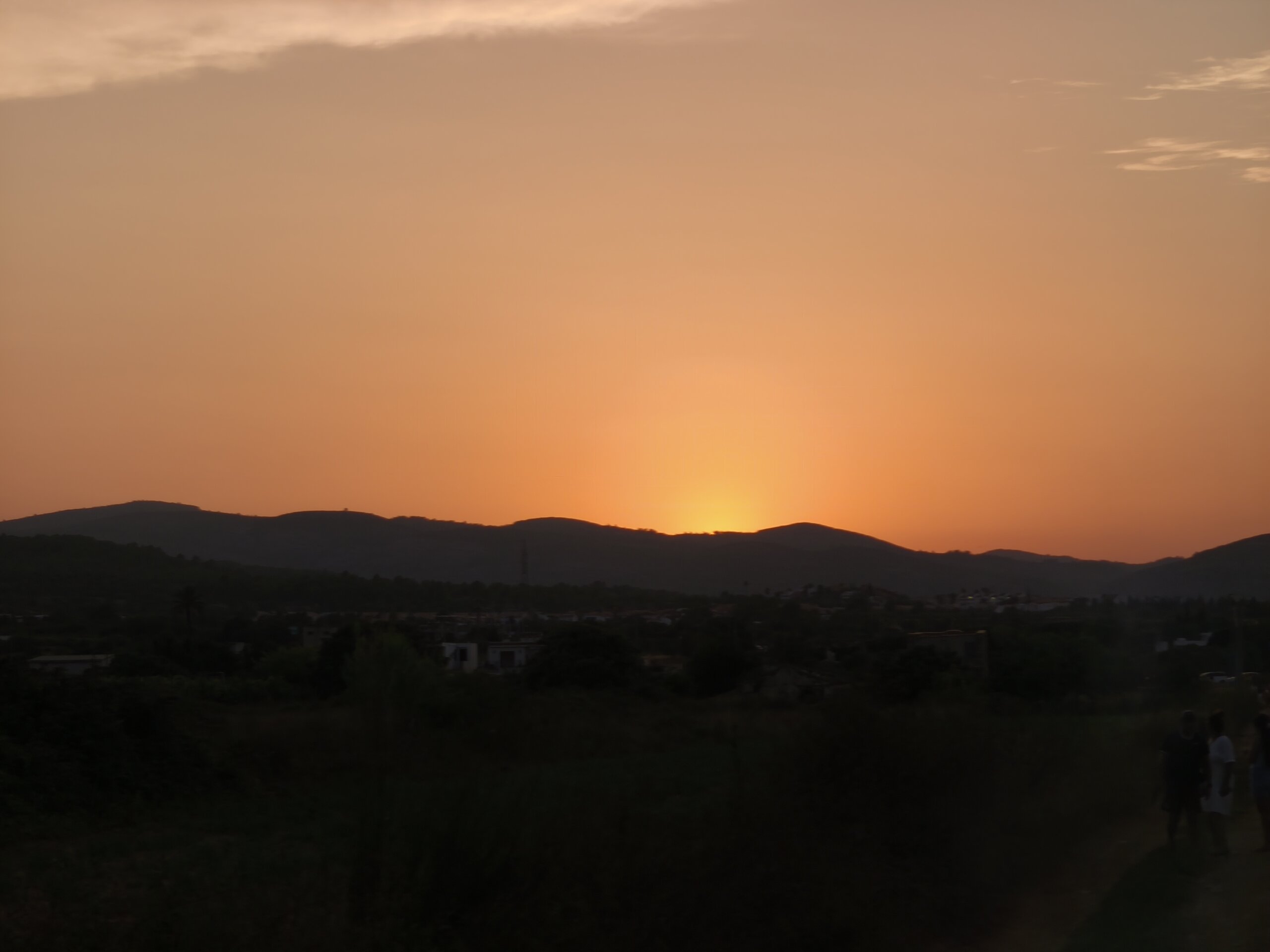
Our original plan was to hike up the hill above town, but the heat made that idea instantly unappealing, so instead we found a spot with a clear view of the western horizon, right where the eclipse would happen3. It wasn’t the prettiest setup: a dirt road, some trash on the ground, and a row of tourist hotels behind us. But the horizon view was exactly what we needed, and we clearly weren’t the only ones who’d had the same idea.
The only thing making us nervous was a large cloud rolling in, threatening to block the whole show before it started.
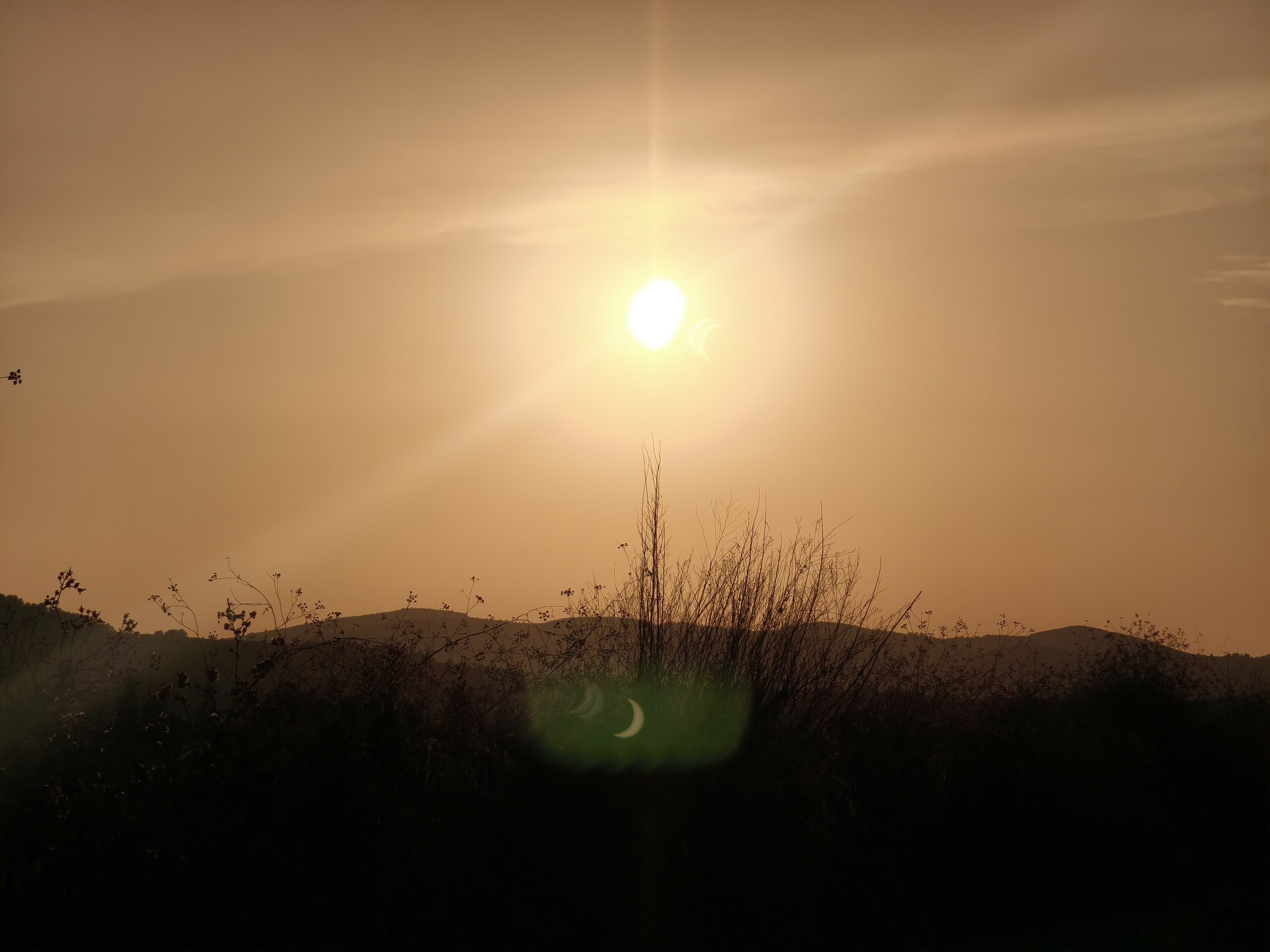
The eclipse officially began, and the sun was still hidden behind the cloud. There was just one small gap above the horizon, and we spent the next stretch hoping it would still be there once totality hit.
It was.
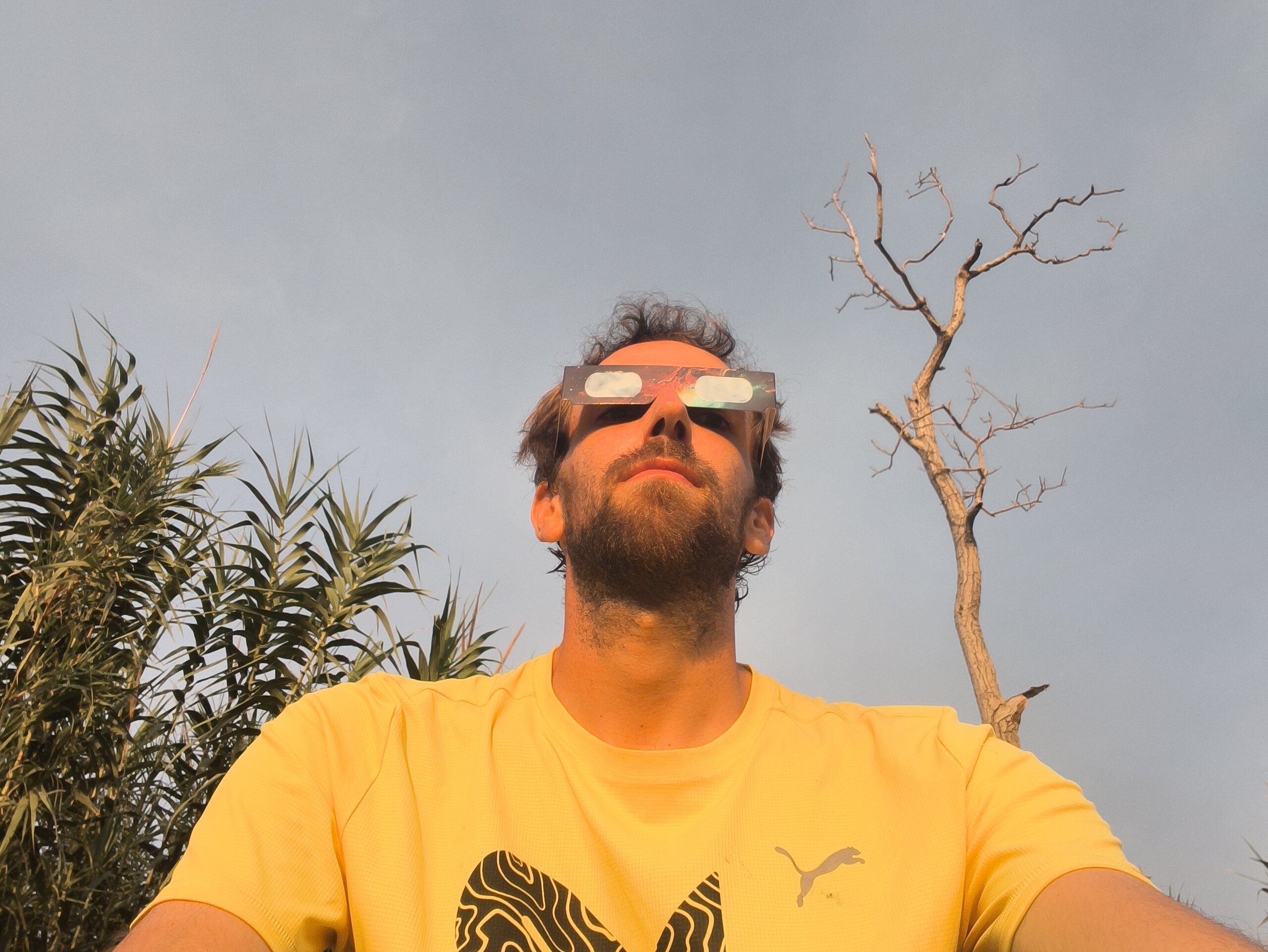
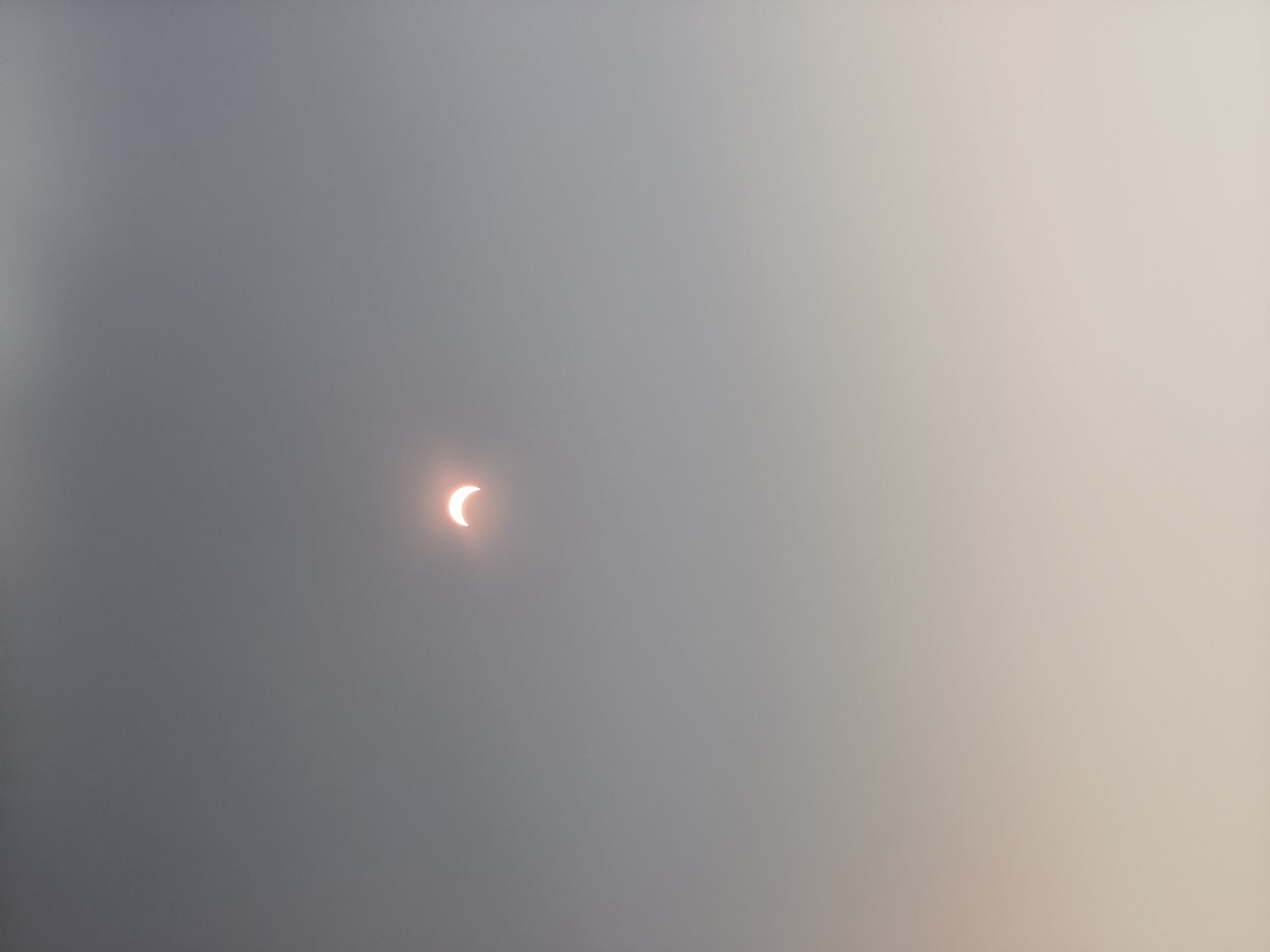
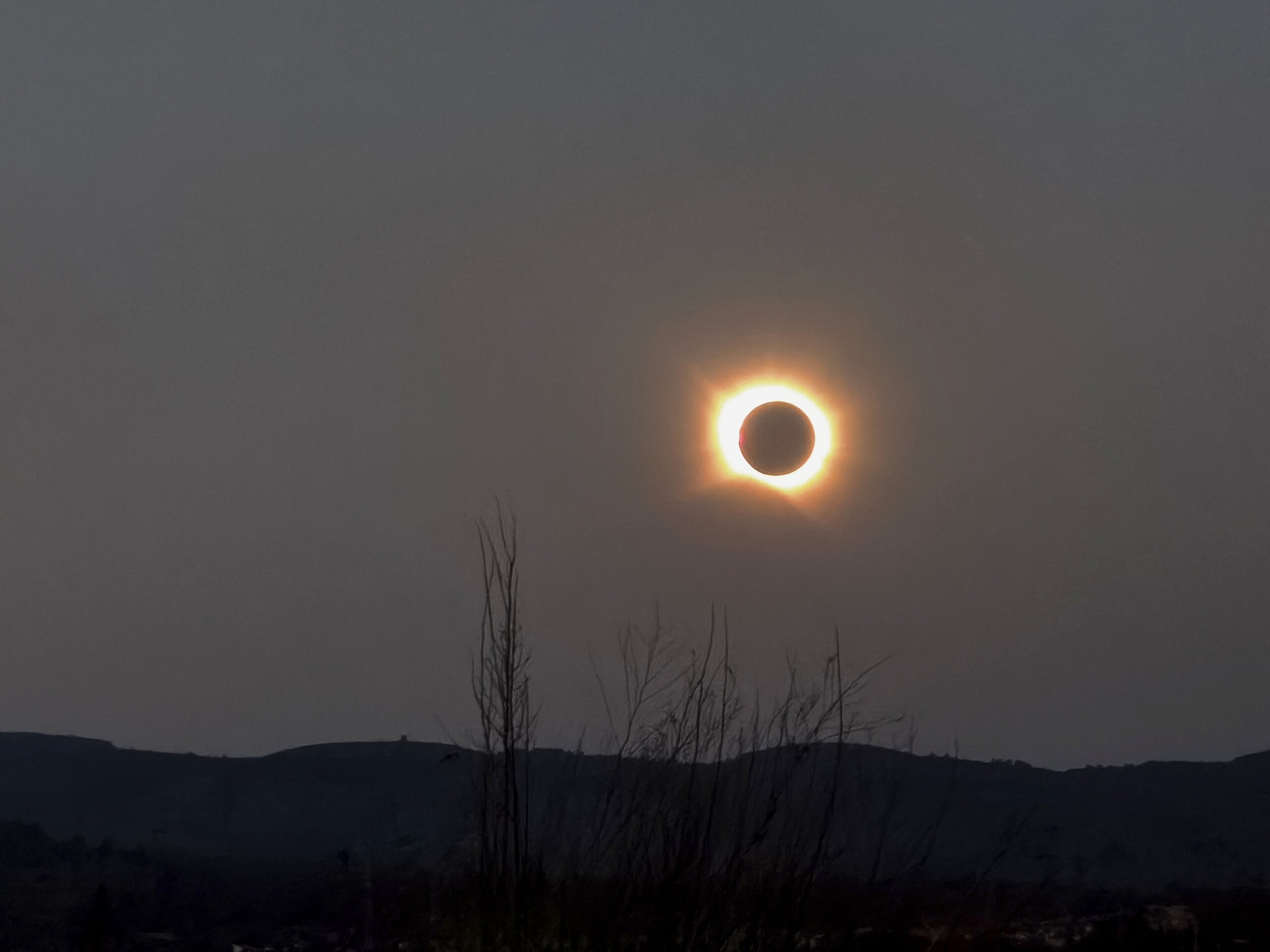
The moment of totality, when the Moon fully swallowed the sun, was strange and beautiful at once. Just before it happened, the birds started chirping like crazy, then went completely silent the moment totality arrived. In their place, this eerie, fiery shape hung above the horizon. We could clearly see the solar corona, and even a huge protuberance visible to the naked eye. We just sat there, staring, completely in awe. I’d expected total darkness, but it looked more like the light just after sunset, dim but not black. The whole thing lasted just under two minutes before it was over, and the sun, now a thin crescent still partly hidden by the Moon, dipped below the horizon. It was the perfect final piece of the whole trip, and I could hardly believe I’d actually made it here, all the way from Geneva, by bike.
That night we went for a swim in the sea and caught a few Perseids too, since it happened to be the peak of the meteor shower as well. What a day.
Gaudí, Hailstones, and a Very Undignified Finish
After two relaxing days by the sea, getting back on the bike wasn’t easy. The cycling itself wasn’t the problem, the heat still was, but I knew the journey wasn’t over yet.
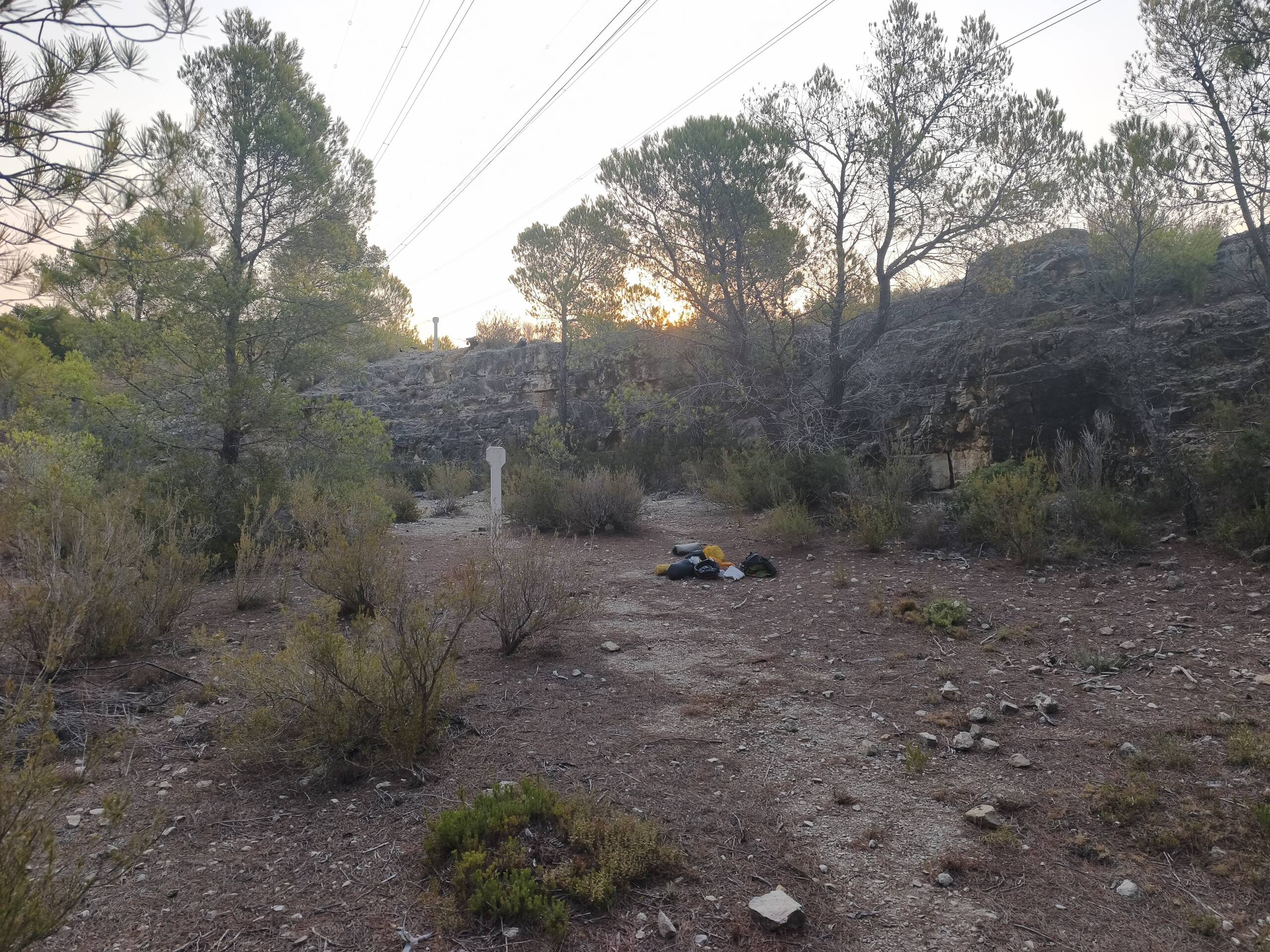
I headed back toward France mostly along the coast, with a few inland detours, one of them around the Ebro Delta. The road quality there was excellent, so I flew through it quickly. Back on the coast, I ran into a string of short, brutally steep hills I hadn’t expected at all. That night I slept in an old quarry with a tunnel leading off into the dark. I checked the entrance, but once it kept twisting underground after a few turns, I decided to leave the rest a mystery.
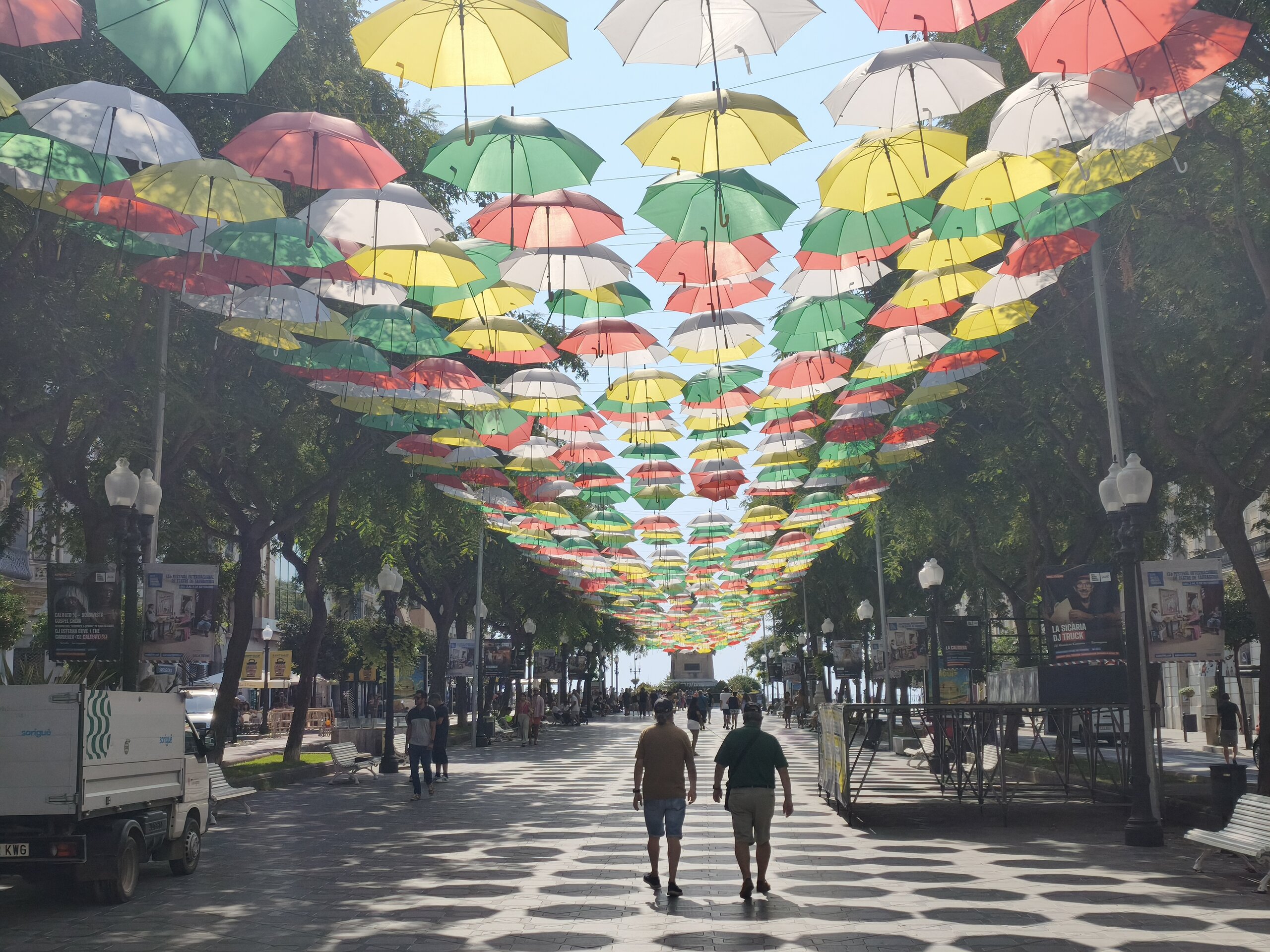
The next day took me through Tarragona and on to Barcelona. I followed the coast, but proper access to the sea was rare, so I spent most of the ride convinced I might simply evaporate. Relief came in the form of a beach in a small bay, which turned out to be a dog beach, packed with dogs of every size, speed, and swimming ability. Watching a chihuahua repeatedly charge into waves five times its size, and get repeatedly wiped out, was easily the highlight.
Right after that break, I accidentally merged onto a road heading straight for the highway. Spotting the highway sign 100 meters ahead was a clear sign I’d taken a very wrong turn. I managed to correct course and made it into Barcelona, where I met up with my Czech friends Kuba and Radka, who’d also come to Spain for the eclipse.
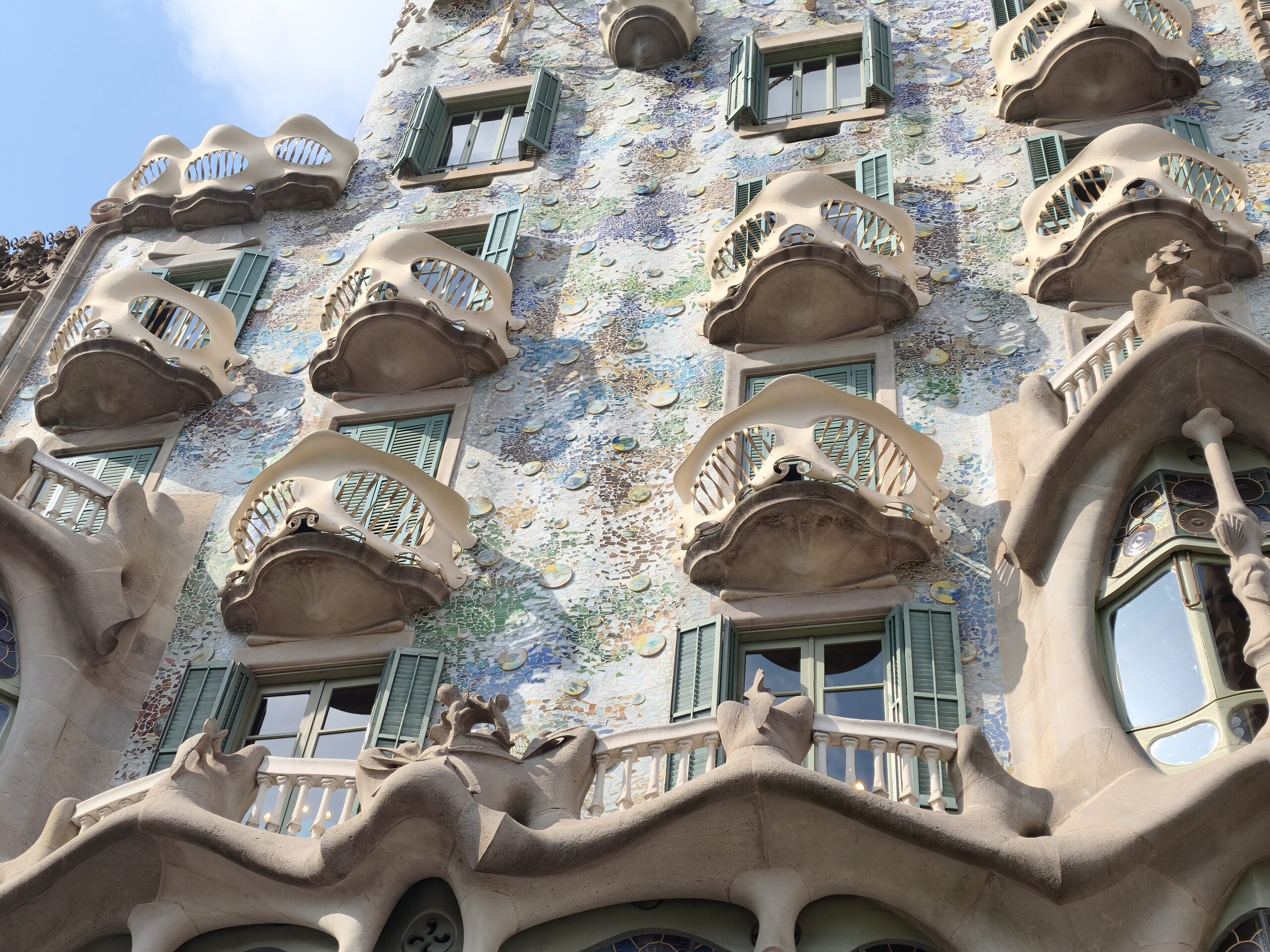
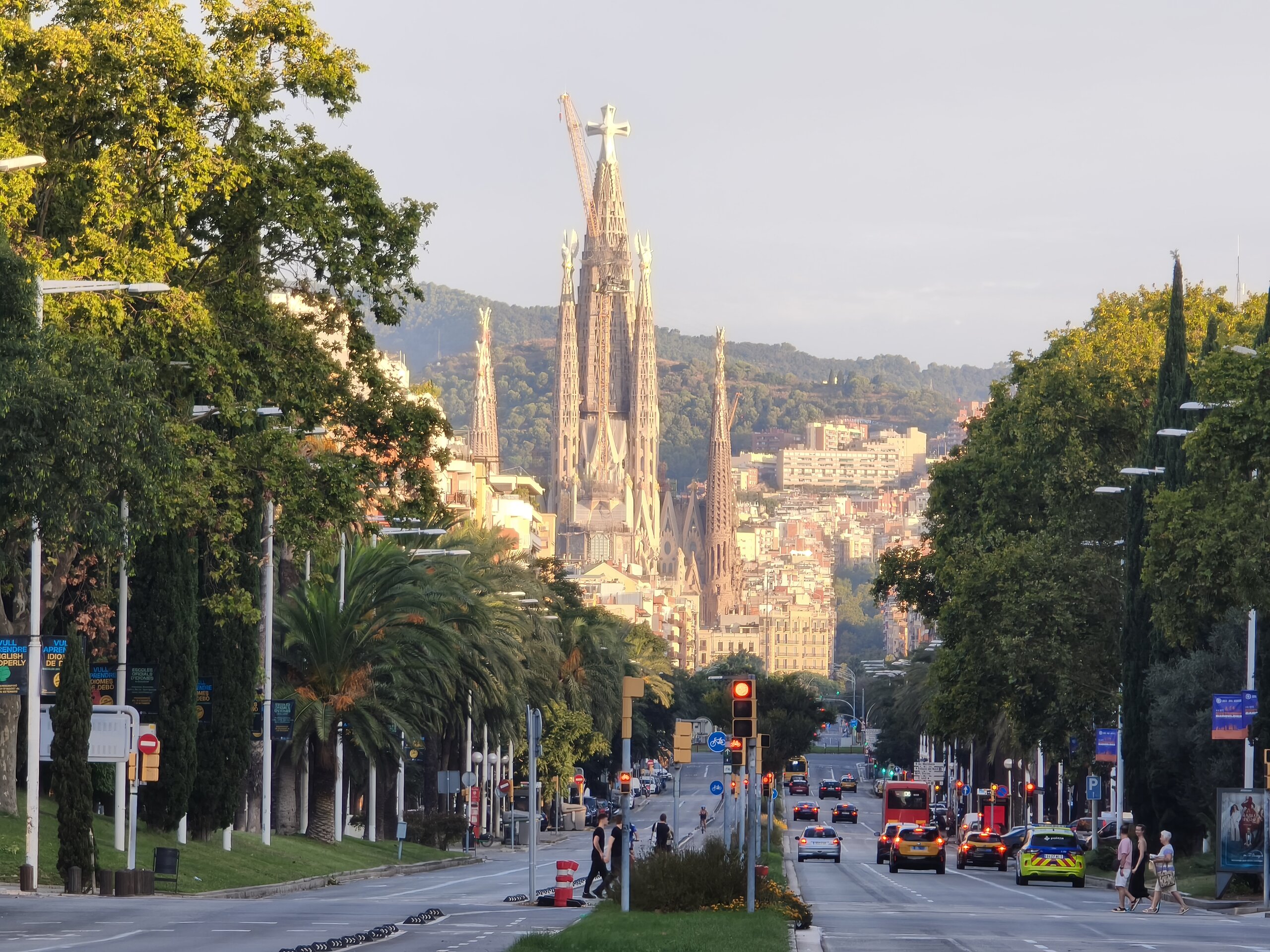
The dorm that night was rough. Someone (probably drunk) started talking loudly at 3 a.m., another guest tried to shut him up, an argument broke out, and things escalated until the police showed up at 6:30 a.m. to deal with it. After that eventful wake-up call, I spent my one planned turisty day in Barcelona doing some proper sightseeing: the Sagrada Família, its tallest tower nearly finished, and Casa Batlló, one of Gaudí’s houses.
Leaving Barcelona the next day, I fell in with a few groups of cyclists along the coast and, for one glorious hour, found myself averaging close to 30 km/h. I left the shoreline again in Malgrat de Mar, a place that hit me with unexpected nostalgia. I’d been there once before, at five years old, on only the second trip I’d ever taken to the sea. My memories of it were vague, but the place matched them surprisingly well.
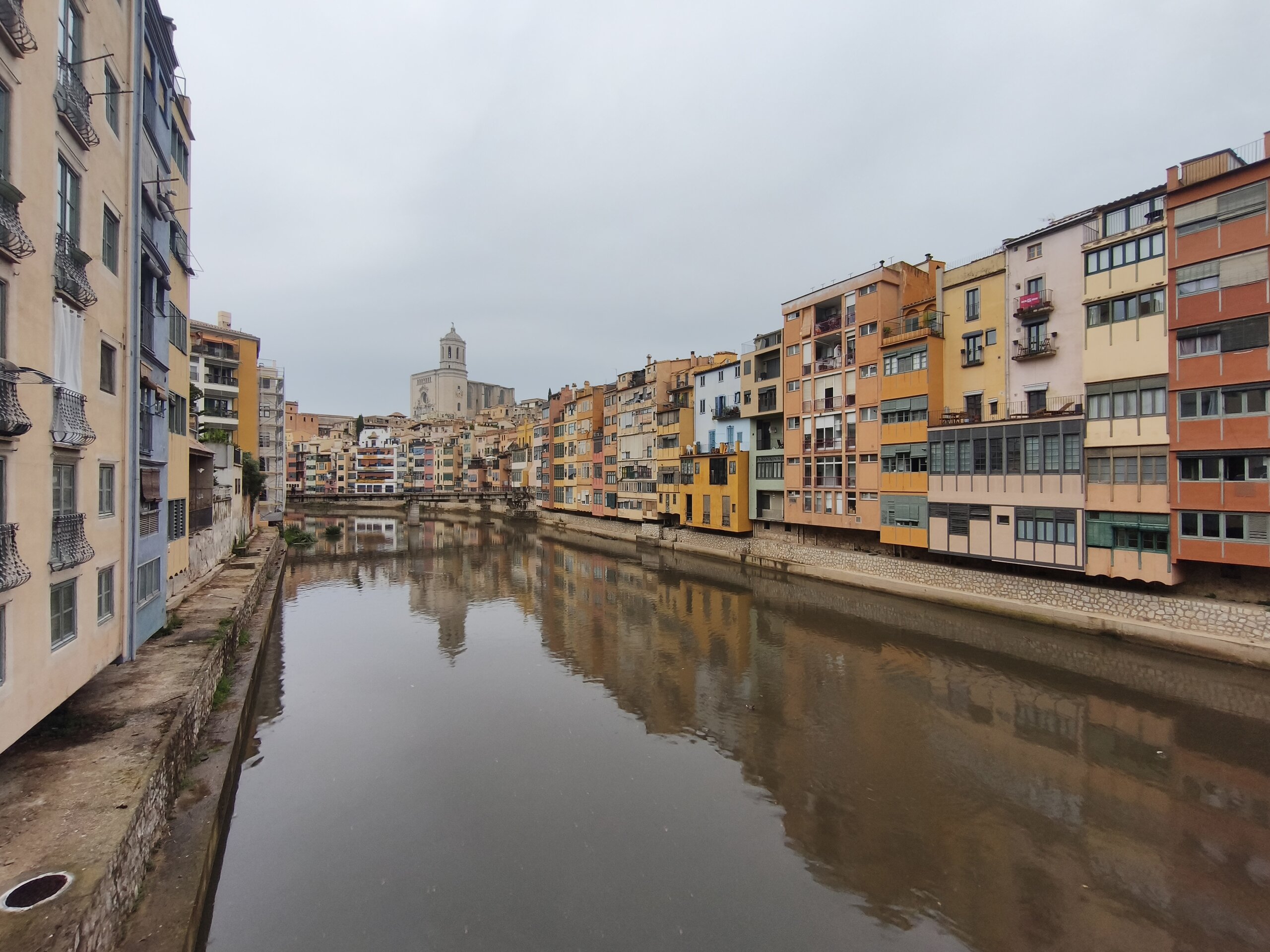
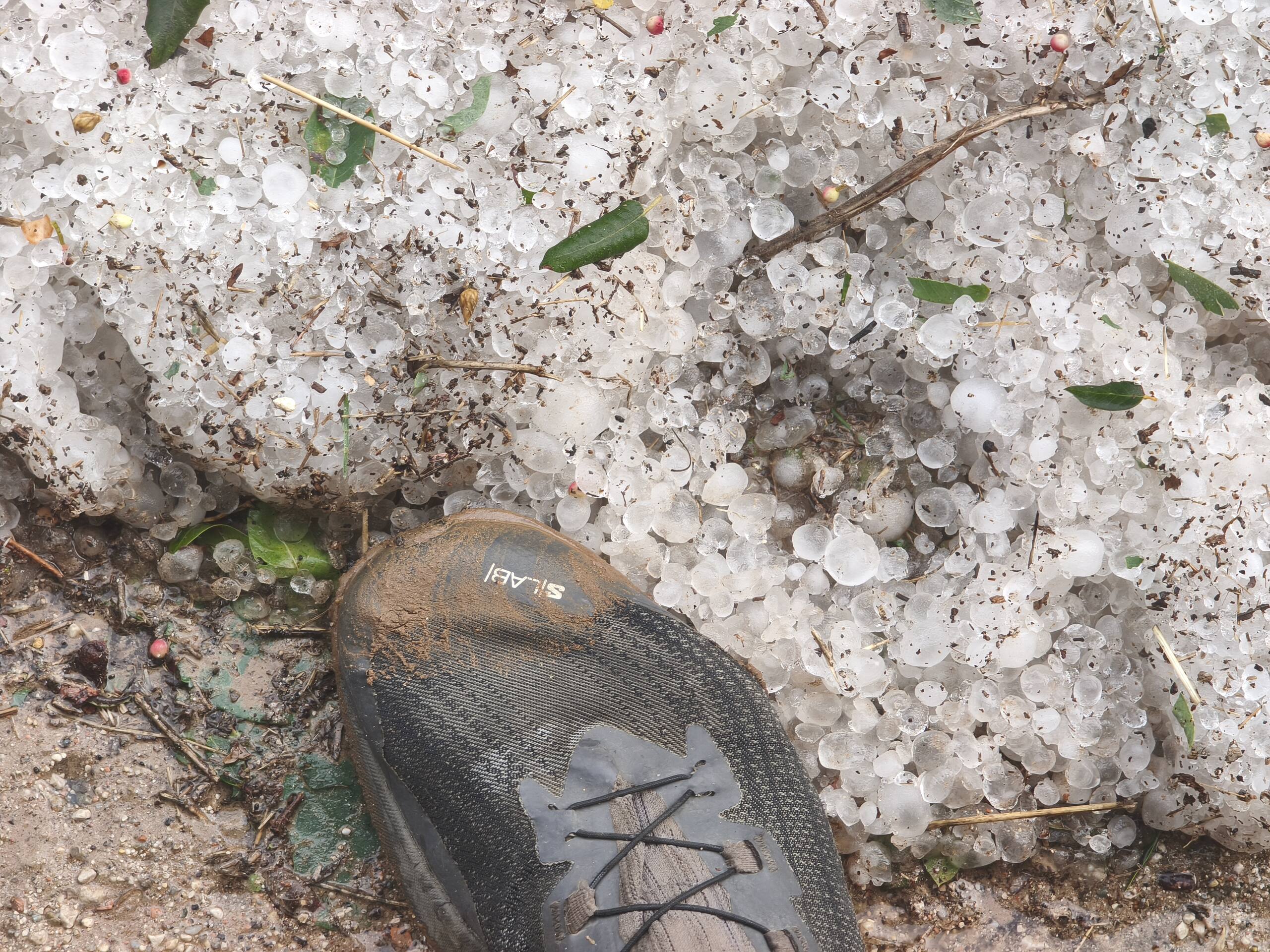
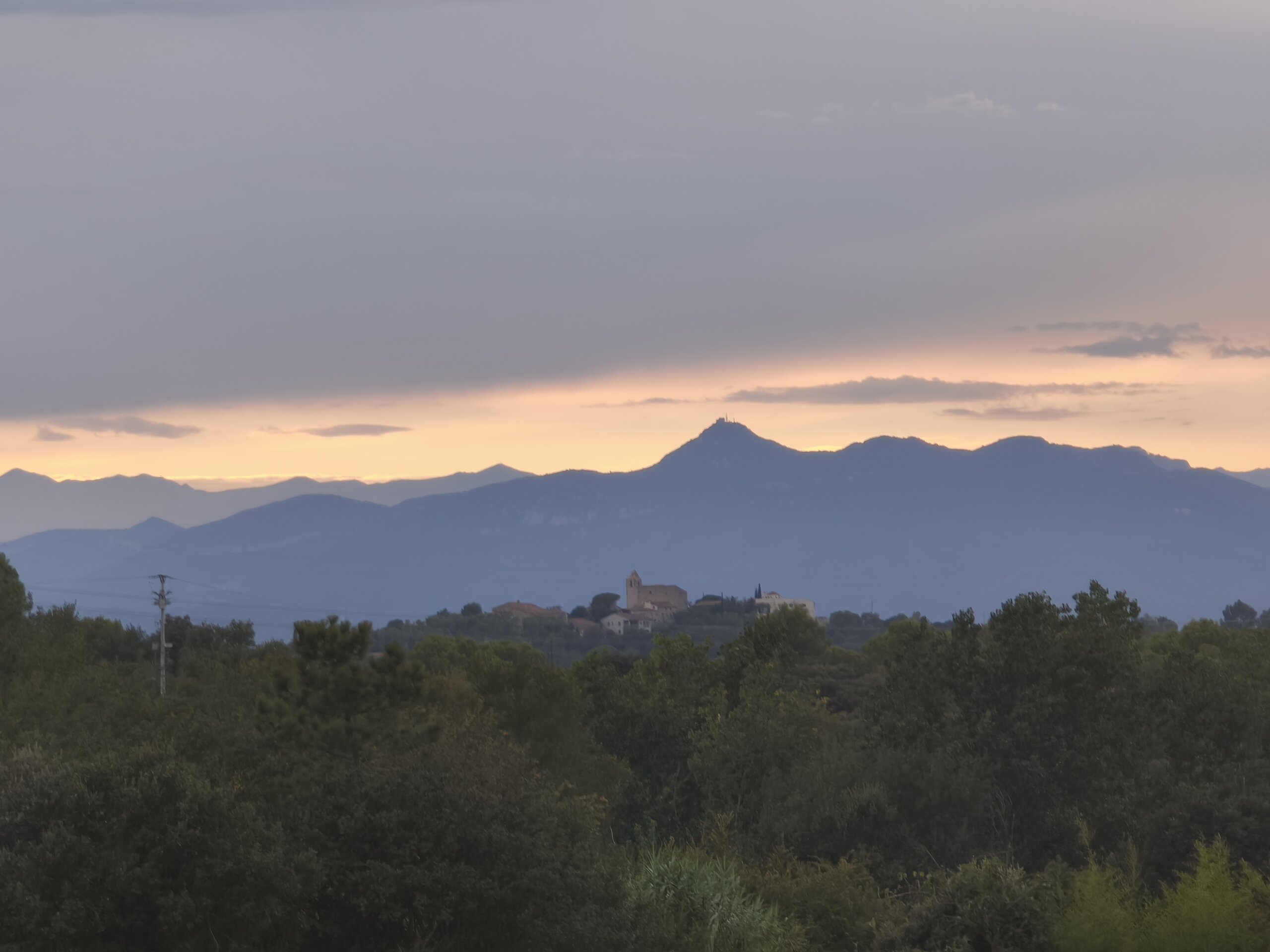
Next up was Girona, where I arrived just ahead of a huge thunderstorm and waited it out with tacos at a Mexican restaurant. The size of the hailstones I saw on the ground afterward made me very glad I’d found shelter in time. The countryside around Girona was lovely, especially with the Pyrenees creeping back into view. I pitched my tarp in a field with a mountain backdrop, knowing the finish line was close.
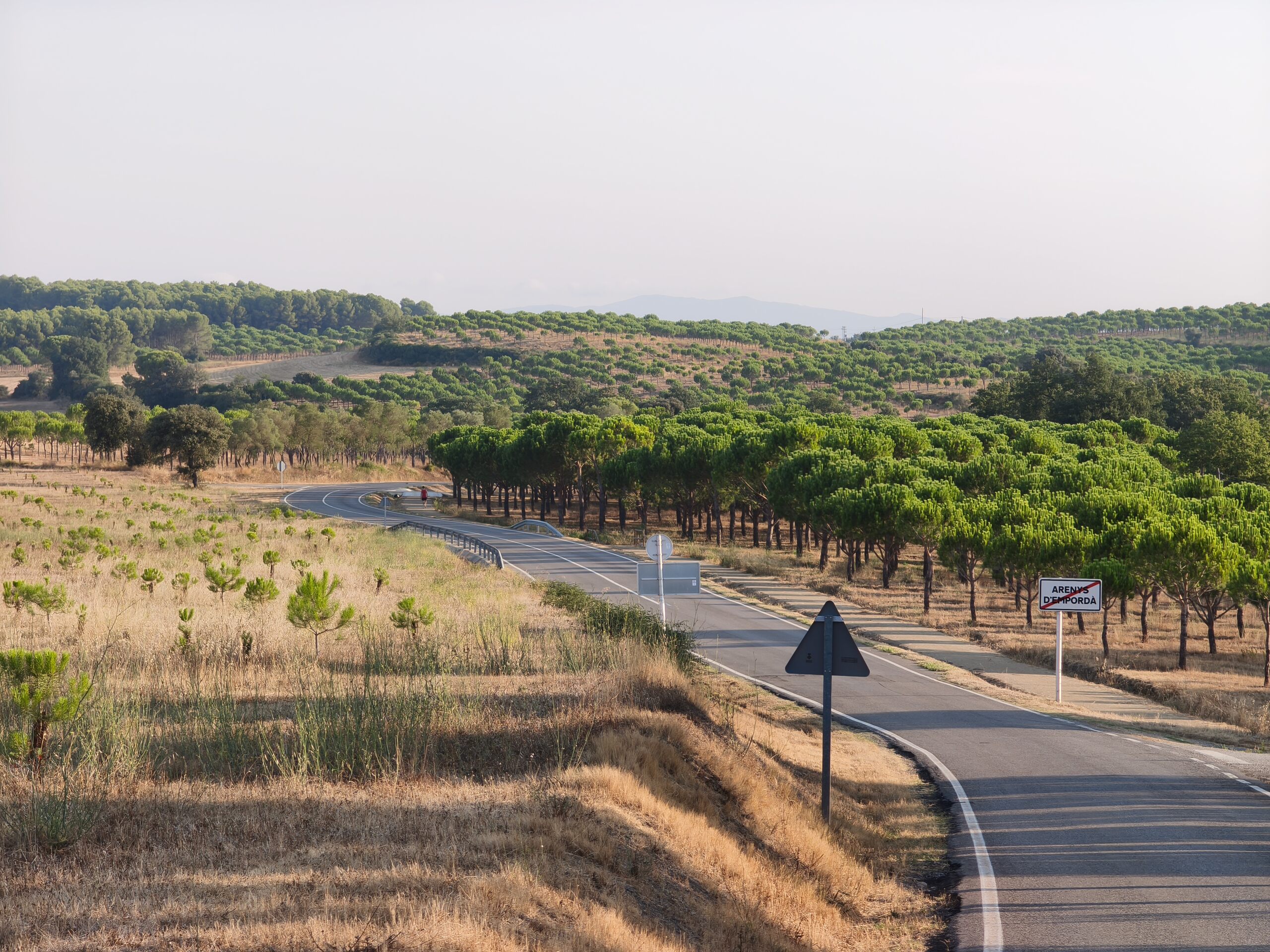
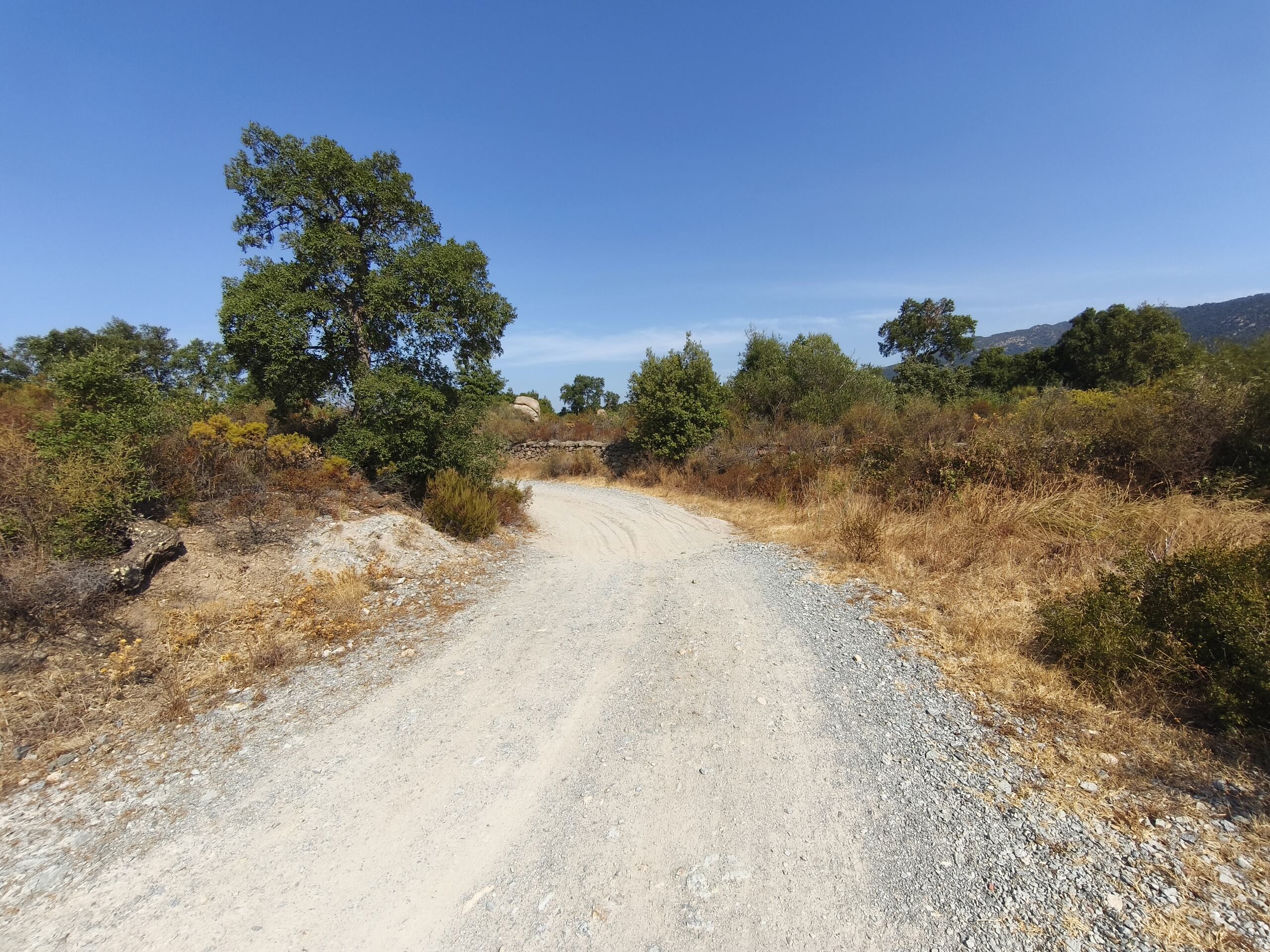
On the final morning, I followed some gravel paths that were barely rideable on a road bike, but I enjoyed every bit of the remote, scenic stretch anyway. I crossed into France past a traffic jam stretching several kilometers, leaving just two hours of cycling to Perpignan, my final stop and train connection home.
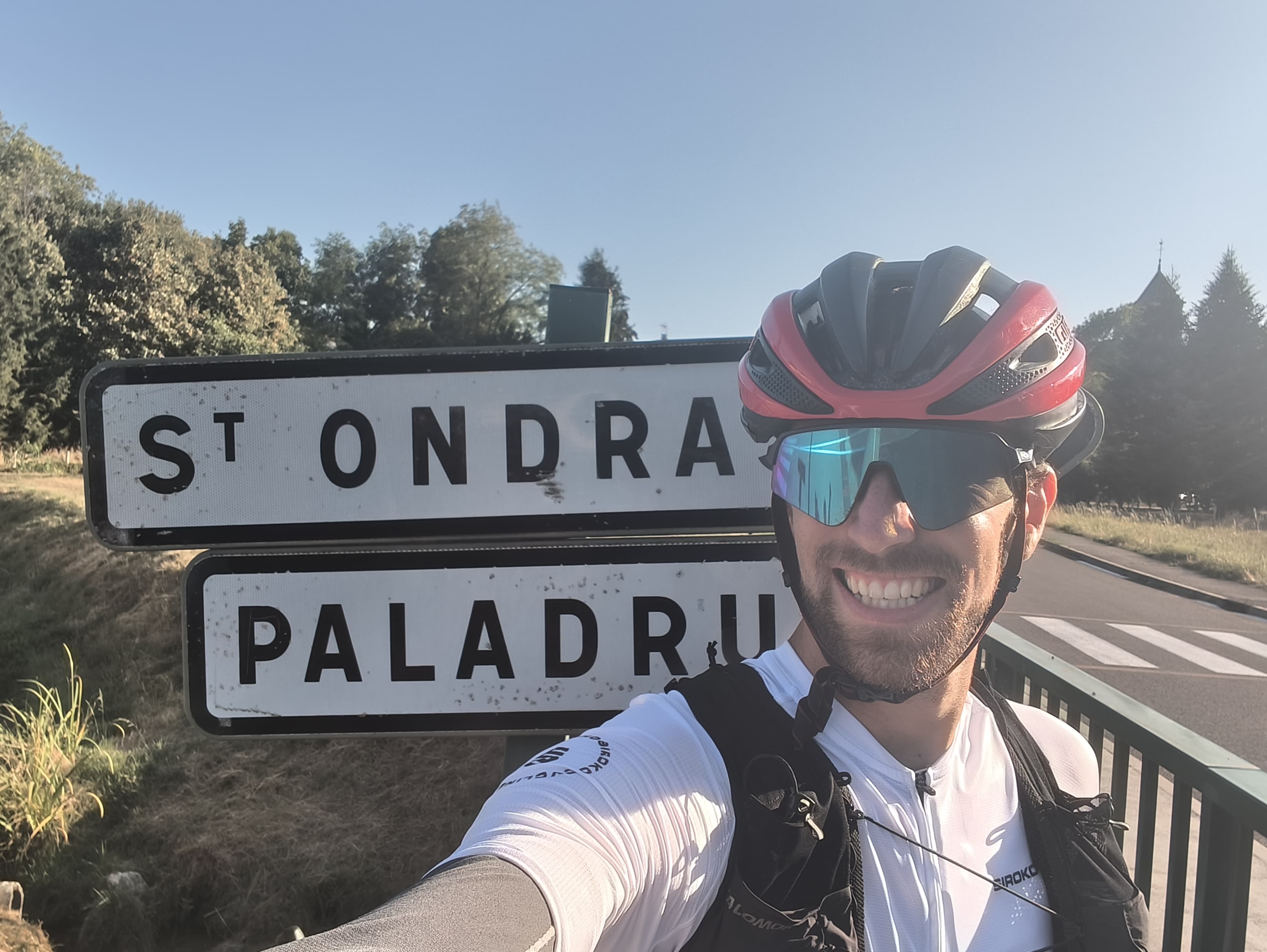
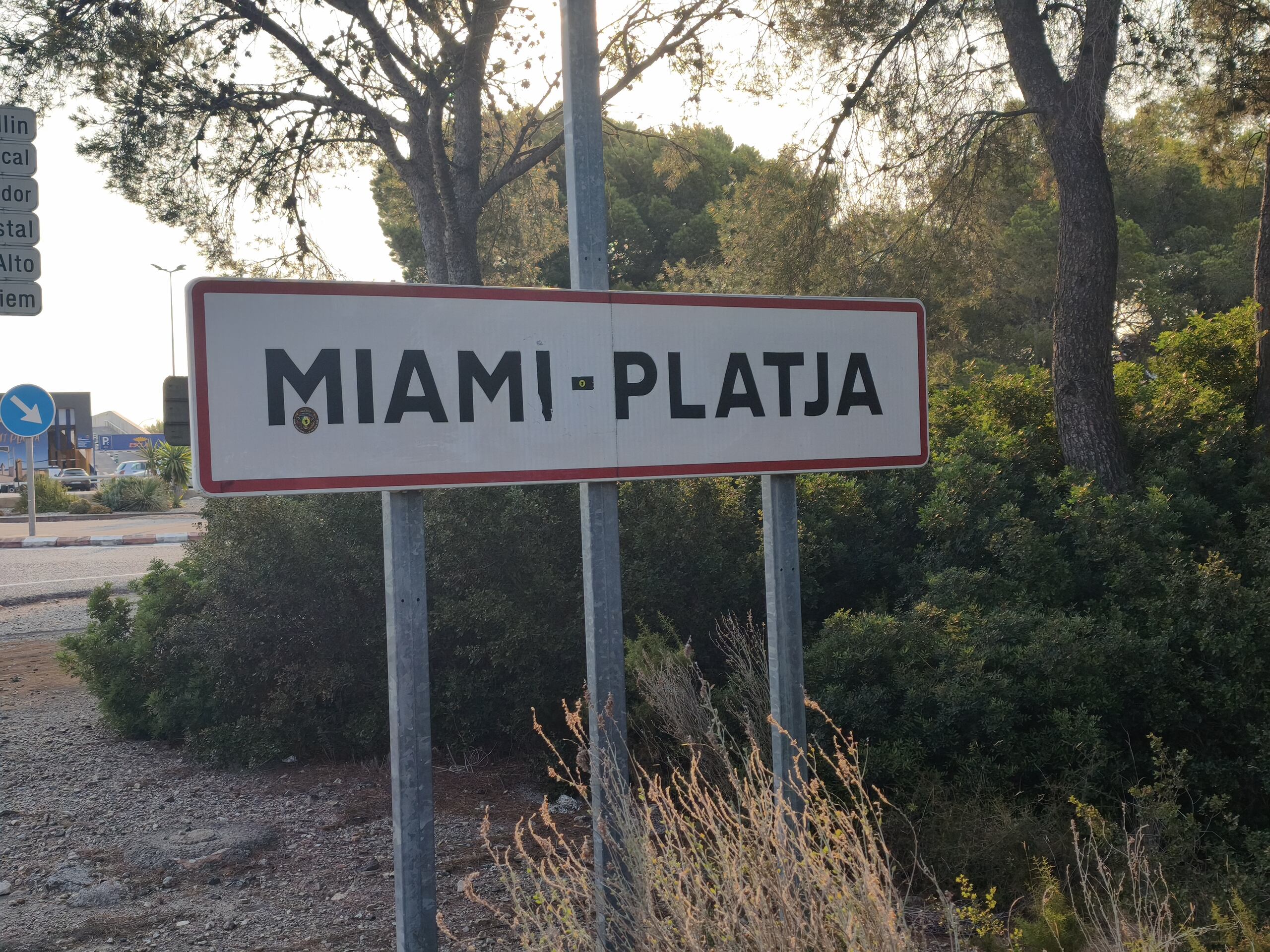
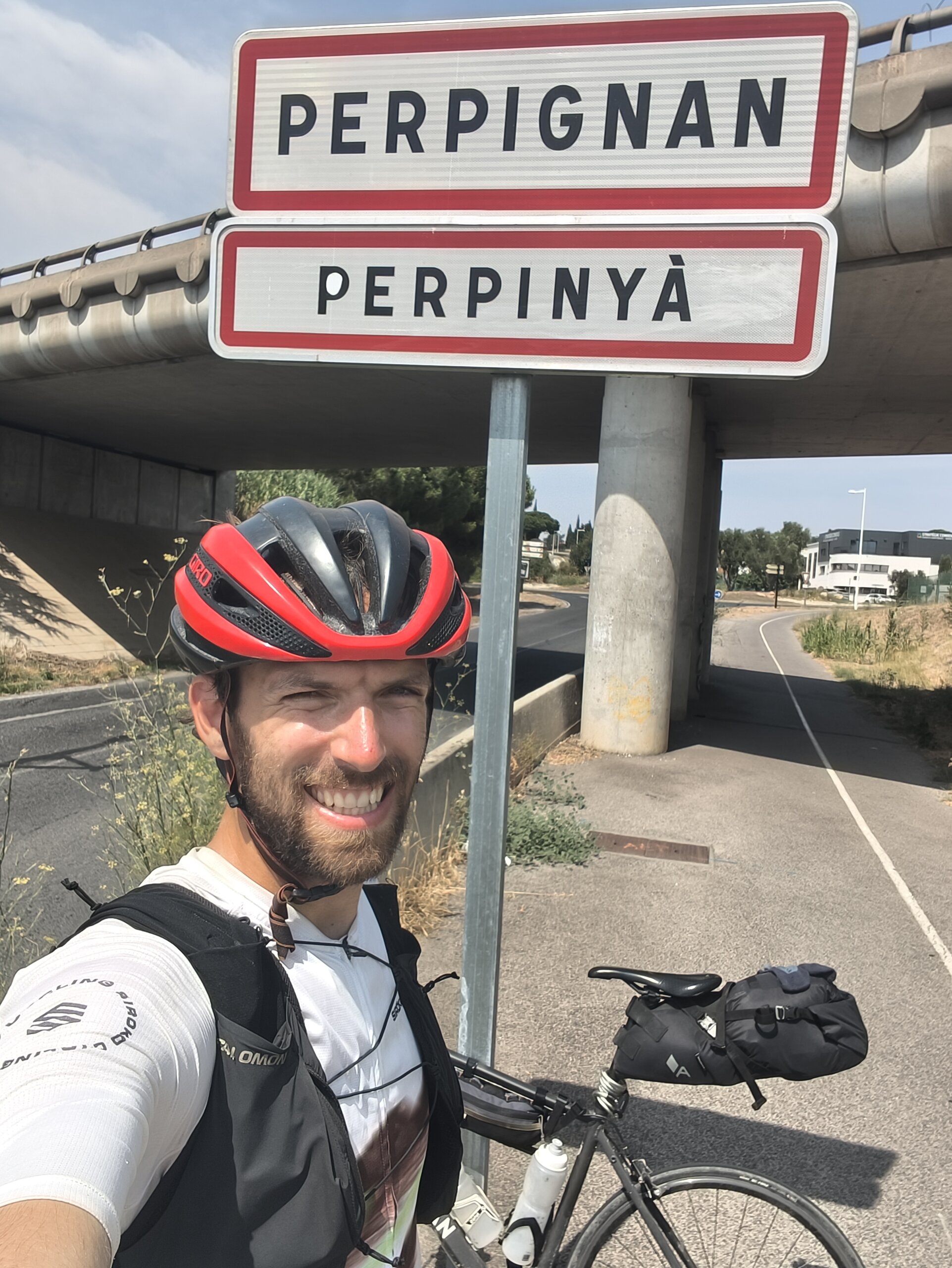
I stopped to take a photo at the town’s welcome sign, with no idea that a flat tire was waiting just around the corner. It was the second puncture of the trip, and it hit only a few kilometers from the train station. With a train to catch and food still to buy, I decided to just walk the bike the rest of the way to be sure I wouldn’t miss it.
And that’s how I finished 1,790 km of cycling: on foot. Maybe the universe was just reminding me that hiking is pretty great too, and that my next big trip should probably be on two feet instead of two wheels.
Final stats:
- Total cycled: 1,790 km
- Elevation gain: 18,250 m
- Time spent moving: 100.6 hours
- Duration: 17 days (14 days of cycling)
- Total solar eclipses: 1
- Punctures: 2
- Fun: infinity
-
The belt of totality is a geographic track on Earth’s surface where the Moon completely blocks the Sun and where the total solar eclipse can be observed. ↩
-
Water reservoirs by the sea with with normal water mixed with the water from the sea. ↩
-
The total eclipse was happening during the sunset only four degrees above horizon. ↩