Te Araroa Stories: Tuna in a Water Bladder - Backpacking Goals
Crossing the extremely muddy Longwood Forest was one of the first big tests of the trail, and I passed it with honours. The next day, it was time to continue further. Ahead of me were four days without any chance to resupply food — another challenge. Looking back now, that seems like nothing special; packing food for several days, or even a week, eventually became completely normal. But at that time, it was something I still had to learn.
During my scooter expeditions, I never needed to carry food for more than two days, since I could cover almost 300 km in these two days and always come across a shop. This time, that wasn’t an option. I quickly hitched a ride from the trail to a nearby town to resupply, then back to where I had stopped, so I wouldn’t skip any part of the route. The hitching was easy, and I had a good chat both ways — even though, on the way to town, I was picked up by a deer farmer driving a car that looked suspiciously like a hearse.
Crossing “Area 51”
After the resupply break, I continued for the rest of the day through mostly easy terrain until Birchwood Station, where I spent the night. There I met Francesca (a SOBO), and Emily and David — two other NOBO hikers I’d end up hiking parts of the trail with over the next few days.
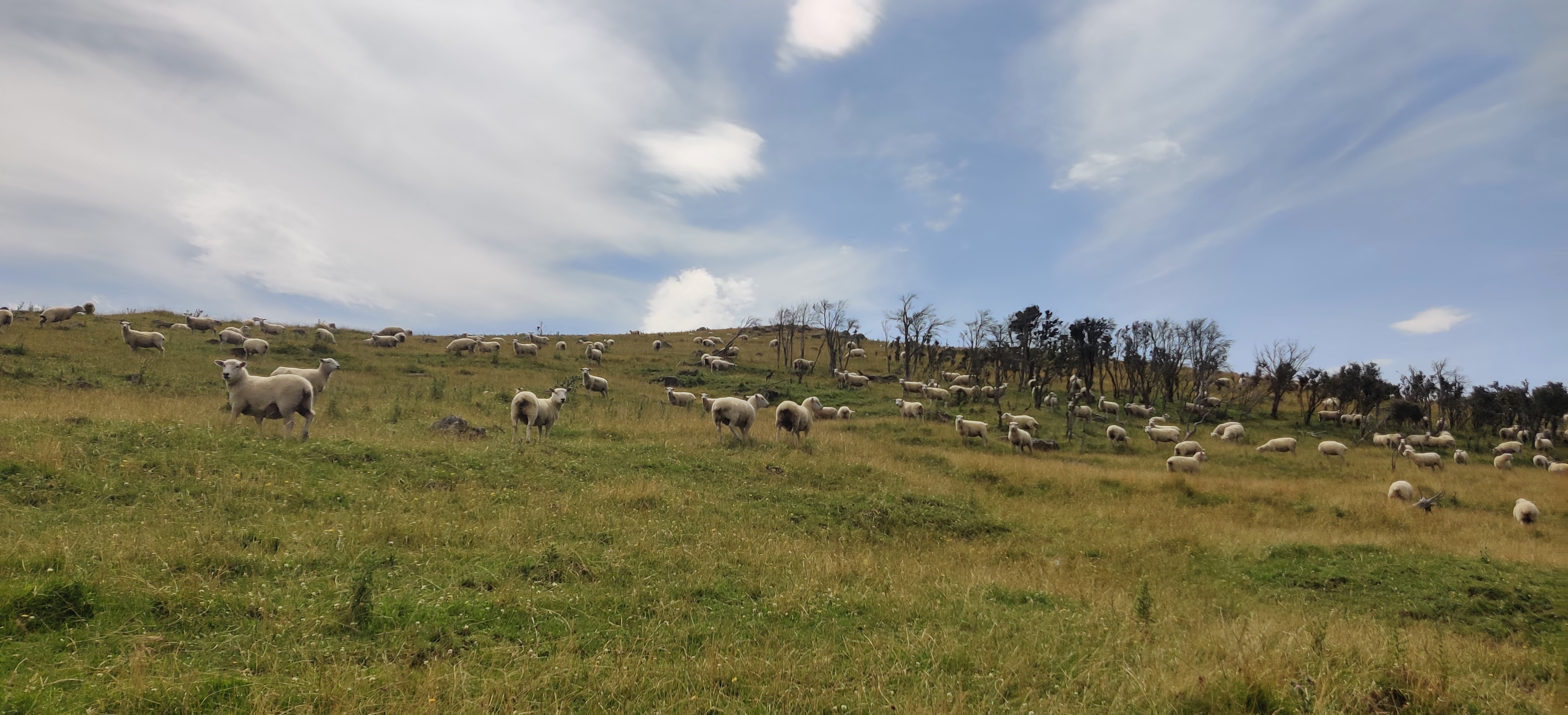
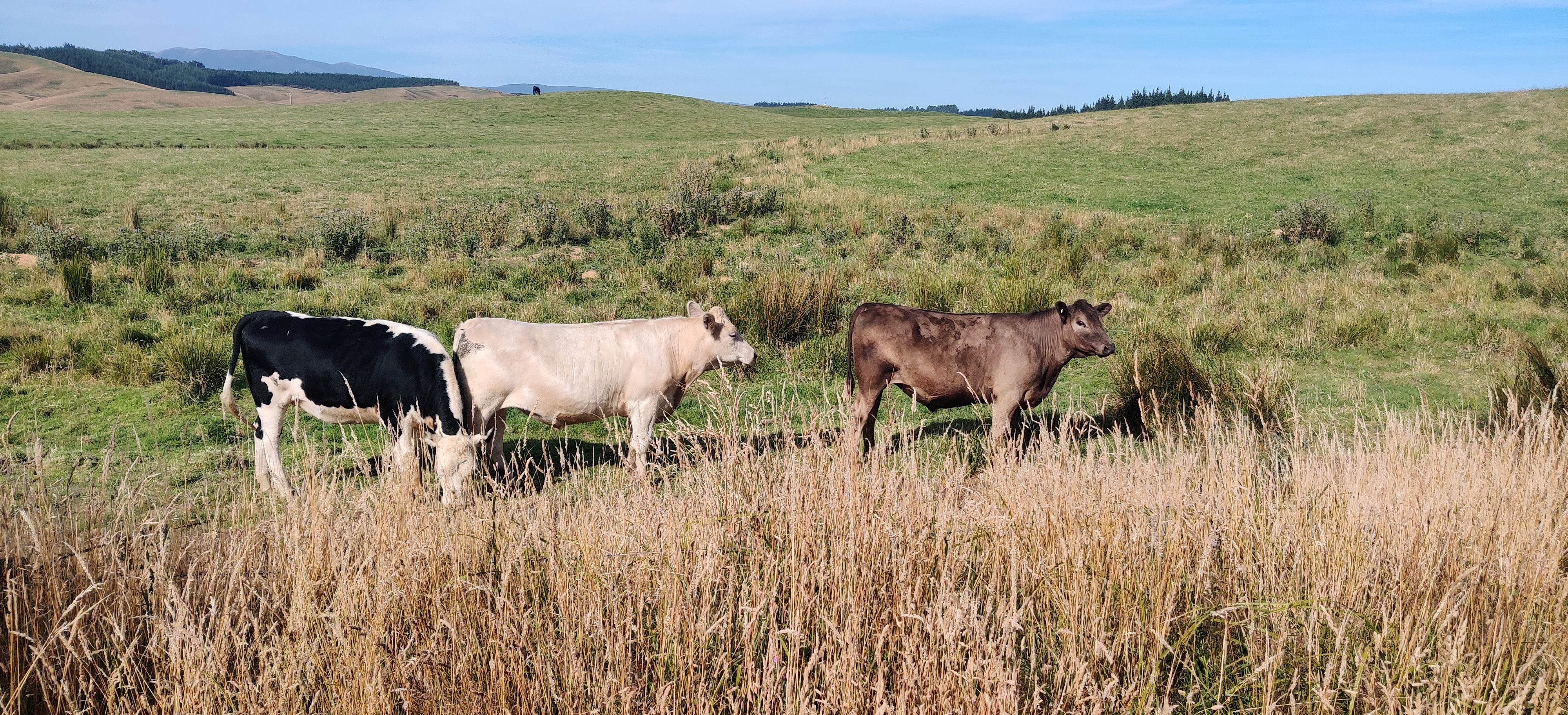
The following day, the trail crossed farmlands around Mt. Linton, which I quickly nicknamed New Zealand’s Area 51. The only logical explanation for the ominous signs reading, “Te Araroa walkers STOP! If you go beyond this point, police will be called immediately!” was that the locals were secretly studying aliens there. That’s definitely not how I’d mark an area for sheep and cows — and I had to pass through a few of those fields.
I was cautious (and a little scared) walking straight through the middle of a herd of cows, but I tried to calm myself with Francesca’s wise words from the evening before:
“Sheep will run away and cows will just stare and pee agresively.”
Little did I know that a few thousand kilometer further I will learn that it’s not entirely true and that three agry bulls are no joke.
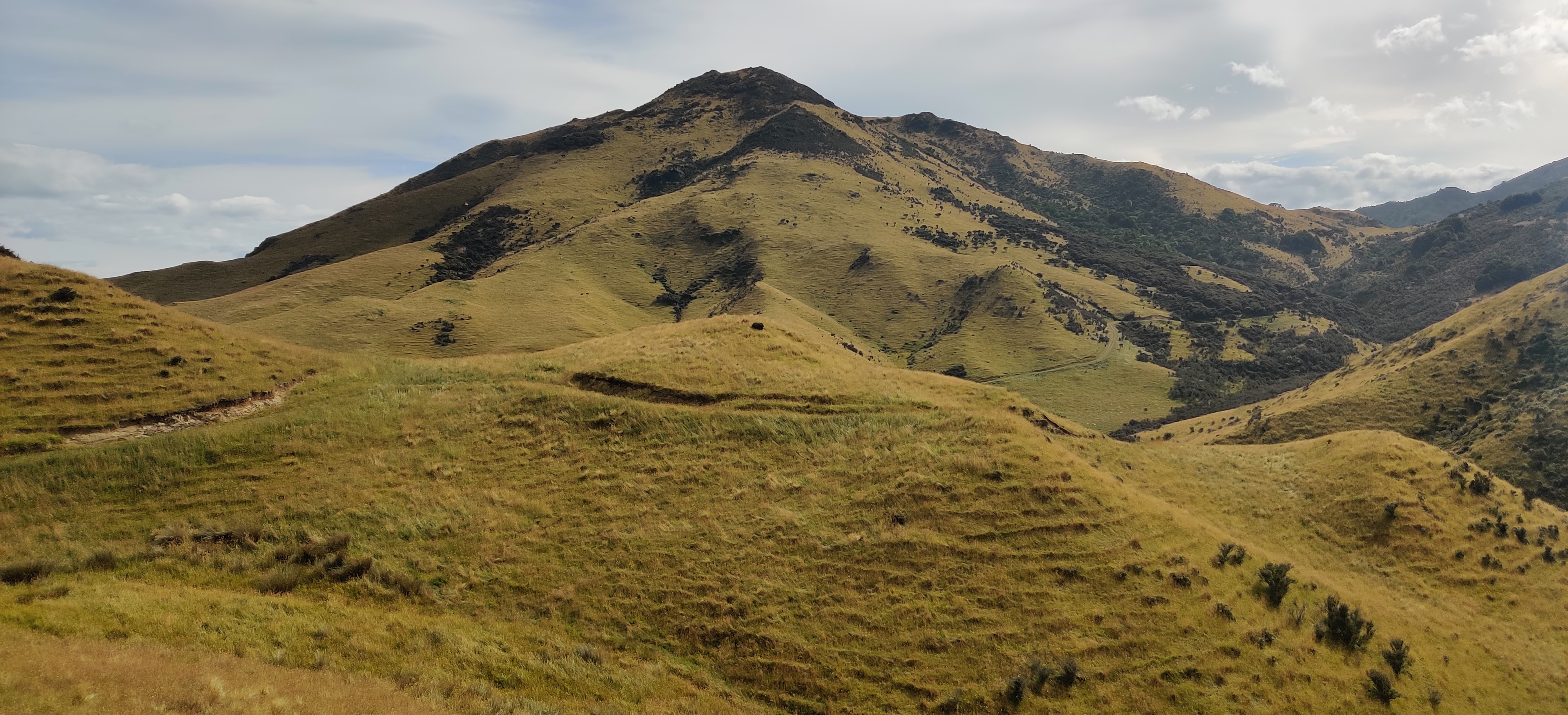
I spent the night in a small hut full of sandflies, where I met Emily and David again. The hut wasn’t on any map. I’d learned about its existence from a SOBO hiker earlier that day. She drew a map in the sand with her trekking pole and said, “You have to leave the trail and follow a little track. Keep going until you stop believing there’s a hut — and that’s when you’ll find it.”
If this were in Europe, I probably would’ve ended up in another country. Luckily, New Zealand is surrounded by ocean, so I knew that if I missed the hut, I’d eventually just run out of land. To my surprise, her description was spot-on. Right when I started doubting there was any hut at all, it appeared.
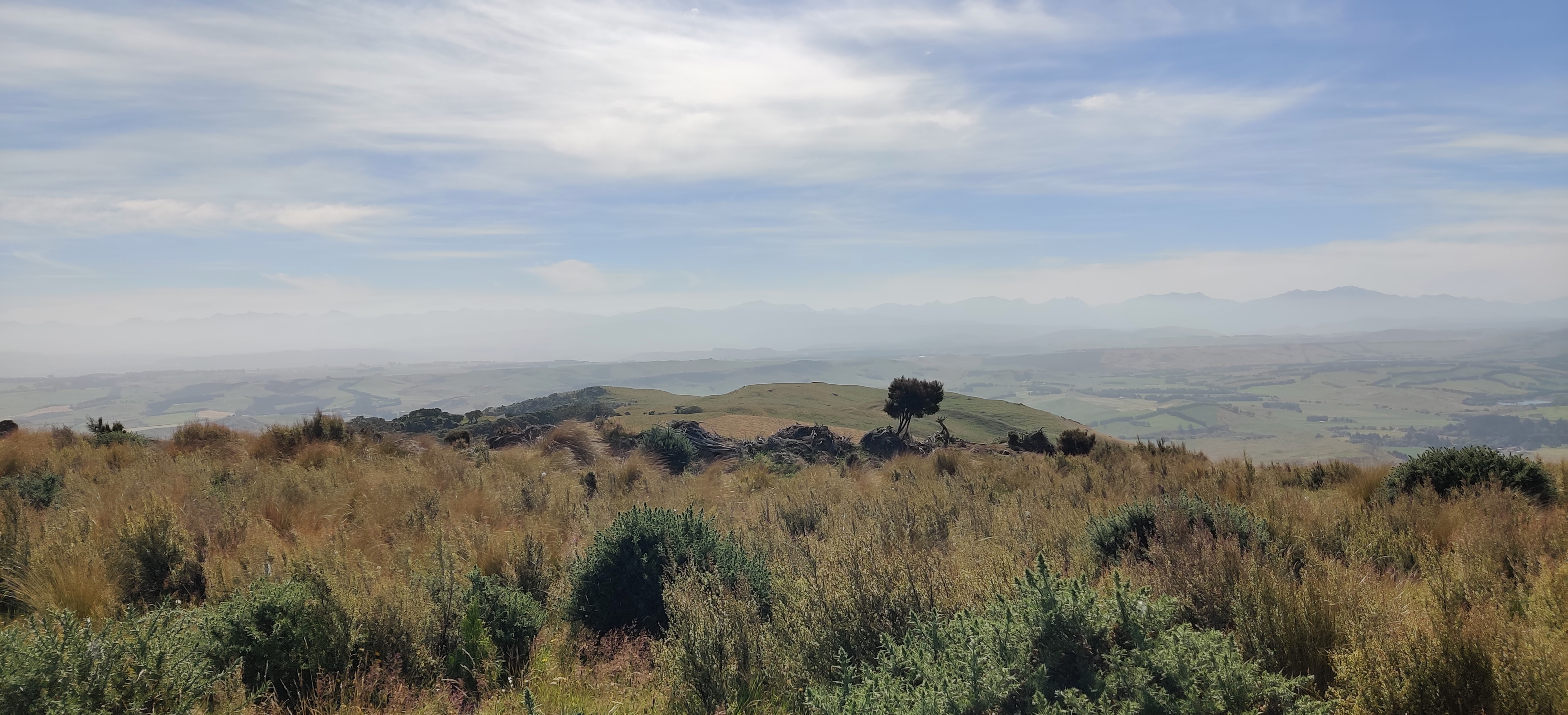
From there, the trail entered the Tākitimu Forest, which I battled through for the next two days. It wasn’t as muddy as Longwood, but it was definitely far from dry. The path twisted over roots and fallen trees. Nothing like the forest trails I am used to in Central Europe, but I was getting the hang of it.
At Aparima Hut, roughly halfway through the forest, I caught up with two more NOBOs — Eleanor and Jake. From there, together with Eleanor, Jake and Emily, we hiked as a group all the way to Te Anau, where we finally took a well-deserved rest day.
From hero to na idiot in 1 second
We decided to spend the rest day together before continuing at our own paces. I did a quick search on Booking.com and found what looked like an amazing deal. A room for four people, cheaper than the campsite we’d just passed! I booked it instantly and felt like a hero. I’d “saved” four tired hikers! One night in real beds, clean clothes, charged electronics. It sounded perfect. And the price? Unbelievable.
We were already picturing our cozy cabin at the campsite… until we arrived at reception.
“So, where’s your car?” the receptionist asked.
“We don’t have a car, we’re hiking,” I replied, slightly confused.
She replied, “Ah… this booking is for a camper van.”
And just like that, I went from hero to idiot in record time. Sure enough, when I checked Booking again and scrolled a little further down, it clearly said the “room” was actually just a patch of grass for parking a camper van (for four people, apparently).
Excitement turned to disappointment, but we decided to stay anyway. To their credit, Emily, Eleanor, and Jake didn’t even blame me, they just laughed and accepted our fate. One thing was still true, though: it was ridiculously cheap.
We went out for dinner and spent the next day relaxing, finishing it off with homemade burgers on the campsite grill. Honestly? Even without beds, it was a great rest day.
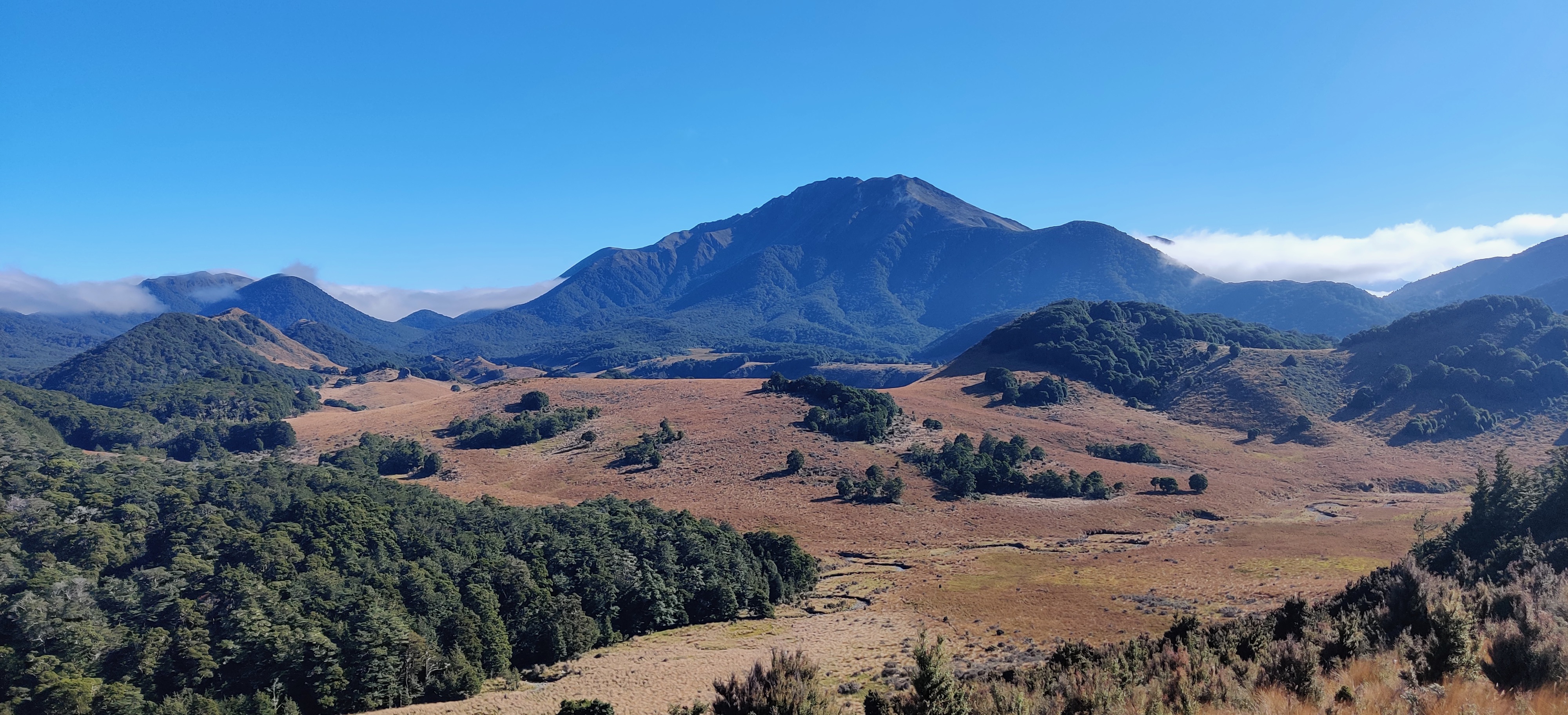
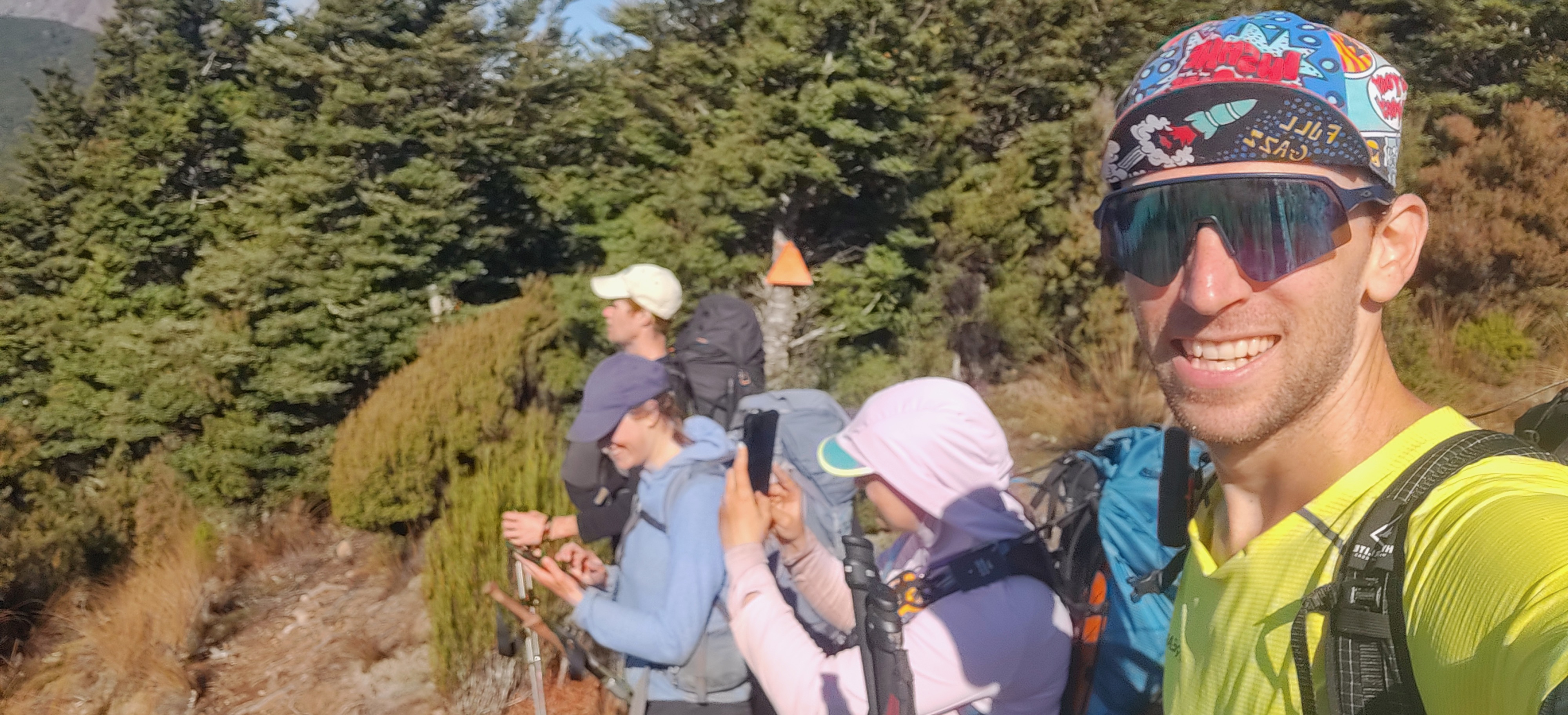
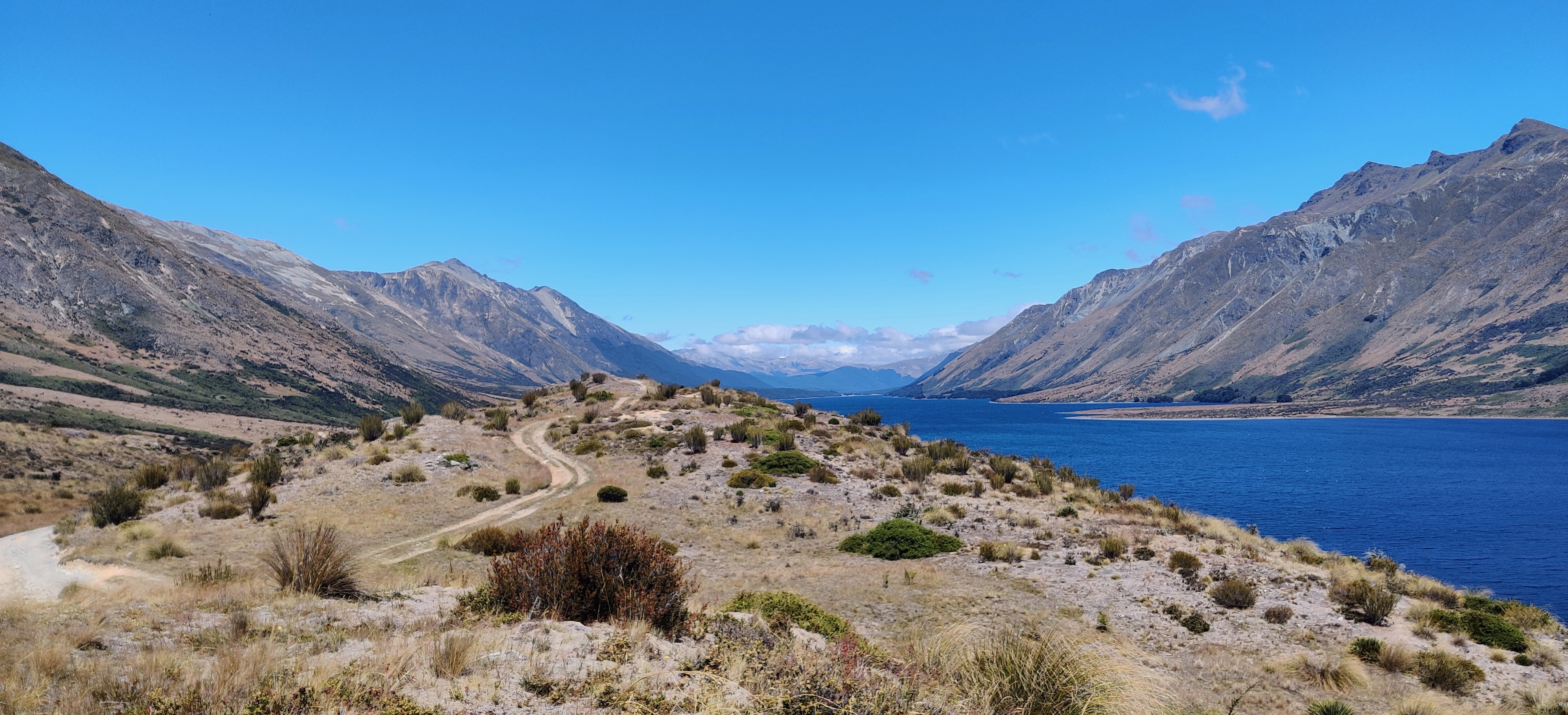
The next day, our little “Fellowship of the Ring” split up, and I continued alone toward Mavora Lakes — one of the filming locations from The Lord of the Rings. The trail led me next to the river, through tall grass and spiky bushes, and at times, the easiest way forward was simply to walk in the river itself.
Tuna in a water bladder = ultralight ❤️
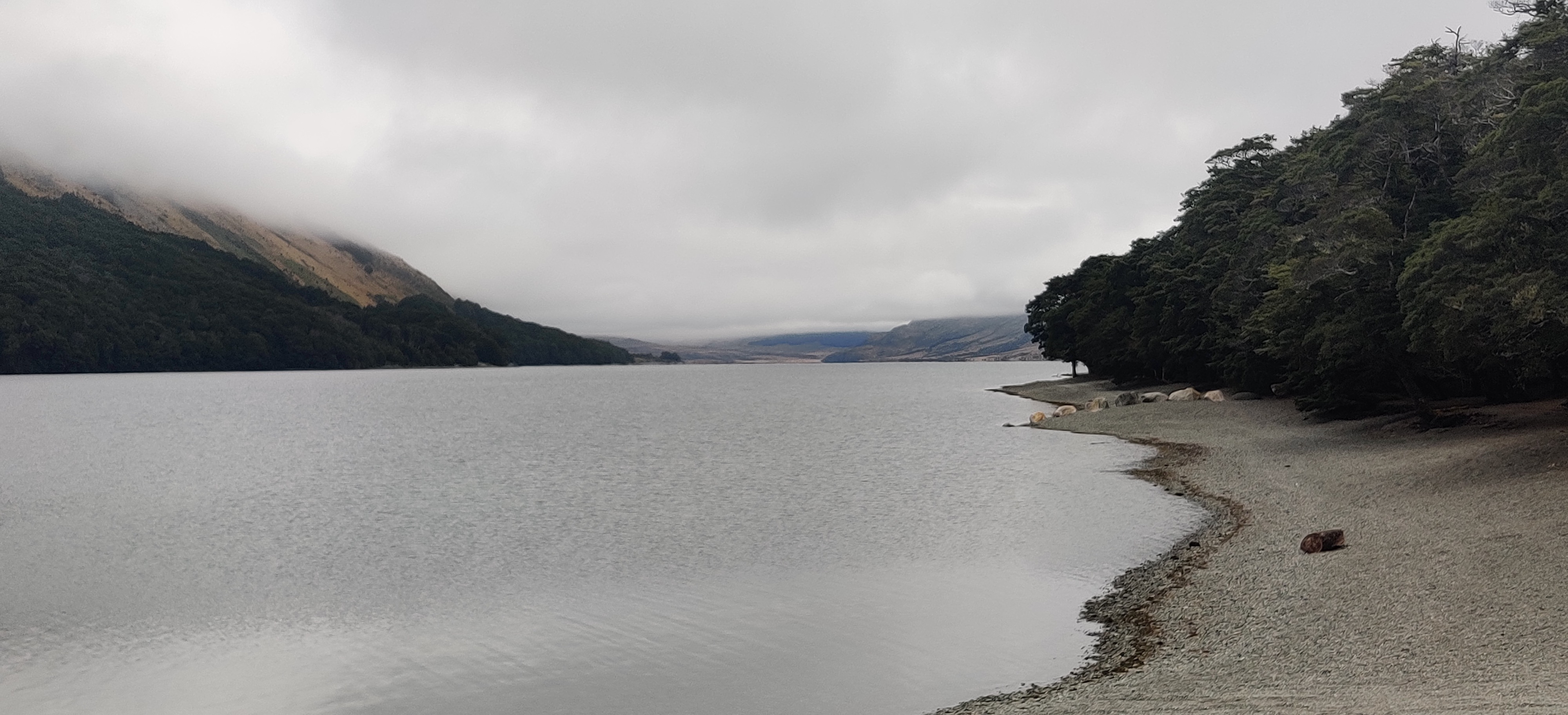
It was cloudy and foggy when I reached Mavora Lakes in the morning, but the sky cleared later in the day, letting me fully appreciate the spectacular landscape around me. Around midday, I arrived at a small DOC (Department of Conservation) hut where I decided to have lunch. My typical hiker’s menu: tortilla wraps with tuna. While I was eating, another hiker came in — a young teacher from the Netherlands. I couldn’t help but notice the replica of the Lord of the Rings ring hanging from his neck.
He told me he’d been to New Zealand several times and always brought the ring with him, though it’s never the same ring, because he keeps losing it and having to buy a new one. (What a terrible hobbit!) Let’s just pretend he didn’t say that and that he actually destroys the ring every time he visits New Zealand.
While we were chatting, the door opened again, and another hiker stepped in - a guy from Hong Kong. What surprised us most wasn’t his nationality, but his tiny backpack. He said he’d been walking almost the entire Te Araroa, and his base weight (gear without food or water) was just 3.8 kg! It was his first hike ever, and he’d learned everything about ultralight backpacking from YouTube. I couldn’t help but think of the classic stereotype — the diligent Asian student who studies theory for hours, then shows up and absolutely nails the execution. We were impressed.
He explained how he achieved such a low weight while eating his “weight-optimized” lunch, which seemed to consist entirely of peanut butter squeezed into a plastic bag from a dehydrated meal. Between sticky bites, he said, “My dream is to buy a water bladder, but not for water. I want to fill it with tuna in oil — because greasy tuna has a great calories-to-weight ratio, and I wouldn’t have to carry the extra weight of cans.”
We all have different dreams, I thought to myself, laughing quietly, but I had to respect his commitment to optimization.
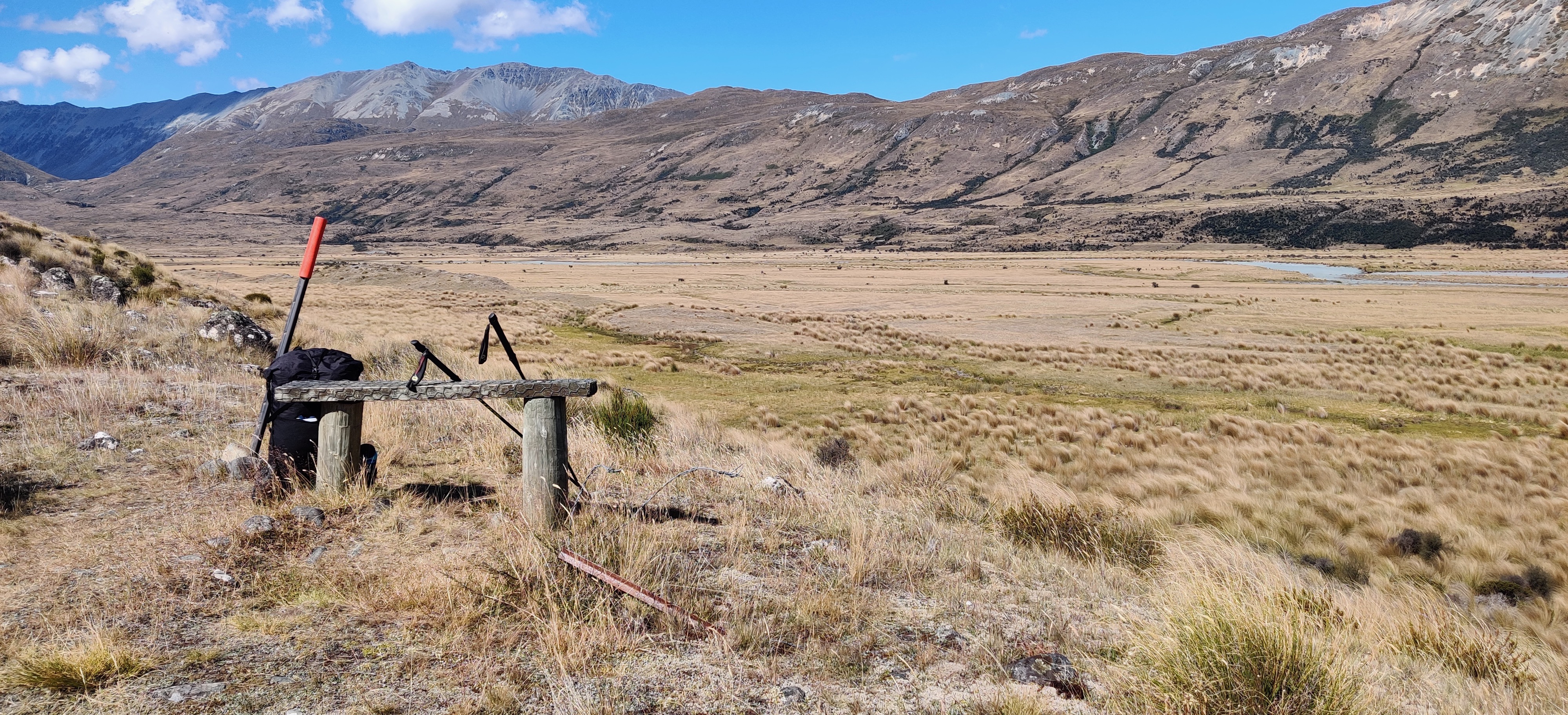
After that peculiar encounter, I continued my journey into a wide valley filled with yellow grass, surrounded by mountains. I started feeling like a hobbit on a mission again. By evening, I reached the beautiful Taipo Hut, where I was completely alone. When darkness fell, I lay in front of the hut in my sleeping bag, watching the unfamiliar constellations of the southern hemisphere spread across the night sky.
Hitchhiker’s guide to New Zealand
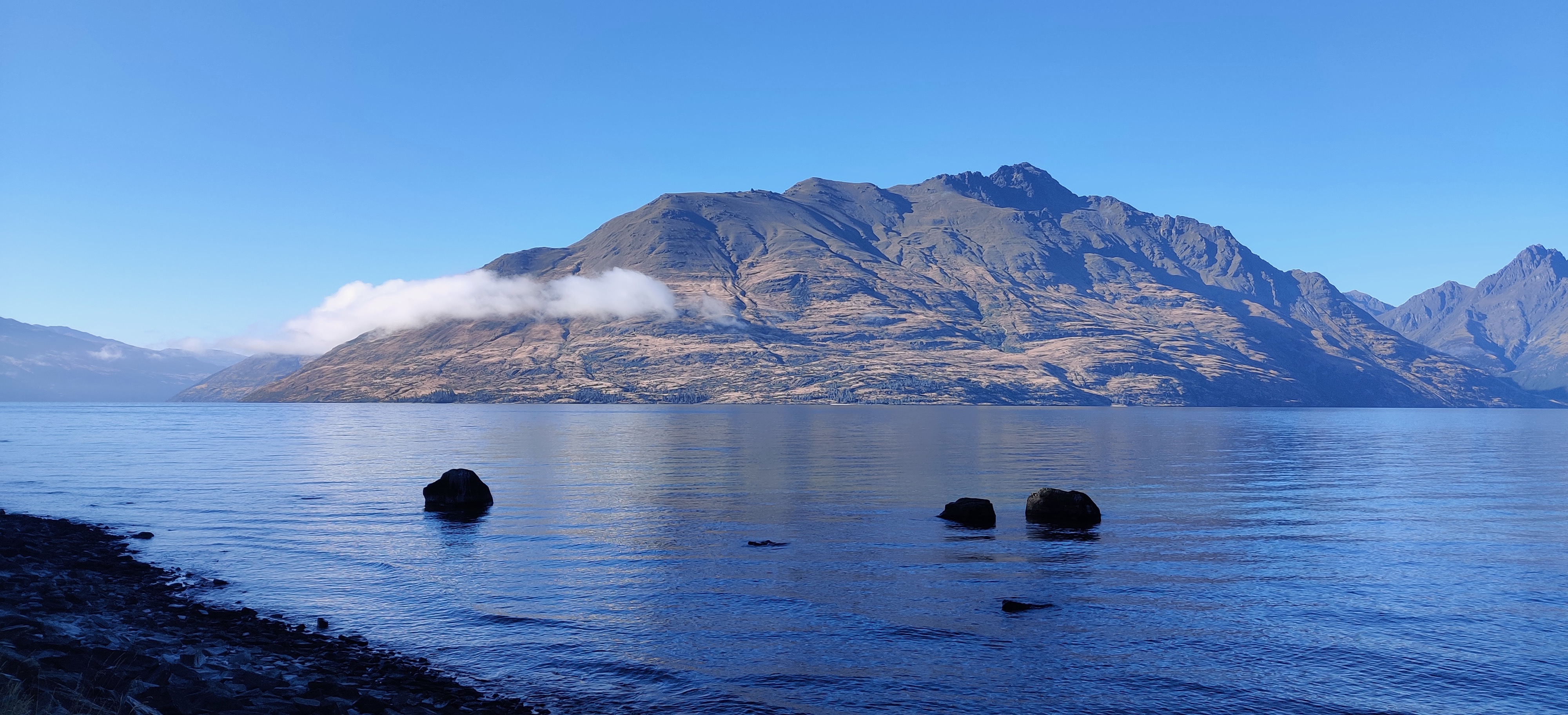
The next morning, I continued about 20 km to the Greenstone car park, from where I needed to hitch a ride around the lake to Queenstown. The Te Araroa trail is interrupted by the lake in this section, and walking the road around it isn’t really an option. Too many sharp turns, cliffs, and dense traffic makes the section dangerous and so it is not in the official itinerary of the TA. My mission was simple: hitchhike to Queenstown, where I planned to stay overnight.
I managed to do it in three hitches. The first one looked like it would be the hardest since I was starting from a dead-end road where only a handful of hikers had cars. But surprisingly, it turned out to be the easiest. As I was approaching the car park, I spotted a group of three seniors ahead of me and got a plan. I decided to strike up some small talk as I passed them, and the conversation quickly took off. It turned out one of the women had visited Český Krumlov — the UNESCO-listed town near where I’m from in the Czech Republic.
As we chatted, I casually asked if they might be willing to give me a lift from the car park. And it worked! One friend of mine once described this approach as “stepping out of your comfort zone straight into someone else’s” — because it’s much harder to refuse a hitchhiker in person than it is to just drive past one on the road.
The first hitch was followed by a shorter ride with an older couple from the area. The third hitch was with a young French woman who lived in Australia and had come to New Zealand for a half-Ironman race nearby. Finally, I arrived in Queenstown, checked into a backpacker’s, and went to meet Emily and Jake, who had done a short side trip off the TA but were back on trail in Queenstown.
We grabbed a kebab plate for dinner, finished it off with a delicious ice cream cone covered in colorful sprinkles (called hundreds and thousands here), and watched the sunset over the lake. Eventually, it was time to say goodbye and head to bed, ready for the next day’s adventures.
If you want to know how my journey continued and how I tackled one of the sketchiest sections of the trail, keep reading here.