Te Araroa Stories: My Wet Feet and the Deceptive Charm of Deception Valley
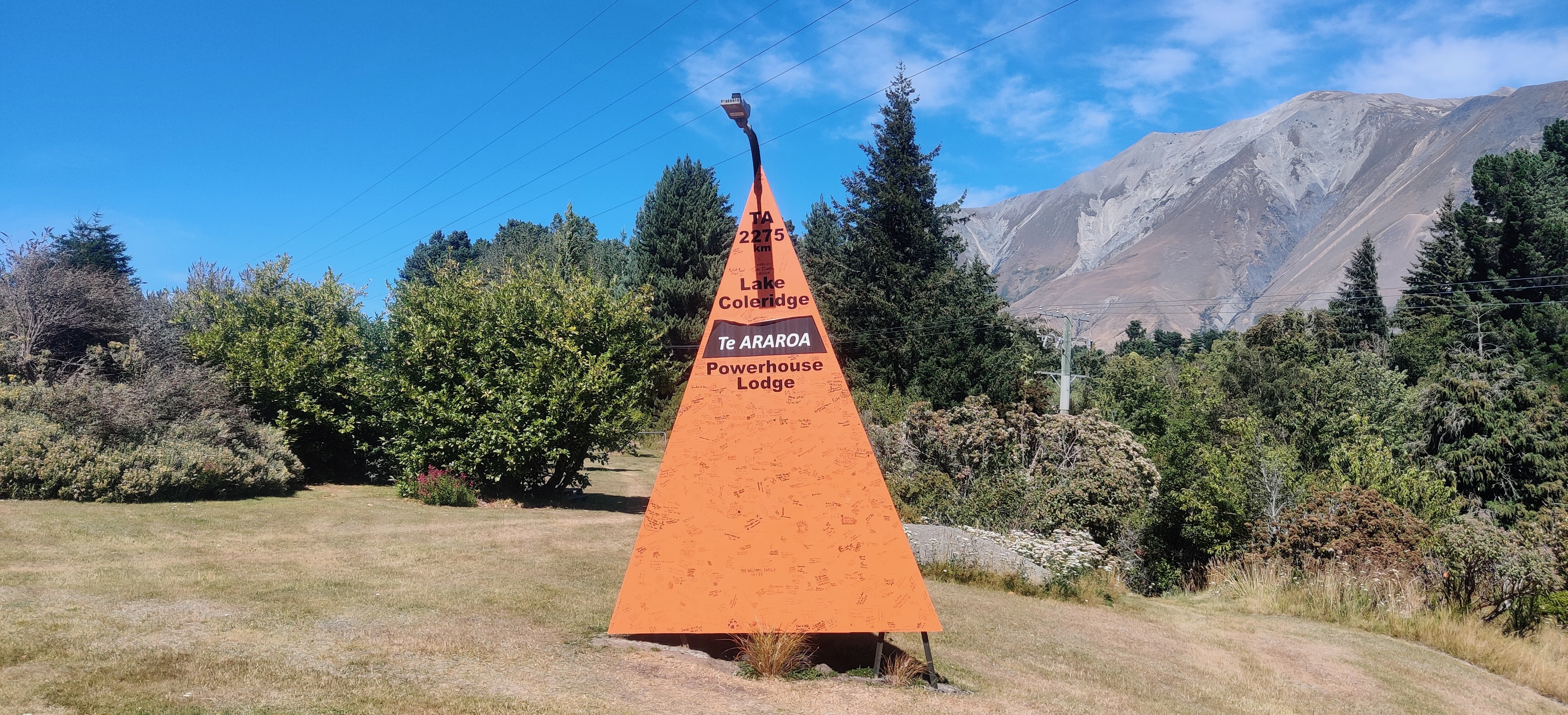
Who would have thought that hitchhiking from the main road near Methven could be harder than scoring a ride in Rachel’s truck the day before? Not me. And yet, there I was; standing for almost an hour, watching cars pass by every minute, all pretending I didn’t exist. Eventually, one kind soul stopped, and after one more hitch, I was back on the trail on the other side of the Rakaia River. The trail resumed next to Powerhouse Lodge, which is a former hydroelectric power station turned into accommodation, owned by a couple who had walked the TA themselves a few years earlier. The Powerhouse Lodge is legendary among TA hikers, thanks to the owners’ hospitality and the largest orange triangle marking the trail, proudly standing in their garden like a holy relic.
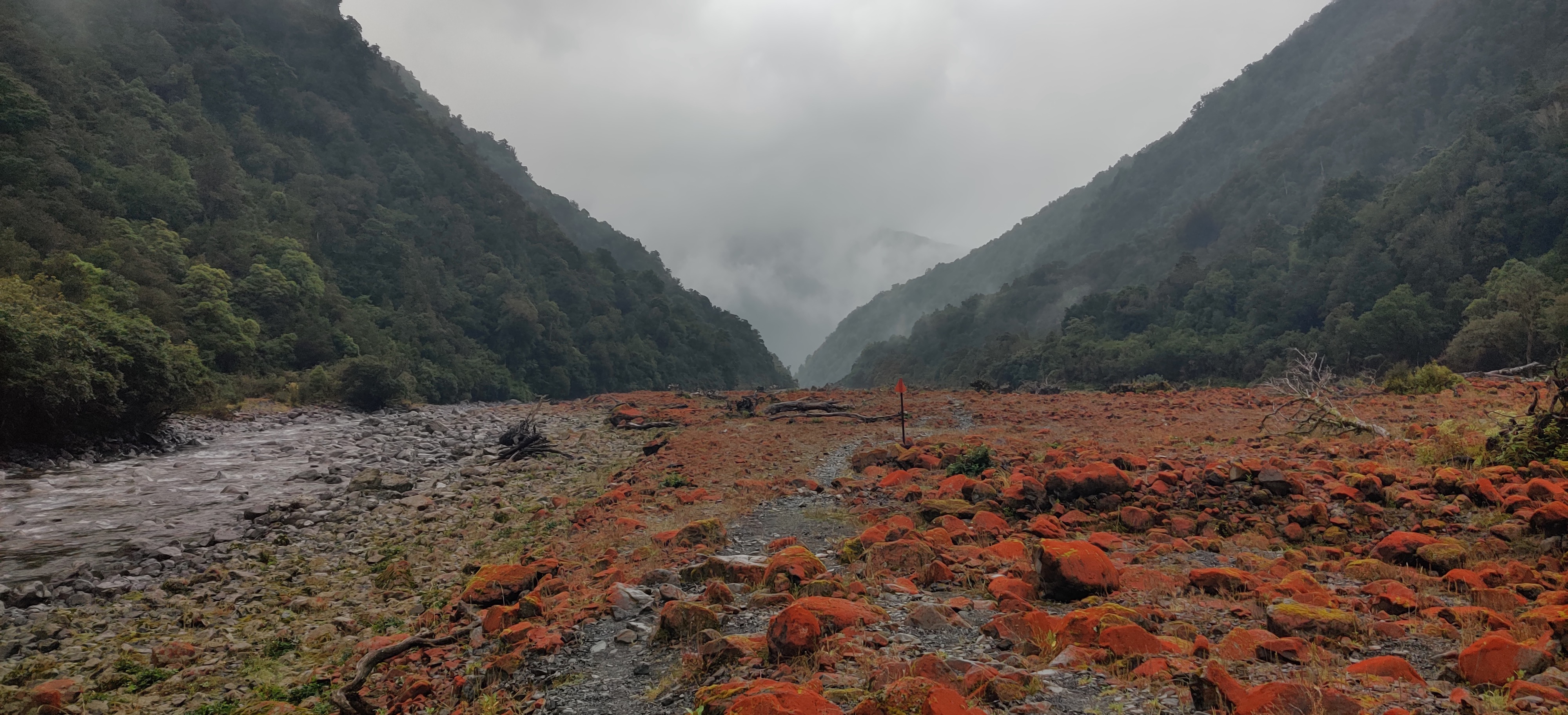
When I talk about the trail in retrospect, I usually say two things: I was lucky with the weather, and I was trying to plan everything well. I constantly checked weather forecasts and adjusted my pace so I could tackle potentially dangerous sections in good conditions. This was one of those moments. It was Saturday afternoon, one of the trickiest sections of the trail was still 110 km ahead, and bad weather was forecast to roll in on Tuesday. I didn’t want to get stuck, so I decided to push harder and make it through before things turned ugly. Deception Valley and Goat Pass are among the more challenging parts of the TA. Hikers follow the riverbed of the Deception River (yes, the name is suspicious), often with no visible trail at all—just walking straight through the water like that’s a totally normal thing to do.
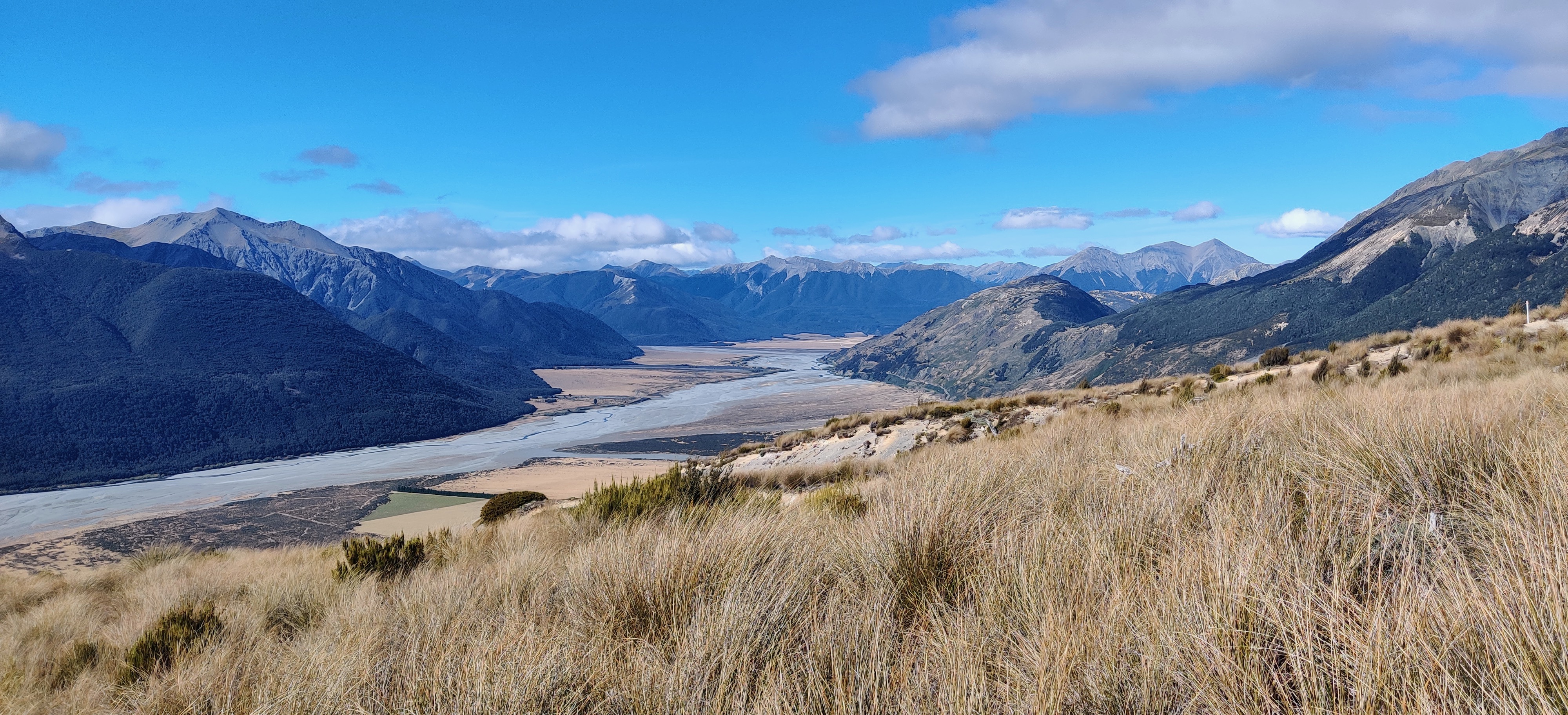
I switched on my “rocket legs” and covered 30 km on Saturday afternoon, followed by 51 km on Sunday (my first 50+ km day on the trail). By Monday morning, I was standing at the start of the Deception Valley section, just one day ahead of the incoming bad weather. I started very early, not because the section was especially long, but because I desperately needed water. I hadn’t camped near a water source, and one liter wasn’t enough for cooking dinner, breakfast, and surviving the morning without feeling like a raisin. For a moment, I considered hitching to Arthur’s Pass to pick up my resupply package, which I had mailed to myself from Auckland. But by the time I finished my thirsty morning routine, I had already walked about 500 meters toward Goat Pass. And since turning back the same way is for losers, and I had enough food to get through Deception Valley, I stuck to the original plan and pushed on.
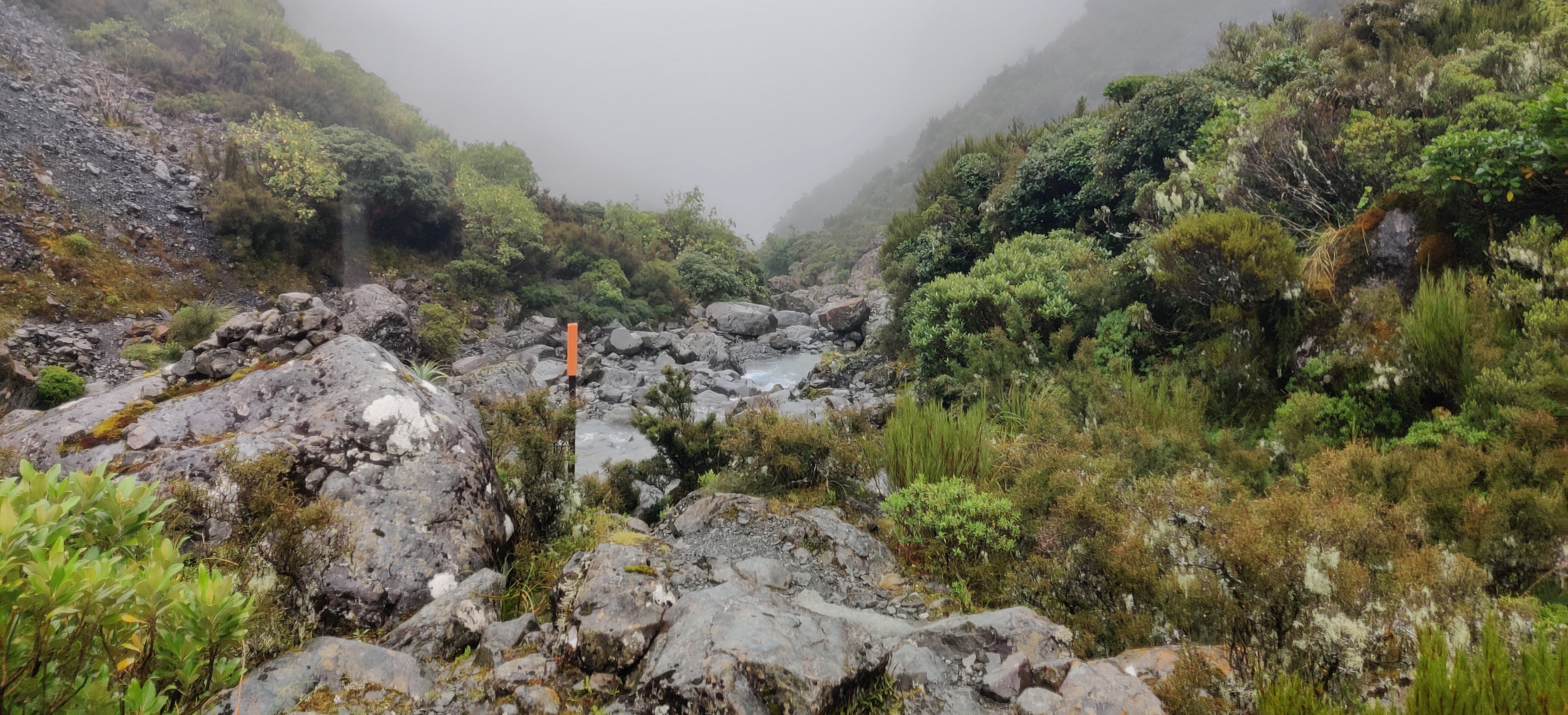
The trail was wet, and soon a light drizzle set in. By the time I reached the hut at Goat Pass, it was properly raining. This hut had one special feature: a radio that allowed to call directly to the Arthur’s Pass Information Centre. From there, hikers could check whether the Deception River was safe for hiking. I already knew it was fine because I’d met other hikers coming the opposite way but I was still tempted to try the radio. Because honestly, how often do you get to casually radio a mountain information center from the middle of nowhere?
“Bzzzz… This is the hiker at Goat Pass. I repeat, the hiker at Goat Pass. Over. Bzzzz.”
“Bzz bzz… This is the Arthur’s Pass Information Centre. Over. Bzzz.”
“Bzzz… I’m just testing this radio. Over.”
“BZZZZ—bzzz—???—OVER—BZZZzz bzz—”
This is the exact transcript of a conversation that never happened. I resisted the urge to try the radio and kept walking.
The Deception River turned out to be fine. Mostly. I still had to cross a few deep sections, and the trail often literally ran straight through the river. That meant getting wet whether I liked it or not, or attempting some mildly questionable bouldering on slippery, wet rocks. Progress was slow but steady, and I eventually made it to the end of the section.
But it didn’t come for free.
My feet were completely soaked, the skin started peeling, and I developed a problem I later identified as trench foot (if you know, you know; if you don’t know, look it up, but not while eating). It didn’t look too terrible, but more importantly, it became genuinely painful. Every step hurt, and just to keep things interesting, the rain started coming down properly.
That’s when the experience officially upgraded itself to Type II fun (if you don’t know what that means, check the explanatory box below).
(Example: A nice, relaxing afternoon stroll in the forest.)
Type II Fun: Some people wouldn’t call this fun at the time, but once it’s over, you’re weirdly glad it happened—and you’ll happily retell the story.
(Example: Your afternoon stroll turns into an unexpected night in the forest because you got lost. You were fine, and now you have a great story.)
Type III Fun: This is not fun. At all. You may have developed PTSD.
(Example: During your afternoon stroll, you were attacked by a bear, it ate your leg, and you were forced to stay in the forest for three months because you
couldn’t call for help.)
After passing through Deception Valley, I reached the road and hitched into Arthur’s Pass. Lucy, who picked me up, worked as a scenic painter on movies like The Lord of the Rings and The Hobbit. Casual. I collected my resupply box and then discovered that both accommodations in the tiny village were fully booked. So, naturally, I pitched my tent at the campsite.
This night was not fun.
It was raining, and I couldn’t sleep because my feet soaked feet hurt.
I decided to take a rest day the following day. As the weather forecast had promised (threatened?), it rained nonstop, and I desperately needed time off to let the skin on my feet recover. I spent the day eating, resting, and filling my handwritten journal with stories from the past few days. I also ran into Hannah, Netta, and Oriel, whom I’d met near the Rangitata River about a week earlier.
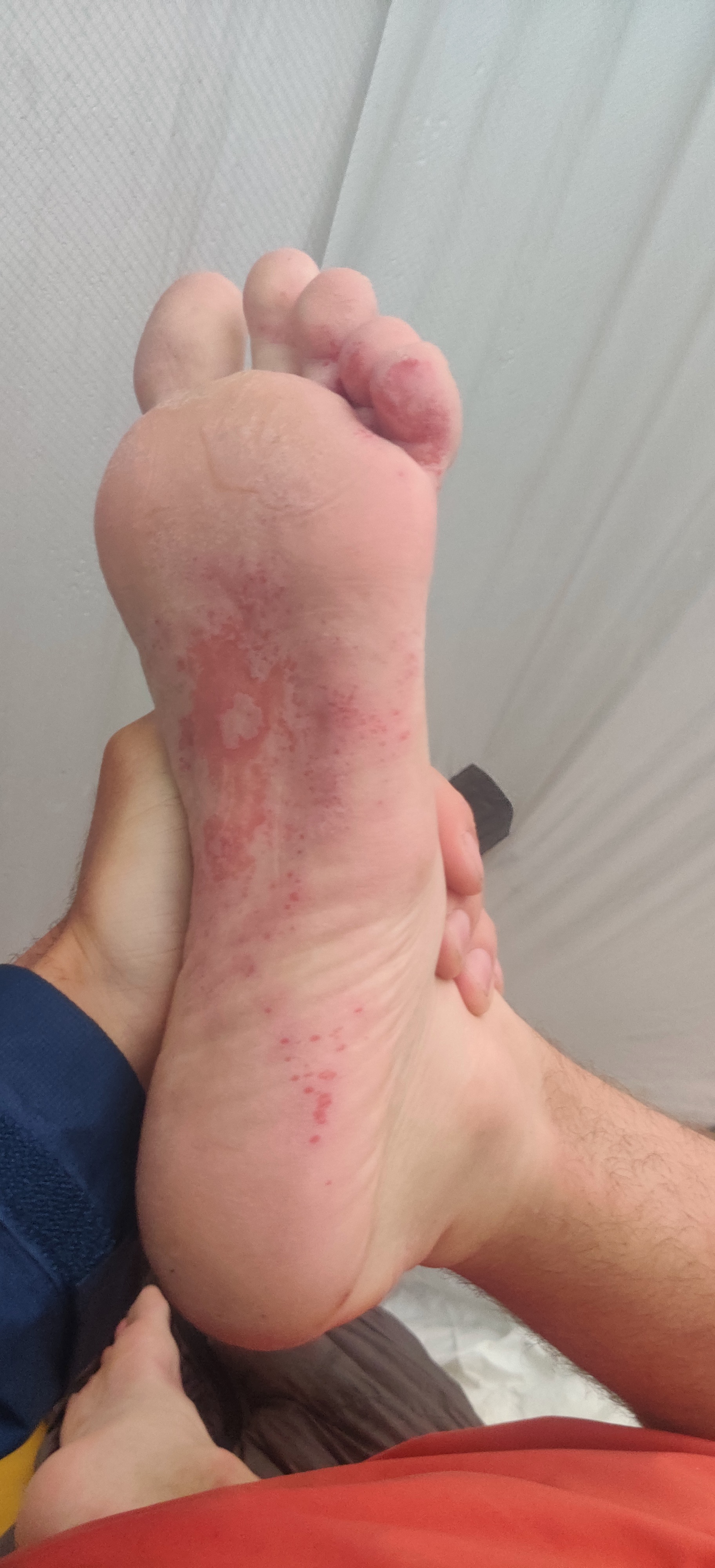
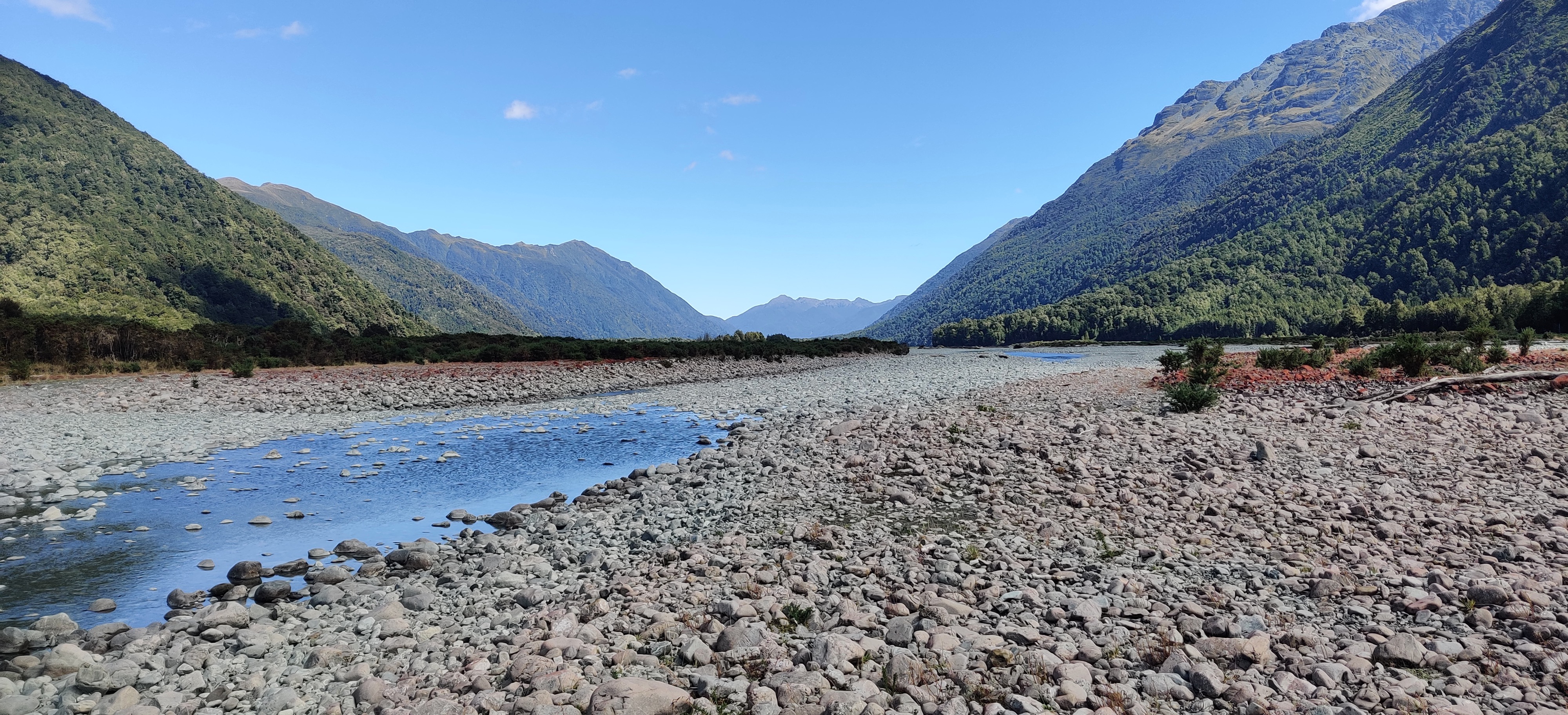
I thought that one rest day would be enough for my feet to recover, but I was wrong. I continued on the trail the next day, and after crossing a few more rivers, my feet were soaked again and the skin started complaining immediately. By the time I crossed Harper Pass, I was really looking forward to staying in the small cabin called Harper Bivi. I knew Hannah would be there because I had seen her name in the hut books earlier that day, and I was excited to share stories from the trail.
When I knocked on the door of the bivi, I was greeted by two arrogant hikers, while Hannah was outside behind the cabin setting up her tent. I joined her, and with a bit of tarp building gymnastics, I managed to squeeze my tarp onto a patch of grass that was somehow smaller than the tarp itself.
That night was the coldest night of the trail so far, and I woke up to icy bits covering my tarp. From the very start of the day, I knew the skin on my feet was in bad shape, and every step was genuinely painful. I spent the day limping along. When I realized I was covering only about 1.5 kilometers in an hour, on terrain that should have allowed me to walk at least three times faster, I knew I needed to stop and rest.
Thanks to the resupply in Arthur’s Pass and my faster pace during the previous week, I had more than enough food. I stayed in the hut for two full zero days.
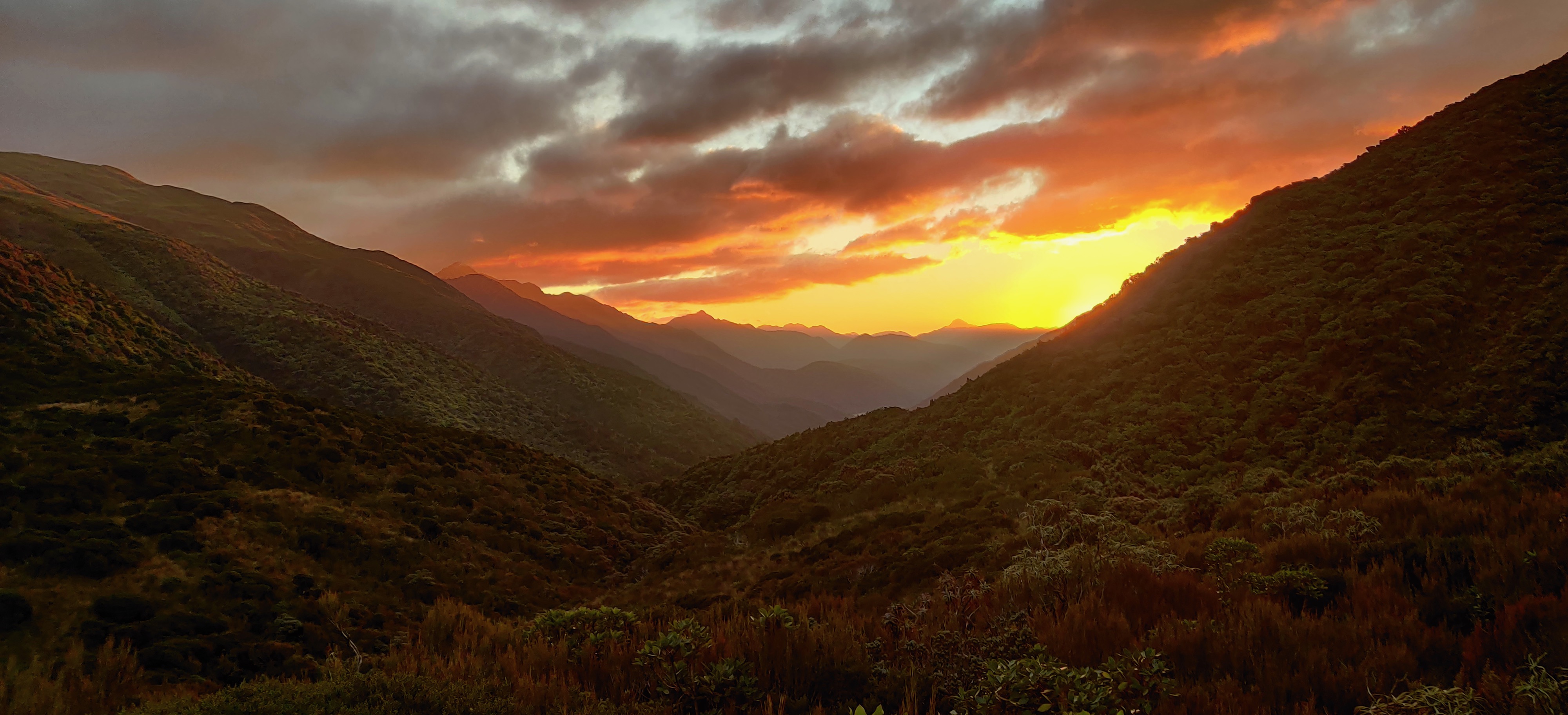
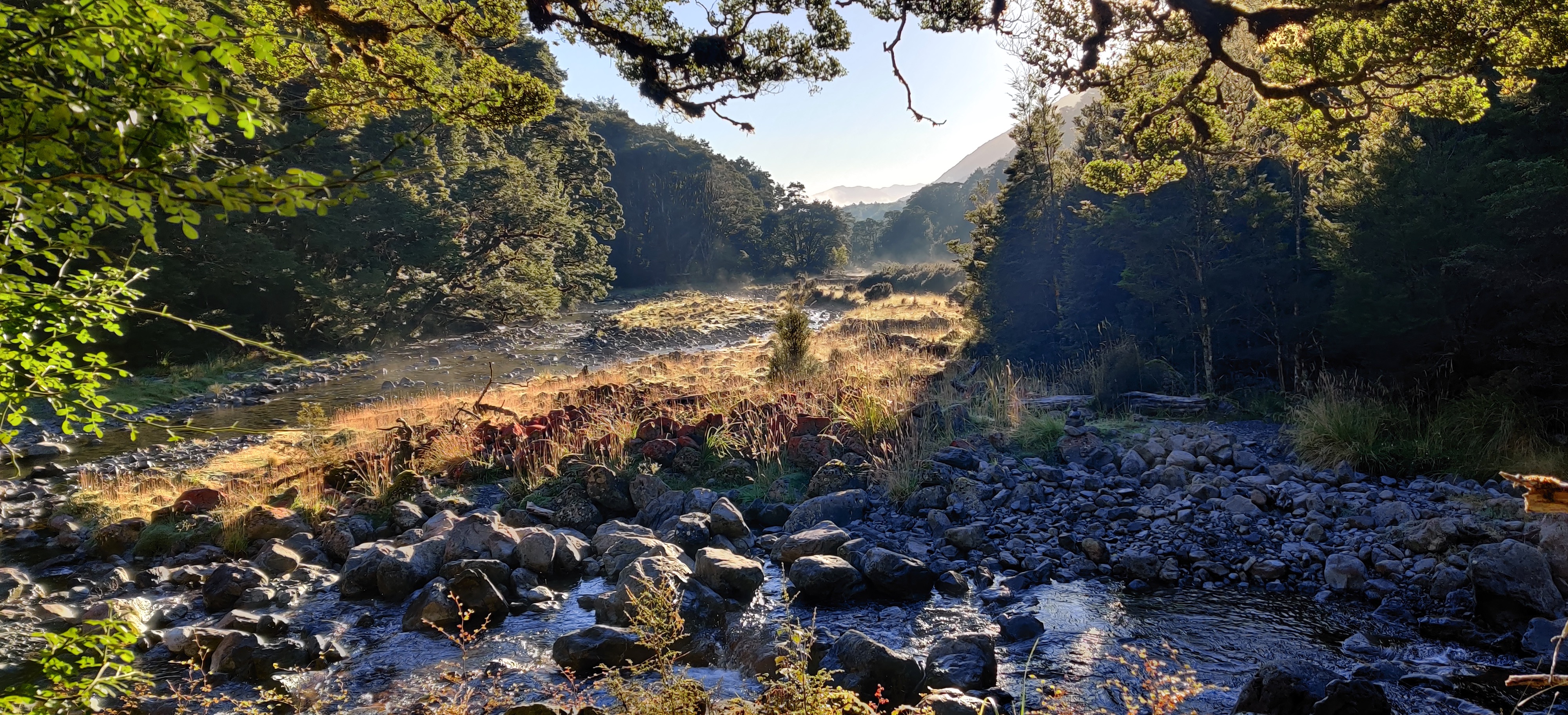
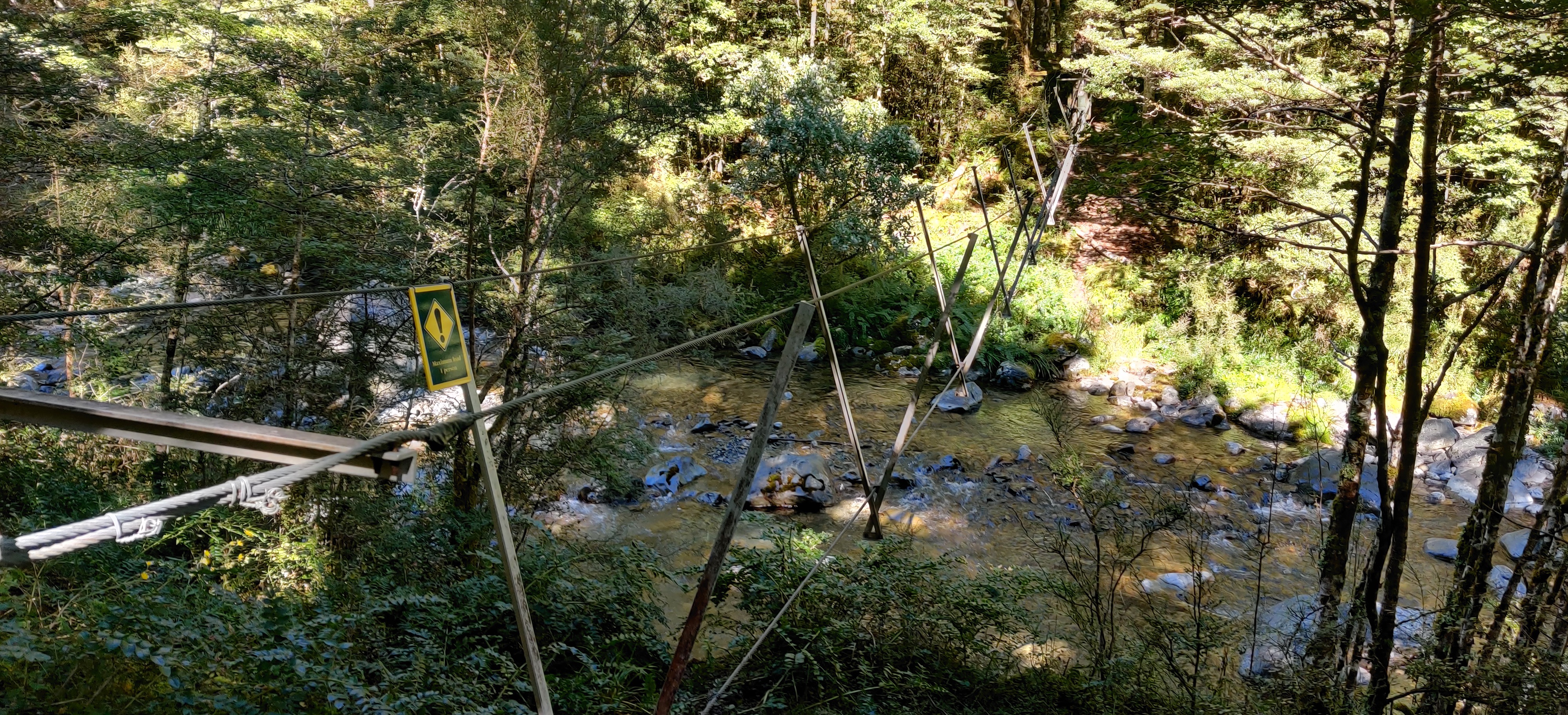
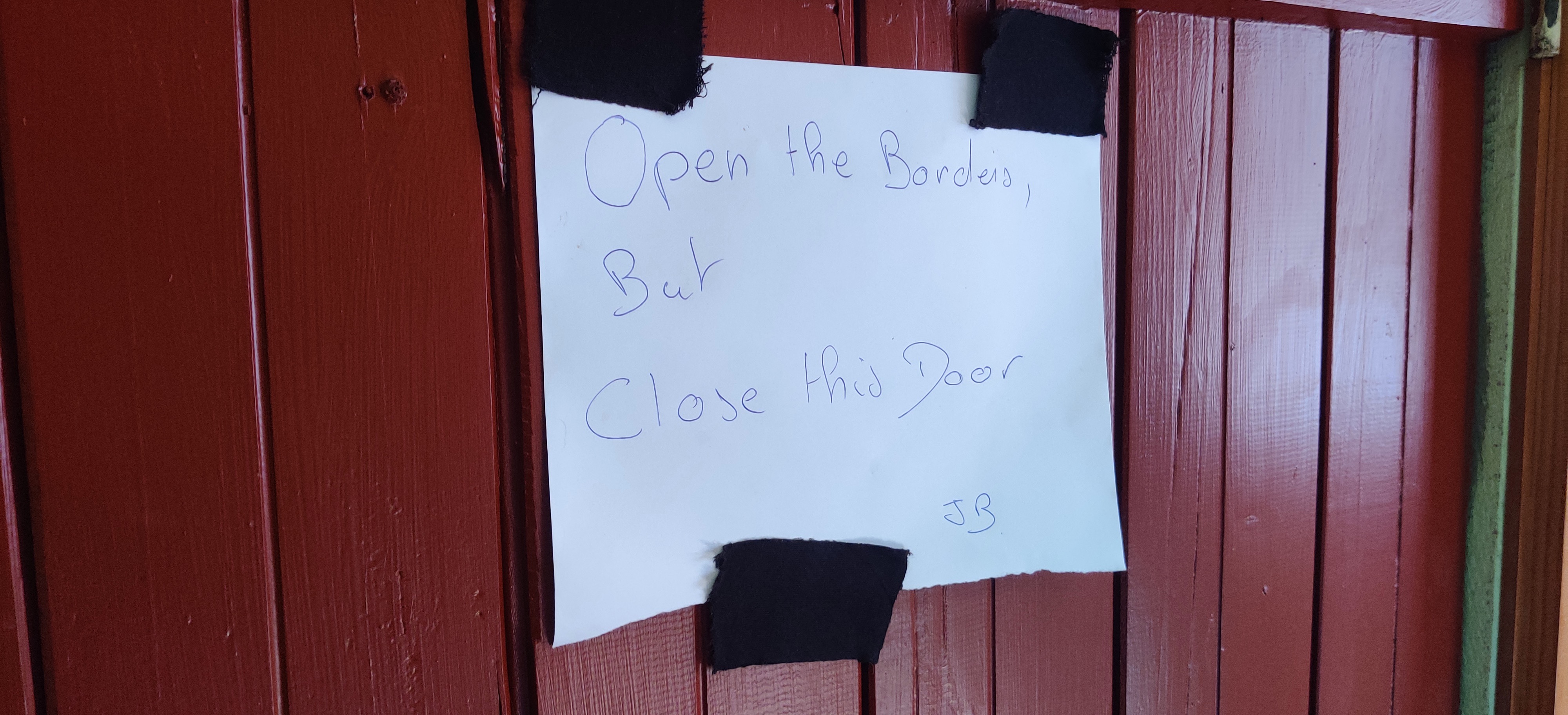
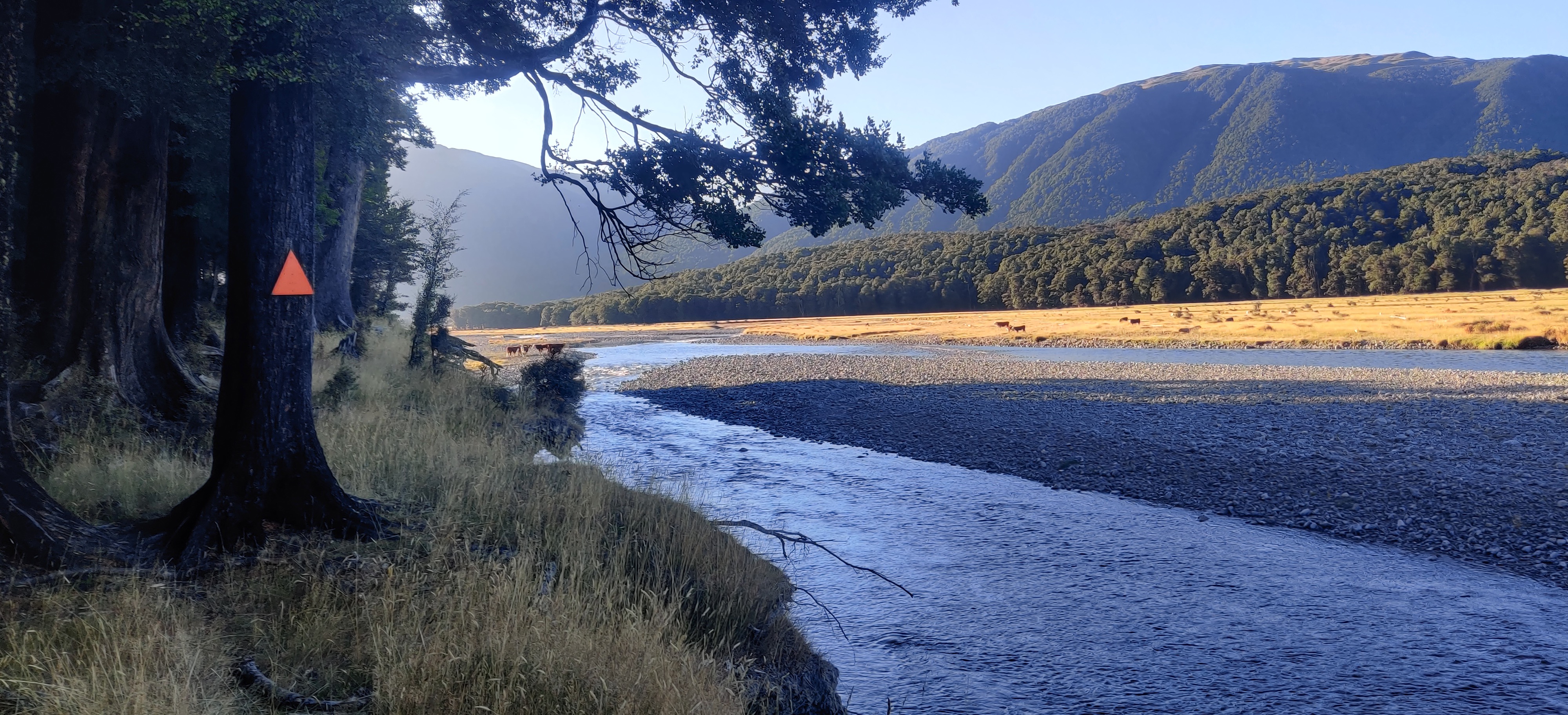
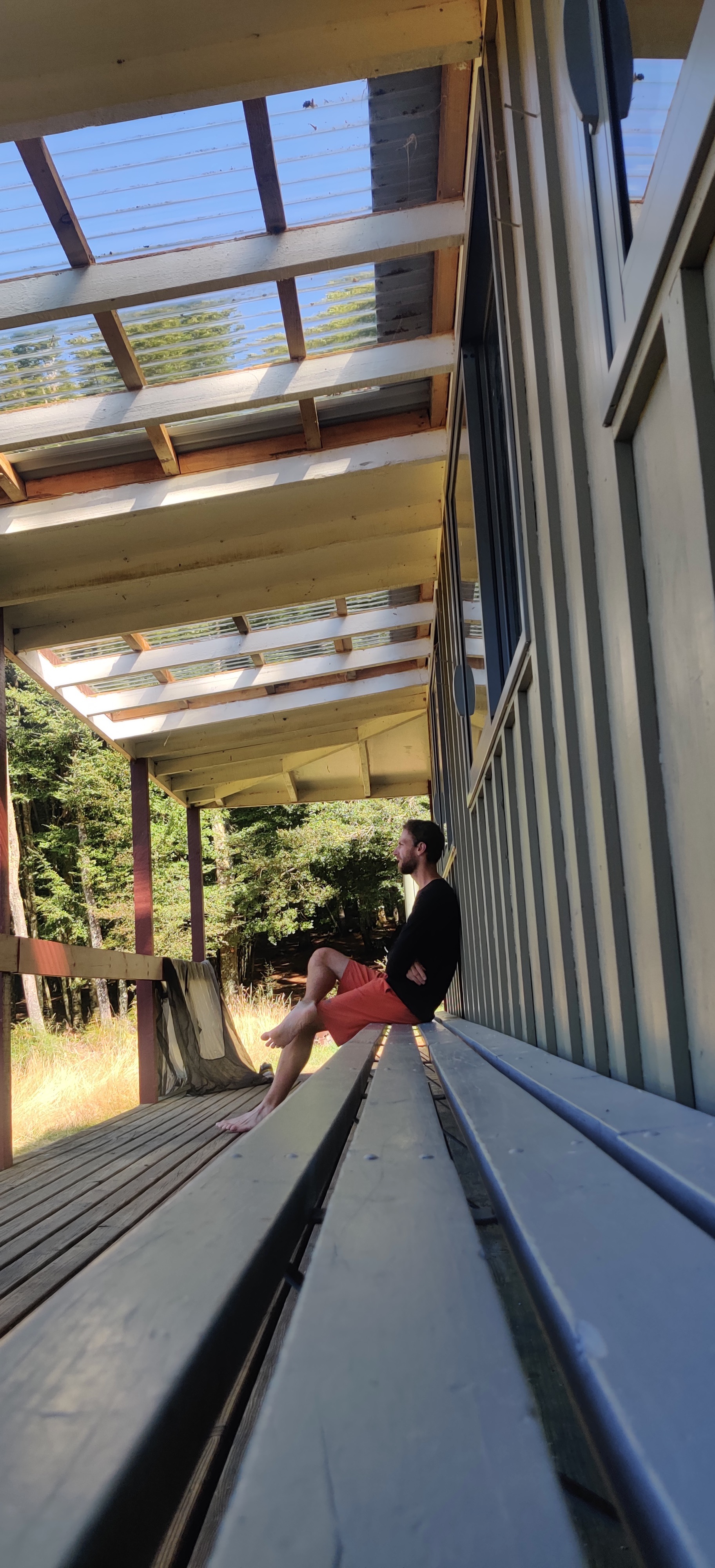
I was doing absolutely nothing. Just eating peanut butter, reading, writing in my journal, eating extra lollies, and chatting with hikers whenever they passed by. I also watched a movie called Nowhere that I had randomly downloaded from Netflix to my phone before starting the trail. If you want to be traumatized, I highly recommend looking it up and watching it. I had absolutely no idea what it was about before pressing play. 😂
On my third night in the hut, I decided that my feet were finally feeling much better and that I would be able to walk one more day to reach Hanmer Springs. It is a small town where I planned to resupply, do laundry, and buy some cream for my soaked and angry feet. Just before going to sleep, two hikers arrived at the hut. Netta and Oriel, whom I already knew from earlier on the trail.
Oriel was dealing with the same foot issues as me, except for him it was only one of his first days with the problem. We realized that more hikers in the area were suffering from the same thing, which made us suspicious. Our best theory was that something in the Deception River, possibly algae, had helped speed up the whole miserable process.
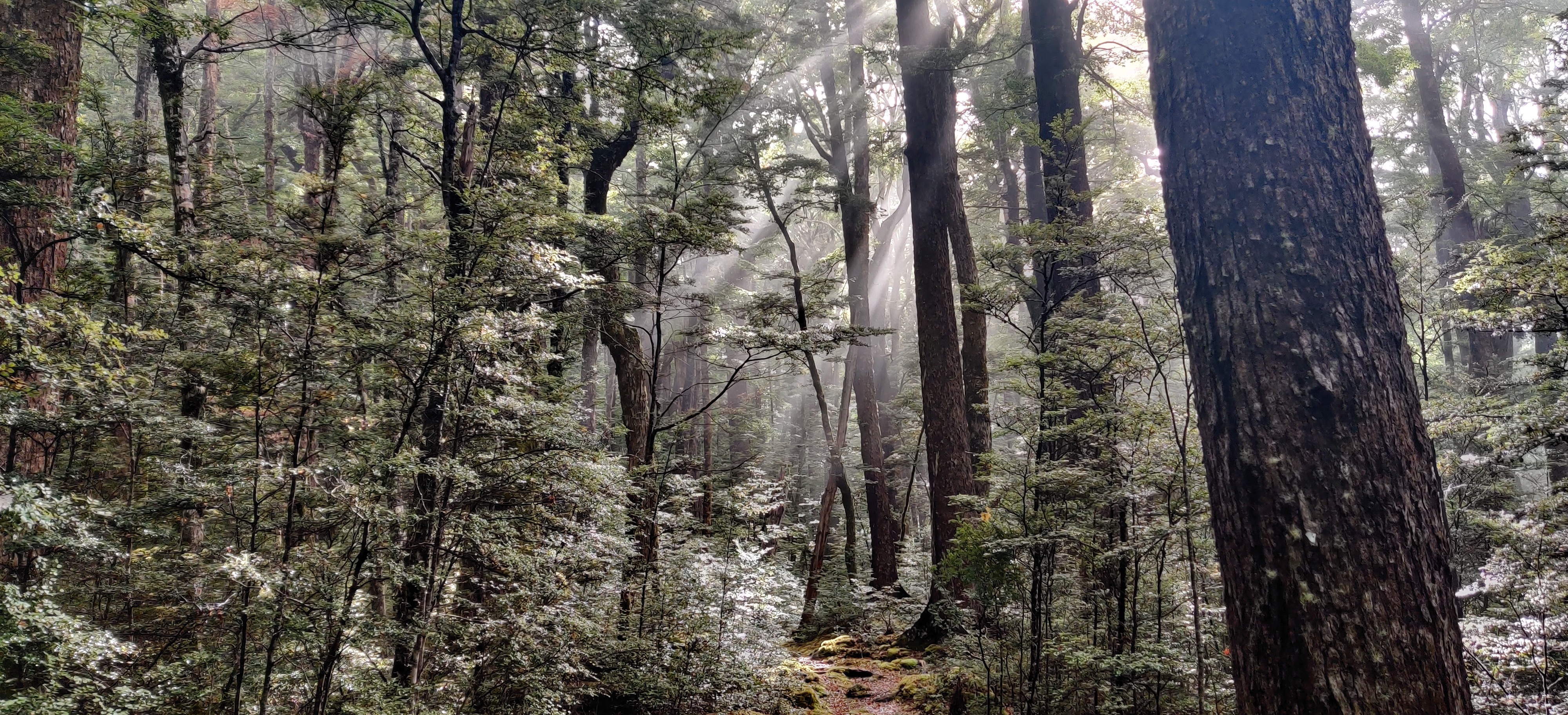
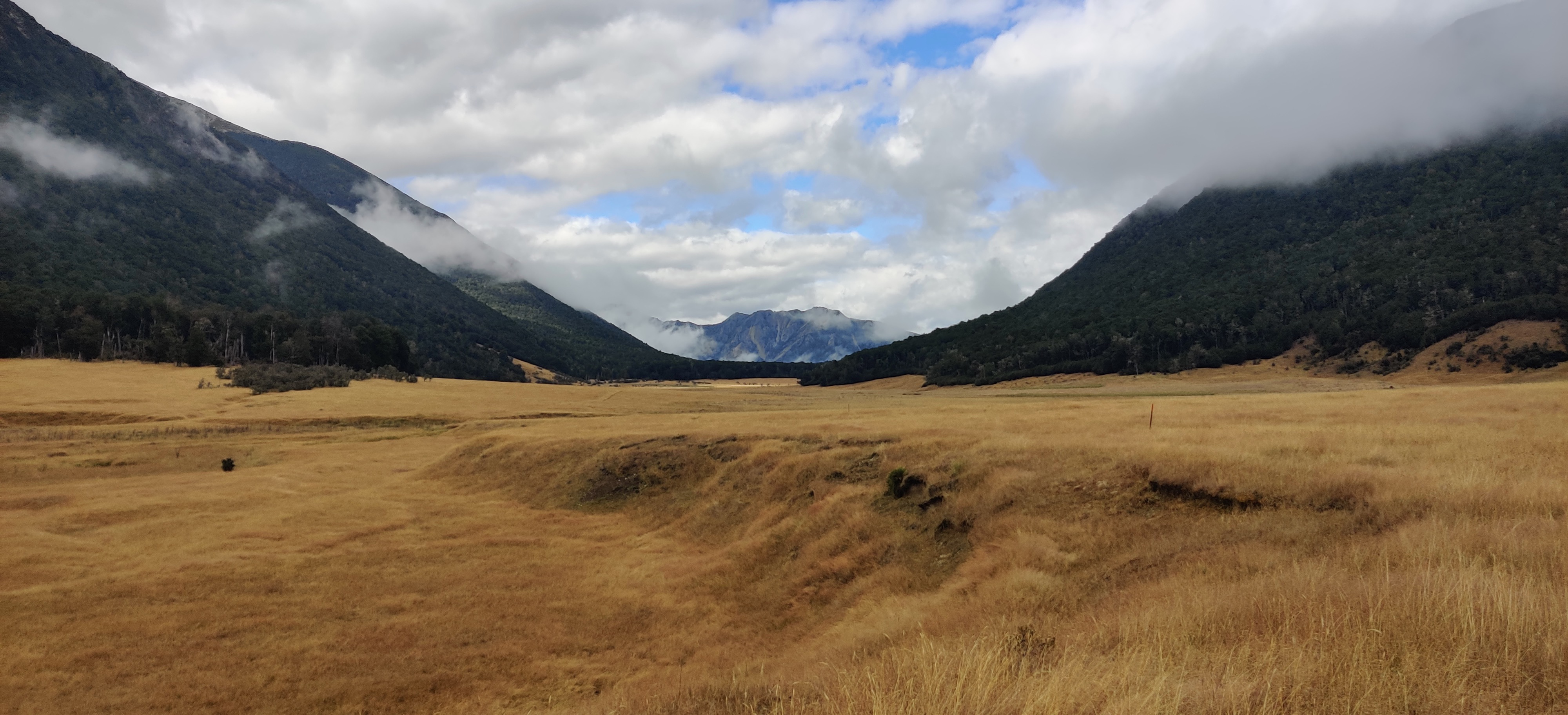
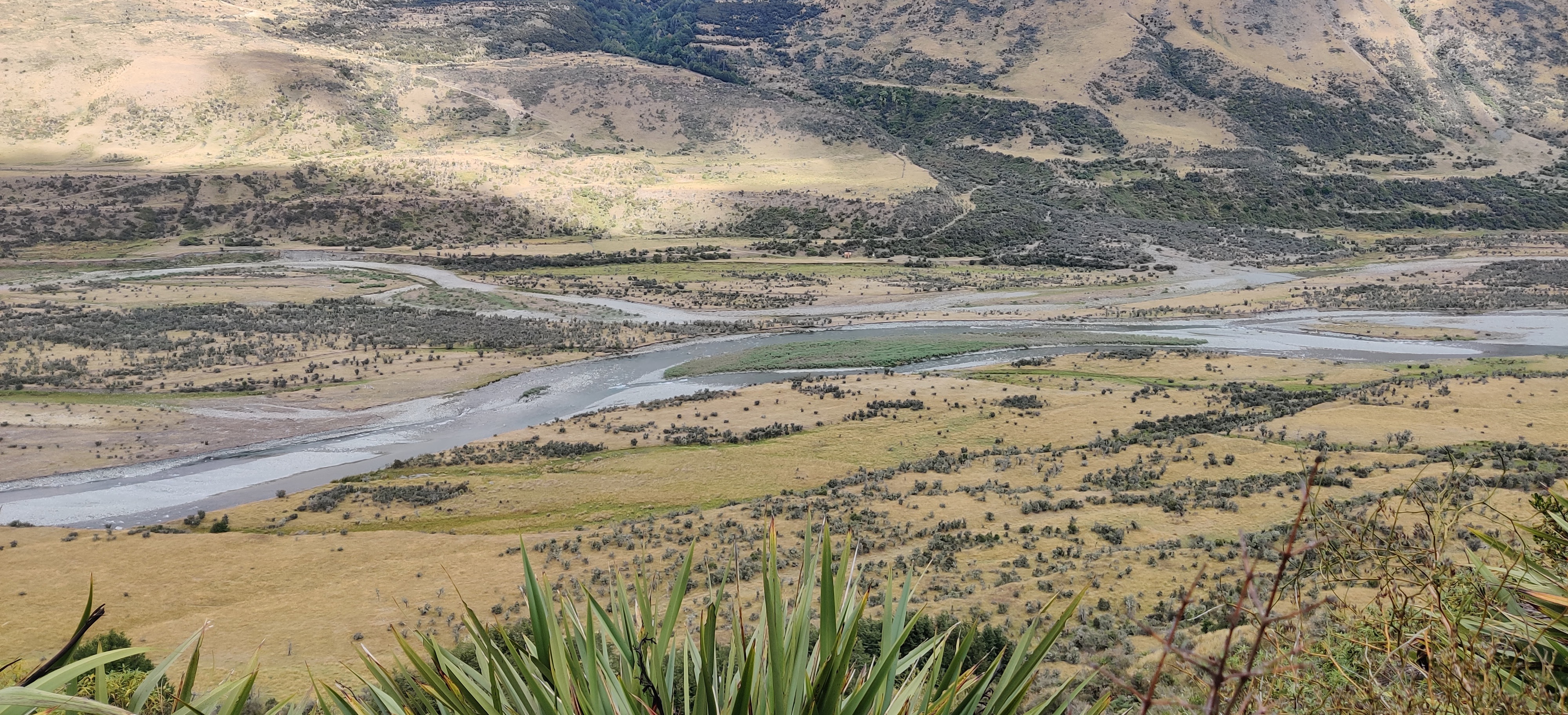
After two zero days in the hut, I walked 35 km to the road, where I could hitch to Hanmer Springs. Hanmer Springs is not on the trail, but many hikers go there to resupply or take a proper rest, so I did the same. My feet felt better, but they still needed more time to fully recover before being soaked again in wet shoes. Because of that, I took two more zero days in Hanmer Springs.
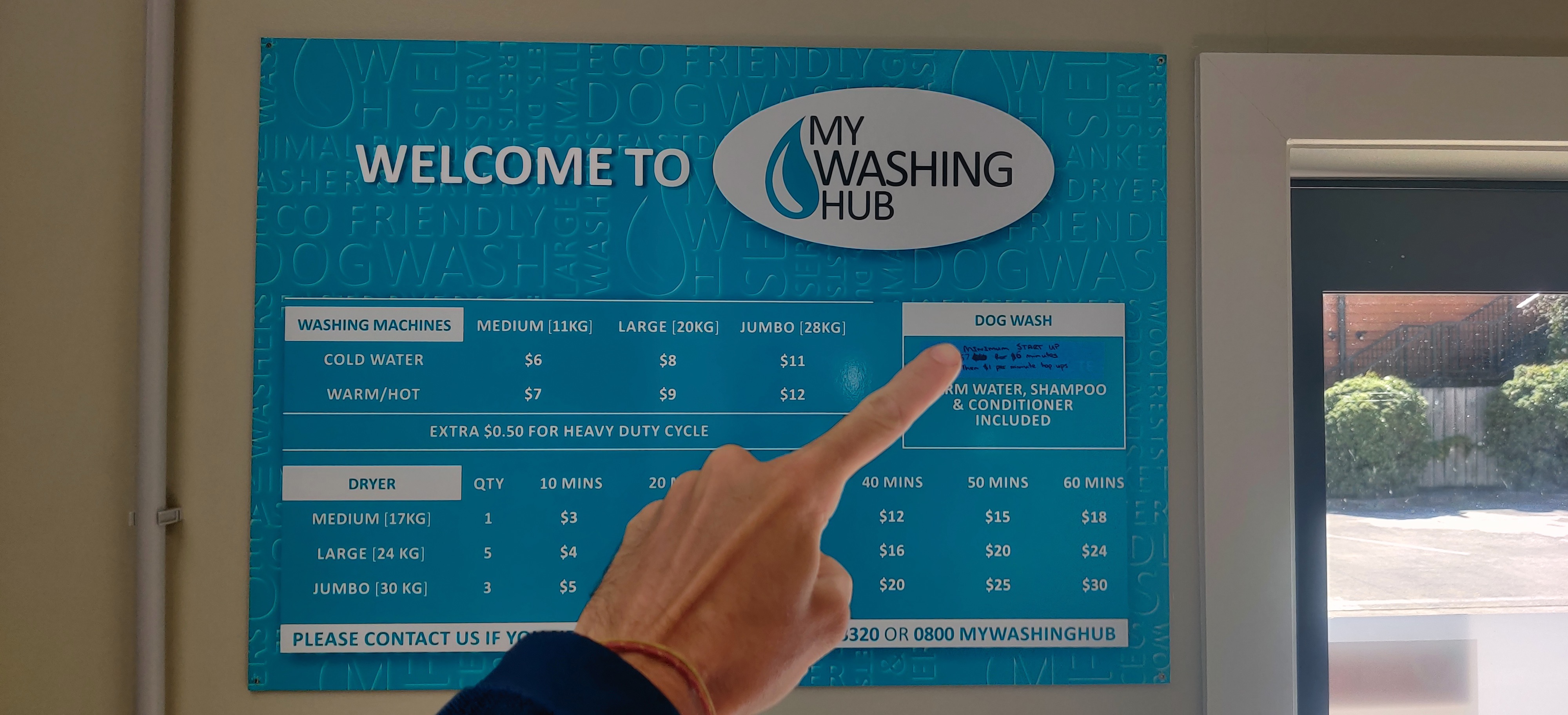
I visited restaurants, ate a lot, and washed my clothes. I also had a few interesting encounters there.
The first was Kjel from Germany, whom I had briefly seen a few days earlier while I was taking zero days in the hut. He was a nineteen year old guy from Germany who had set himself the ambitious goal of finishing the trail in under 100 days.
An even more surprising encounter was with Claire, who was originally from Canada and was bikepacking the Sounds to Sounds route. We talked for a while, and then came the plot twist. She mentioned that she lived in Geneva, was also a particle physicist, and we later realized that we even shared some common friends. That was already a pretty big coincidence, but it was still nothing compared to the third encounter.
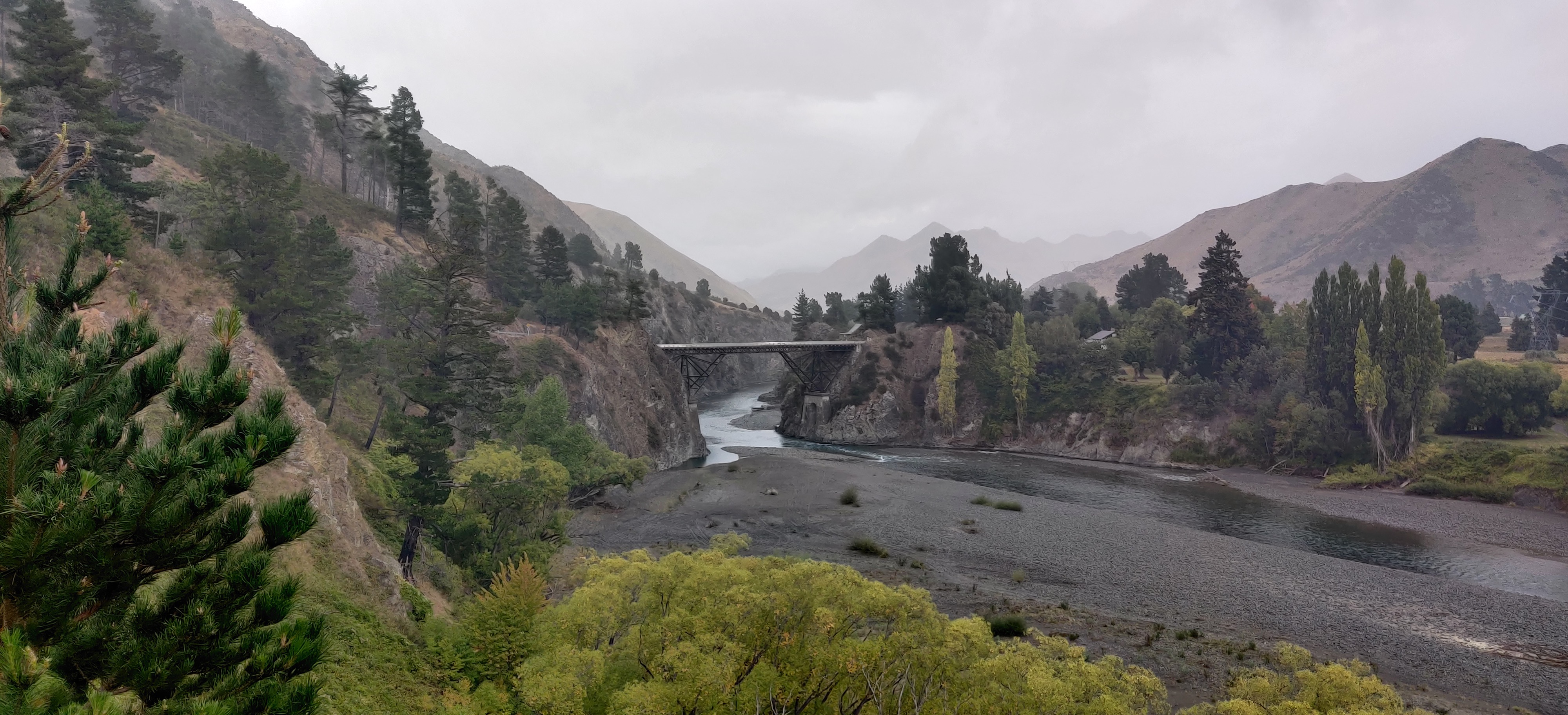
A few weeks earlier, I noticed a Czech guy traveling the world on a scooter—yes, a push scooter, not a motorbike—started following me on Instagram. The scooter community is small, and since I had done some big scooter adventures myself, like traveling from the Czech Republic to the northernmost point of Europe, I was curious about his journey.
After a while, I realized he had landed in Christchurch and planned to travel around New Zealand. But nothing prepared me for my surprise when this exact guy, Michal, randomly showed up at the same accommodation I was staying at! I knew it was him because his scooter was parked outside, and it was unmistakably his.
When I approached him and asked, “Aren’t you Michal?” he looked a bit confused at first. Then it clicked, and we both laughed at how incredibly small the world can be.
If you want to find out how I tackled one of the most difficult and also most scenic parts of the trail, you can continue reading here.