
Te Araroa Stories: It All Started Innocently… Then I Walked Across New Zealand
It was April 2024, and I was sitting in my office at the University of Geneva, pretending to look busy while analyzing data from the ATLAS experiment at CERN. My colleagues and I were searching for new particles called Higgsinos — tiny things that may or may not exist, unlike my social life at that time. Between writing a paper and wrestling with my dissertation chapters, I was desperate to see the light at the end of the academic tunnel. That’s when I started thinking: What am I going to do after I finally defend this thesis? I didn’t know the details yet, but I knew one thing — it had to be an adventure. A big one.
The first idea
Inspired by my previous adventures on a scooter — most of which happened before I started my studies in Geneva — I wanted to do something in a similar spirit. The only problem? I knew I’d finish my doctorate in October, and by that time Europe is already transforming into one big cold shower. Sure, a week or two of adventure would still be doable, but I wanted something properly big. The kind of adventure you can only do before you have a real job, responsibilities, and an HR department asking where you’ve disappeared.
Then it hit me: why not go big and go south? Somewhere far away, where it would actually be summer while Europe was freezing. That’s when New Zealand popped into my mind. I’d always wanted to visit — mountains, wild nature, friendly people, and just the right amount of sheep. A few of my friends had been there not long before, and their stories only made the idea more tempting. The only question left was: what exactly should I do there?
New Zealand isn’t that huge, really. If I decided to cross it on my scooter or by bike, it would actually be a shorter trip than the 3 800 km across Europe I’d done before, from the Czech Republic to Nordkapp. And since I wanted something even bigger, I started thinking: what if I just walk it?
The idea of a long thru-hike had been floating in my mind for years. I’d seen presentations about the big three American trails (the PCT, CDT, and Appalachian Trail) and always thought, “How on Earth can anyone hike for five months straight?” It sounded completely insane… and also a little amazing. So I did what everyone does when they have a crazy idea: I asked Google. I typed “New Zealand thru hiking,” and to my surprise, there it was — a trail called Te Araroa, stretching across the entire country.
I loved the idea instantly. I didn’t plan anything right away, but the thought stayed quietly in the back of my mind for months. So when I finally defended my thesis in October 2024, I didn’t have a backup plan — but Te Araroa was waiting. And that’s when I decided to make it real.
What is Te Araroa trail?
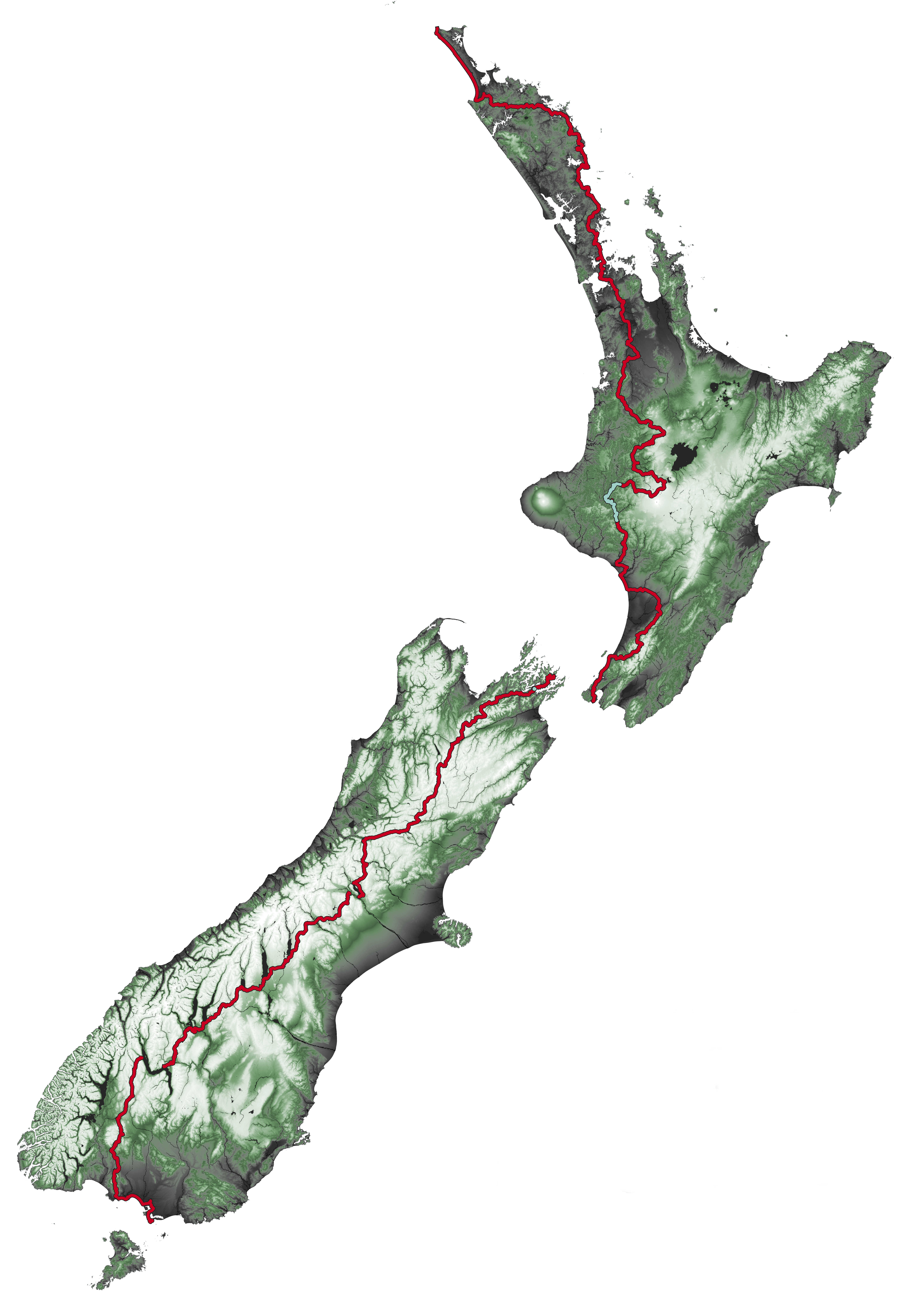
Te Araroa in Māori means “The Long Pathway” and it absolutely lives up to the name. It’s a 3,040 km trail stretching across both the North and South Islands, climbing and descending over 80,000 meters of elevation (yes, that’s like going up Mount Everest about nine times). According to the official trail website, roughly 2,000 hikers complete it every year in one go, while many others choose to tackle only sections. It’s not as world-famous as the American giants like the PCT or Appalachian Trail, but it’s quickly gaining popularity — and for good reason.
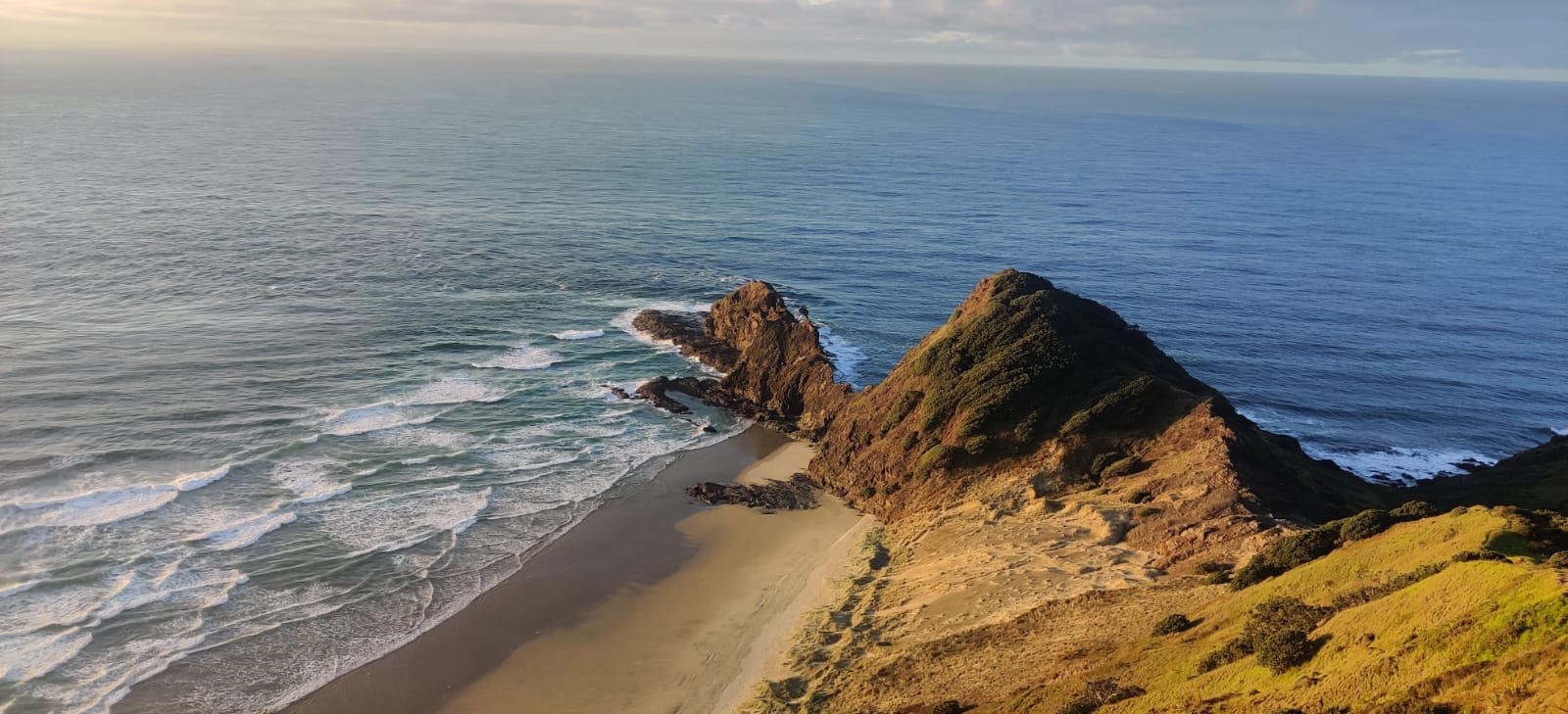
The trail officially starts at Cape Reinga, the northern tip of the North Island, and finishes at Bluff, down at the very bottom of the South Island. That’s the direction most hikers take, known as southbound, or in trail slang, SOBO. The main reason is simple: at one point, the trail turns into a river (literally!) and you spend about 150 kilometers floating in a canoe, so it’s a bit tricky to do that uphill.
That said, the other direction is totally possible too, though it requires a few tweaks to the route. This direction is called northbound, or NOBO if you want to sound like you belong in the thru-hiker club.
Timing, however, is everything. If you go SOBO, the ideal start is between October and December. Start too early, and you’ll get soaked by the North Island’s winter rains. Start too late, and you’ll hit the South Island mountains just in time for snow. If you go NOBO, the window shifts. You can usually begin around December to January, once the mountain snow has melted. Finishing in autumn up north isn’t a big deal, because the last 600 km, the area north of Auckland, is nicknamed the “winterless north.” It might rain, sure, but at least you won’t have to dig yourself out of a snowdrift.
More about the preparation for the trail is in the next post.